Clear Sky Science · en
Sudomotor dysfunction reflects early atherosclerosis risk in adults with type 1 diabetes
Why sweat and blood vessels matter in type 1 diabetes
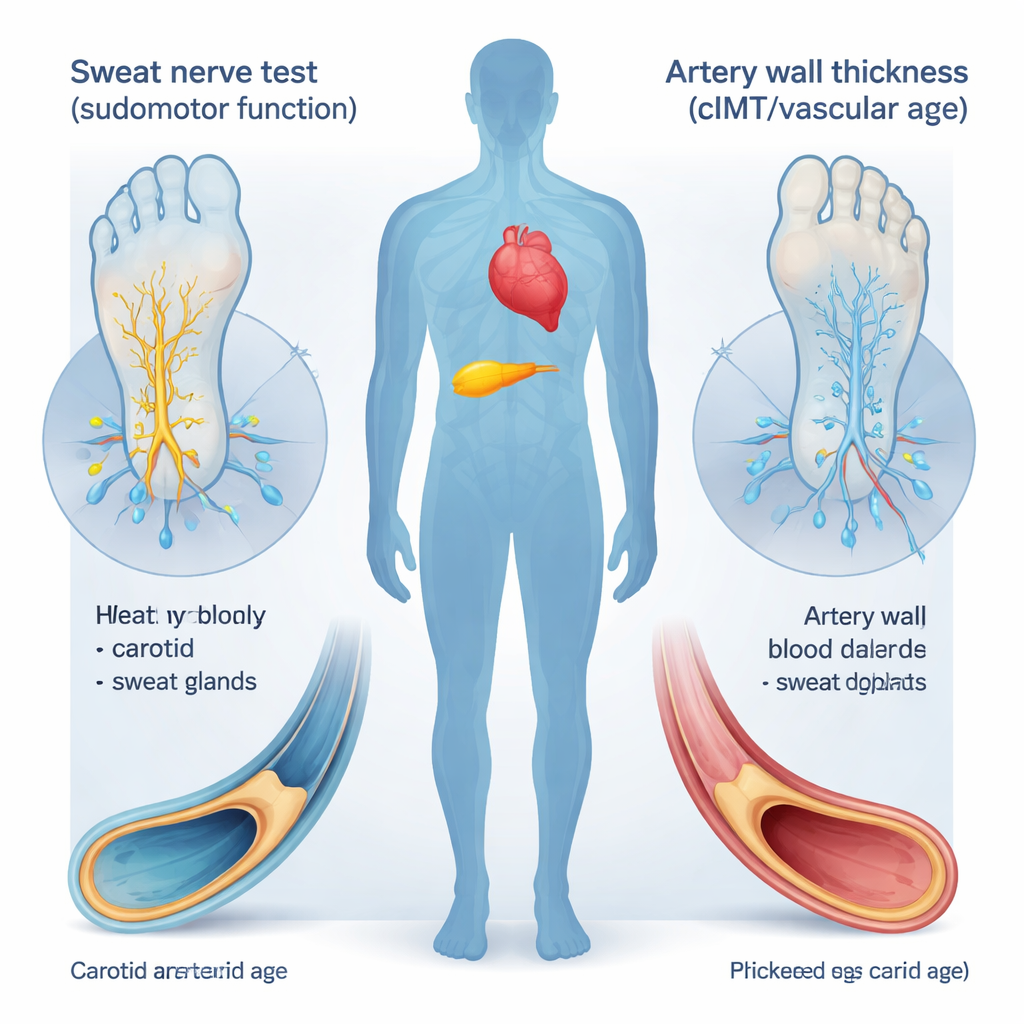
For many people living with type 1 diabetes, the main focus is keeping blood sugar in check. But long before symptoms of heart disease appear, subtle changes can already be brewing in the body’s smallest nerves and blood vessels. This study explores whether a quick, painless test of how well the sweat nerves in the feet work can also reveal early, hidden damage in the arteries that supply blood to the brain and heart.
A closer look at nerves, sweat, and hidden damage
Type 1 diabetes is an autoimmune disease in which the body stops producing insulin. Even with advances in treatment, people with type 1 diabetes still face a higher risk of heart attacks and strokes than those without diabetes. One early warning sign of this risk is thickening of the inner lining of the carotid arteries in the neck, measured as carotid intima-media thickness (cIMT). Another early change is damage to the tiny nerve fibers that control sweat glands, known as sudomotor dysfunction. These small fibers are often the first to be injured by long-term high blood sugar and other metabolic stresses.
How the researchers tested artery and sweat nerve health
The study followed 299 adults with type 1 diabetes, most in their 30s, who had lived with the disease for a median of 16 years and had no diagnosed cardiovascular disease. Using an ultrasound device, a cardiologist measured cIMT in the right carotid artery and used these values to calculate a “vascular age”—an estimate of how old a person’s arteries behave compared with healthy peers. To assess sweat nerve function, the team used a device called SUDOSCAN. Participants placed their hands and feet on metal plates for about two minutes while the machine measured how well their skin conducted a tiny electrical signal, a marker called electrochemical skin conductance (ESC). Low ESC in the feet (below 70 microsiemens) was considered abnormal and signaled sudomotor dysfunction.
What the study uncovered about early artery changes
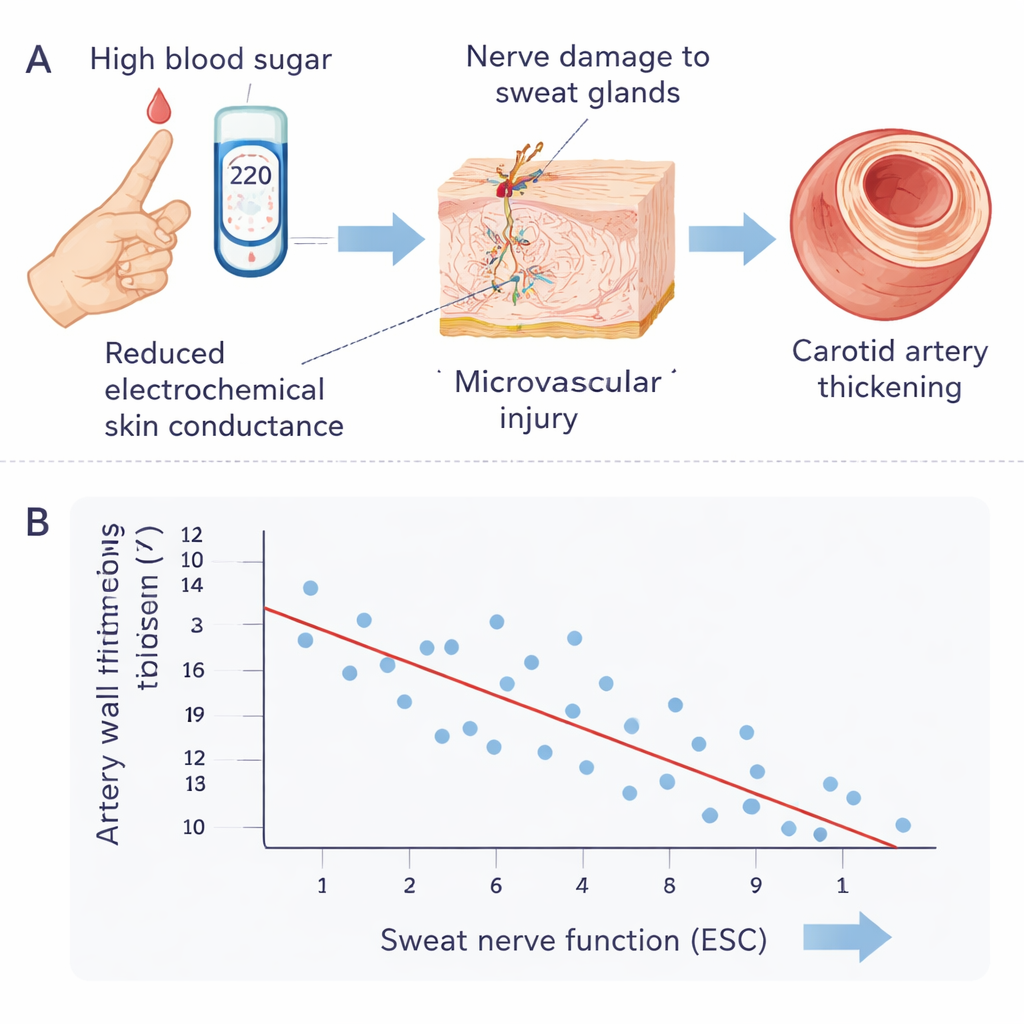
About 17% of participants showed abnormal sweat nerve function in their feet. These individuals tended to be older, had lived longer with diabetes, and were more likely to have high blood pressure. Importantly, they also had slightly thicker carotid artery walls and higher vascular age compared with those whose sweat nerve function was normal. When the researchers looked at the data more closely, they found that lower ESC in the feet was linked to higher cIMT and older vascular age. In other words, poorer sweat nerve function tracked with arteries that looked older and more worn, even after adjusting for factors like sex, body mass index, kidney function, and long-term blood sugar control.
How nerve and vessel damage may be connected
The findings support a broader picture in which damage to small nerves and small blood vessels develop hand in hand. Long-term high blood sugar leads to the buildup of harmful sugar-linked proteins, called advanced glycation end-products, which the study found to be higher in people with sudomotor dysfunction. These changes can impair blood flow to nerves, cause local oxygen shortages, and disturb the delicate lining of blood vessels. Over time, this environment may both injure sweat nerves in the feet and promote thickening of the carotid artery wall. The researchers emphasize that sudomotor dysfunction is more likely a marker of this long-term metabolic burden than a stand-alone cause of artery ageing.
What this could mean for people with type 1 diabetes
The study suggests that a simple, non-invasive sweat nerve test might help flag adults with type 1 diabetes who are at higher risk of early artery damage—even before they develop symptoms of heart disease. While the study cannot prove cause and effect, it shows that reduced sweat nerve function in the feet tends to appear alongside thicker carotid arteries and older vascular age. In practical terms, if a person with type 1 diabetes is found to have sudomotor dysfunction, it may be a signal for doctors to look more closely at their cardiovascular health and consider earlier or more intensive prevention strategies.
Citation: Naskręt, D., Gandecka-Pempera, A., Kulecki, M. et al. Sudomotor dysfunction reflects early atherosclerosis risk in adults with type 1 diabetes. Sci Rep 16, 5343 (2026). https://doi.org/10.1038/s41598-026-36292-w
Keywords: type 1 diabetes, sudomotor dysfunction, atherosclerosis, vascular age, small fiber neuropathy