Clear Sky Science · en
Clinical validation of a multisensor wearable device (SOUNDI) for the diagnosis of obstructive sleep apnea (OSA)
Why a Small Patch on Your Chest Matters at Night
Millions of people stop breathing repeatedly while they sleep without knowing it. This condition, called obstructive sleep apnea, can leave you exhausted, raise your blood pressure, and strain your heart. The gold-standard test requires a tangle of wires, belts, and tubes—hardly a recipe for a good night’s rest. This study introduces SOUNDI, a small wearable patch designed to spot sleep apnea at home with far less fuss, and tests whether it can match the performance of standard equipment used in sleep clinics.
A Common but Hidden Sleep Problem
Obstructive sleep apnea happens when the upper airway partly or completely collapses during sleep, causing repeated pauses in breathing. These events lower blood oxygen levels and trigger brief awakenings, often without the sleeper remembering them. Globally, nearly a billion middle‑aged adults are thought to have this condition, and about half have moderate to severe disease that should be treated. Yet many never receive a diagnosis, in part because traditional sleep testing requires specialized centers, overnight staff, and bulky devices that are uncomfortable and costly to deploy at scale.
From Wires and Tubes to a Single Wearable Patch
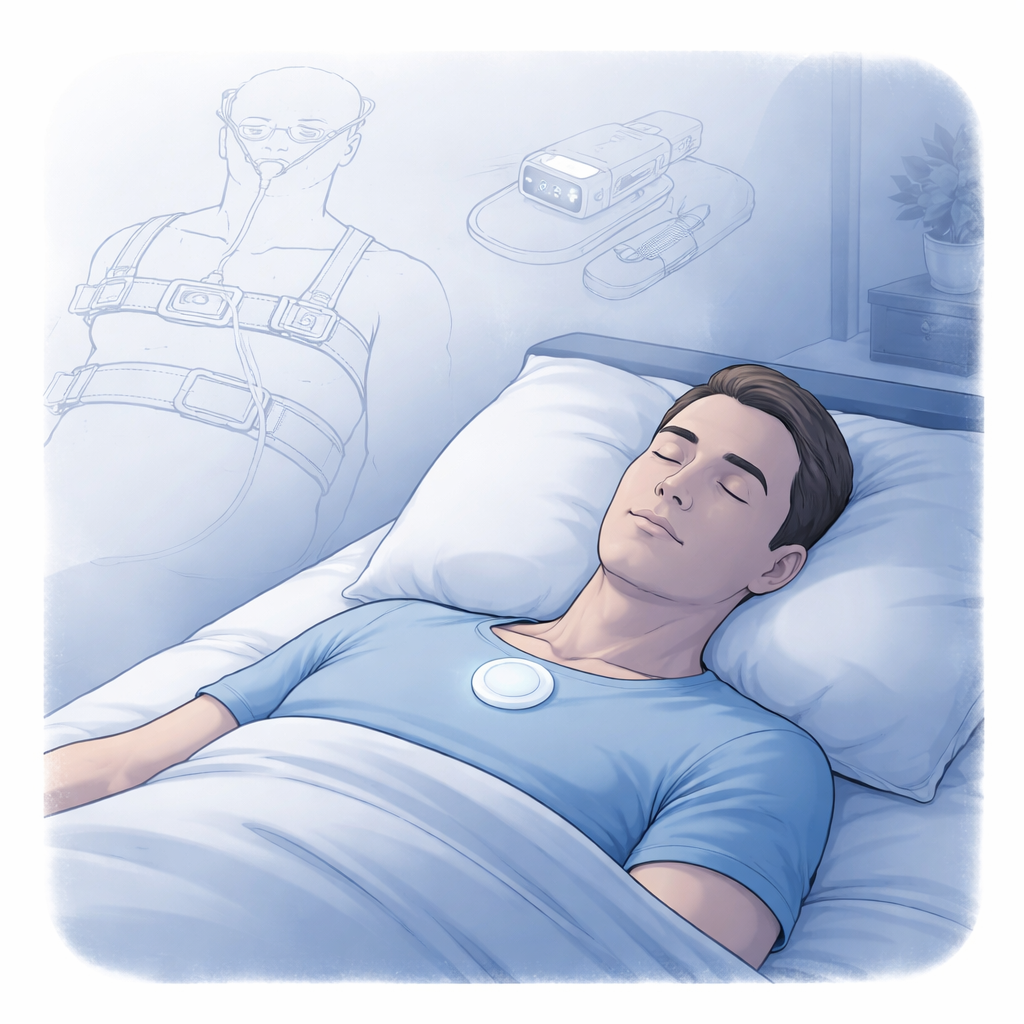
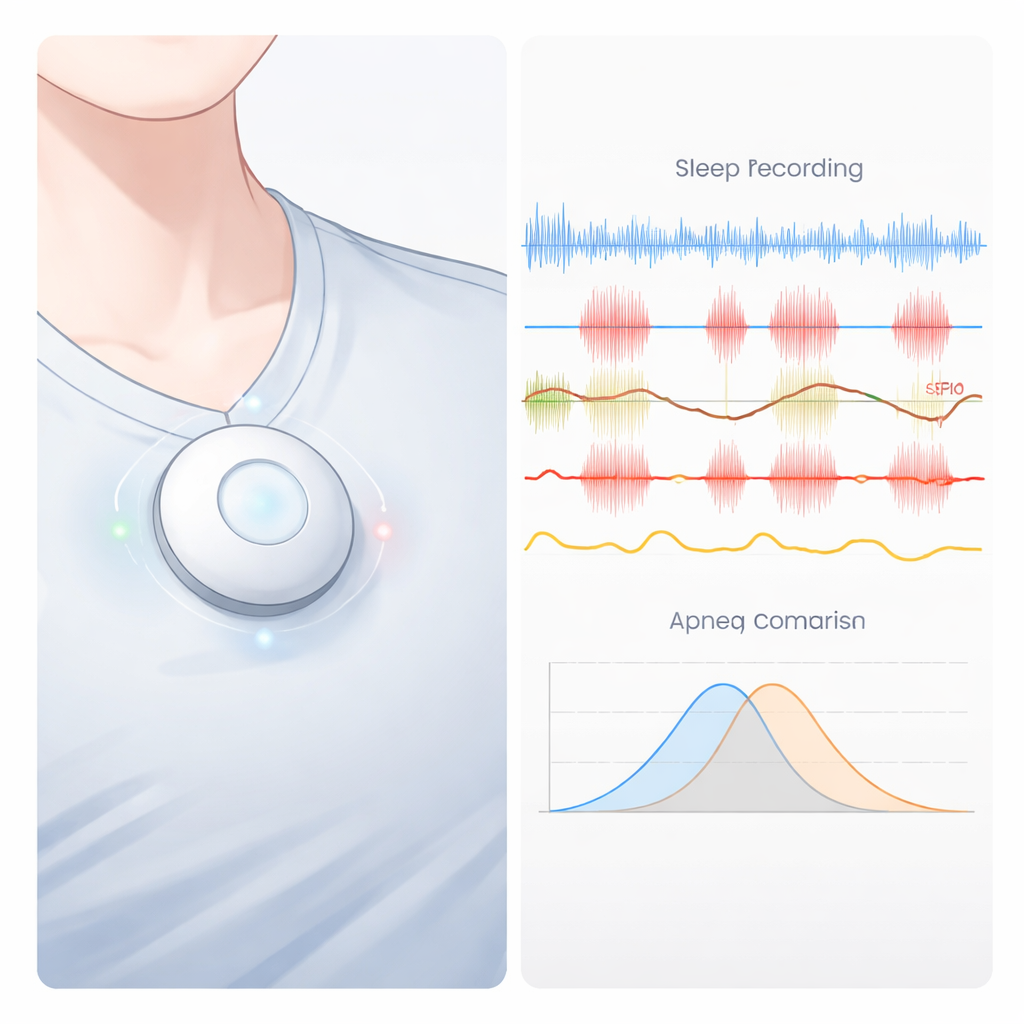
To tackle these barriers, the researchers evaluated SOUNDI, a round, lightweight device that sticks to the upper chest with a medical adhesive. Instead of multiple separate sensors, SOUNDI integrates optical, sound, and motion sensors in one housing, plus a simple heart lead. It listens to breathing sounds, tracks chest and abdomen movements, measures blood oxygen through light signals, and detects posture and movement. All of this information is processed by dedicated software to estimate key sleep and breathing measures that sleep doctors already rely on, but with far less equipment than traditional cardiorespiratory monitoring.
Putting SOUNDI to the Test in Real Patients
The study enrolled 50 adults referred to a sleep center in Milan because of suspected sleep apnea. Each participant spent a night at home wearing both the usual portable monitoring system—with belts around the chest and abdomen, a nasal cannula, and a finger oxygen sensor—and the SOUNDI patch at the same time. Specialists who scored the recordings did not know which device produced which data. The team then compared how closely SOUNDI’s measurements matched the standard system for the number of breathing events per hour, drops in oxygen, heart rate, and time spent sleeping on the back.
How Well Did the Patch Perform?
SOUNDI’s readings lined up remarkably well with the traditional device. The main index of disease severity—the number of apneas and shallow-breathing events per hour—was almost identical between the two systems, with extremely strong statistical agreement. Other measures, such as how often oxygen levels dipped and the average and minimum oxygen levels during the night, also matched closely. When the researchers used standard cutoffs to sort patients into no, mild, moderate, or severe sleep apnea, SOUNDI and the reference device agreed at a level considered robust for clinical use. Importantly, the patch showed high specificity and strong positive predictive value at commonly used thresholds, meaning that when it labeled someone as having sleep apnea, it was usually correct.
Comfort, Convenience, and What Comes Next
Beyond accuracy, patients strongly favored the wearable patch. Large majorities rated its comfort and ease of placement as top‑score and said they would gladly use it for several nights of monitoring, something that can be challenging with traditional gear. The study did note some limits: it did not use full laboratory polysomnography as a comparison, and it did not focus on people with specific medical conditions such as heart failure or chronic lung disease, who will need to be studied separately. Still, the results suggest that a small chest patch can deliver clinic‑grade information in everyday bedrooms.
What This Means for People Who Snore
For someone who snores loudly, wakes unrefreshed, or has been told they pause in breathing at night, the idea of spending a night wired up in a lab can be daunting. This research shows that a simple, comfortable chest patch can spot obstructive sleep apnea with accuracy close to today’s standard home equipment, while being easier to wear and potentially cheaper to deploy. If confirmed in larger and more diverse groups, devices like SOUNDI could help bring sleep apnea testing out of crowded clinics and into people’s homes, making it more likely that those at risk are identified and treated before serious health problems develop.
Citation: Salito, C., Bovio, D. & Lombardi, C. Clinical validation of a multisensor wearable device (SOUNDI) for the diagnosis of obstructive sleep apnea (OSA). Sci Rep 16, 5806 (2026). https://doi.org/10.1038/s41598-026-36290-y
Keywords: sleep apnea, wearable device, home sleep testing, snoring, sleep health