Clear Sky Science · en
Unveiling economic and humanistic burden of hematologic malignancies in Japan with personal health record data
Why this study matters for everyday life
Blood cancers, such as leukemia and lymphoma, are often discussed in terms of survival and drug prices. This study from Japan asks a different question: how much do these diseases quietly drain people’s energy, income, and well-being while they are trying to keep working and living normal lives? By linking health insurance records with smartphone surveys, the researchers reveal a hidden cost that extends far beyond hospital bills.
The growing challenge of blood cancers
Japan’s rapidly aging society is expected to see sharp increases in blood cancers by 2050. Thanks to modern treatments, many patients live longer, but they may spend years coping with fatigue, pain, repeated hospital visits, and other health problems. These long-term struggles can reduce how much people can work and how they feel day to day. Until now, most research in Japan focused on medical bills alone, leaving out lost income and the personal impact on quality of life. This study set out to capture the full picture for working-age patients.
Using smartphones to connect stories and numbers
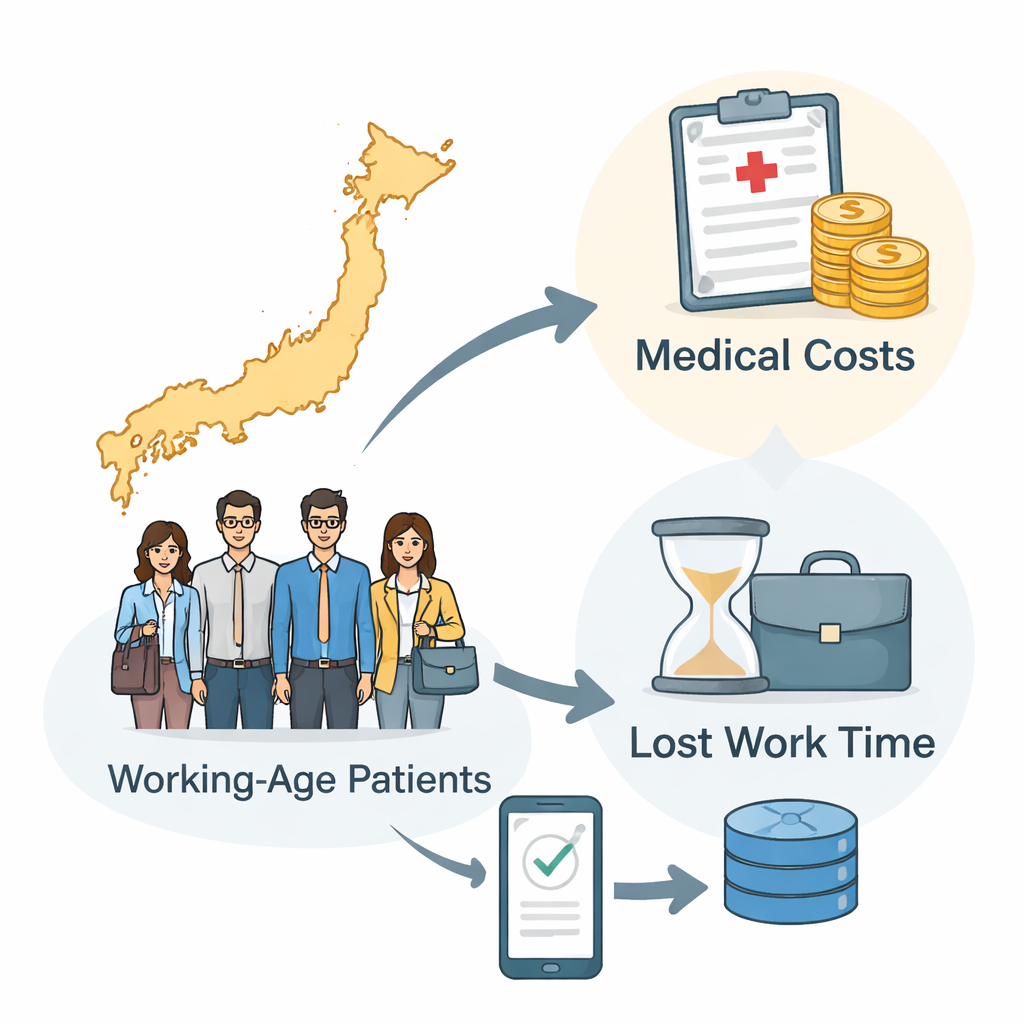
The team used a large employment-based insurance database covering about 20 million people in Japan and linked it to an app called Pep Up, which lets users answer health questionnaires on their phones. They identified 122 adults with various blood cancers who responded to surveys about work productivity and daily well-being, and then matched those answers to their medical claims. A much larger comparison group of nearly 2,000 similar patients who did not answer the survey helped the researchers check that the main findings were robust. Patients were also grouped as having “active” disease (recent cancer-related claims) or “non-active” disease (no recent claims but past history), to see how current treatment needs influenced costs and life impact.
The hidden price of working while sick
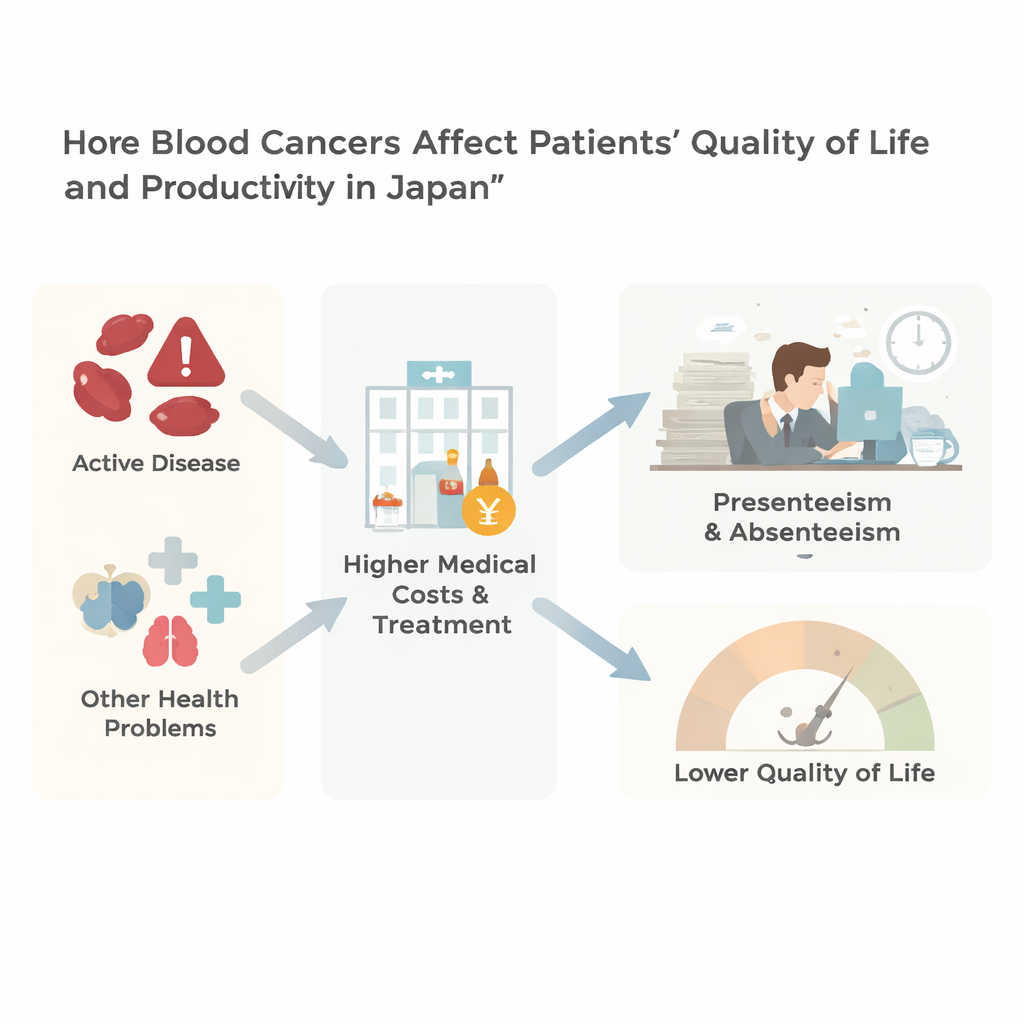
When the researchers added up yearly costs, they found that money lost from work limitations was larger than direct medical spending. On average, each surveyed patient generated about 12,800 US dollars in total yearly cost, but roughly two-thirds of this—over 8,000 dollars—came from lost productivity, not hospital or drug bills. Most of that loss was due to “presenteeism,” where people go to work but accomplish less because of symptoms such as fatigue, pain, or emotional distress. “Absenteeism,” or missed workdays, was smaller but still substantial. Patients in the active treatment group had higher total costs and more lost productivity than those whose disease was less active, and they were also more likely to have a medical certificate on record indicating extended time off work.
Quality of life behind the numbers
Beyond money, the study examined how patients felt using a standard quality of life test that measures mobility, self-care, usual activities, pain, and mood. Compared with the general Japanese population, patients with blood cancers scored noticeably lower, reflecting worse day-to-day well-being. The drop in quality of life was similar in size to changes considered clinically important in other chronic diseases. A striking pattern emerged: workers who reported large productivity losses had the poorest quality of life, even lower than people in the study who were not working at all. Younger patients and those with more other health problems tended to feel worse and lose more productivity, suggesting that trying to keep up with work during treatment can take a heavy toll.
What this means for patients and society
This research shows that the true burden of blood cancers in Japan is not just what appears on hospital invoices. Lost work time, reduced on-the-job performance, and diminished quality of life together form a substantial, and likely underestimated, social cost. Because the study focused on employed, app-using individuals, and did not include caregiver burden or people who had already left the workforce, the real impact is probably even greater. For a layperson, the bottom line is clear: better access to effective, potentially curative treatments and stronger workplace and social support could pay off not only in longer lives, but also in more productive, happier years for patients and their families.
Citation: Tsutsué, S., Suzuki, K., Lim, S. et al. Unveiling economic and humanistic burden of hematologic malignancies in Japan with personal health record data. Sci Rep 16, 6405 (2026). https://doi.org/10.1038/s41598-026-36287-7
Keywords: blood cancer, productivity loss, quality of life, health economics, Japan