Clear Sky Science · en
Effects of exogenous selenium treatment on the composition of endophytic bacterial and fungal communities in Amorphophallus muelleri
Why a fiber-rich root and a trace mineral matter
Konjac, a starchy plant used across Asia to make low-calorie noodles and dietary fiber supplements, has become a quiet star of the health-food world. At the same time, the trace mineral selenium is gaining attention for its role in human immunity and aging. This study brings those two threads together, asking a deceptively simple question with big implications for food and health: if farmers spray selenium onto konjac leaves, what happens not only to the selenium content of the crop but also to the hidden universe of microbes living inside the plant?
Boosting selenium inside the plant
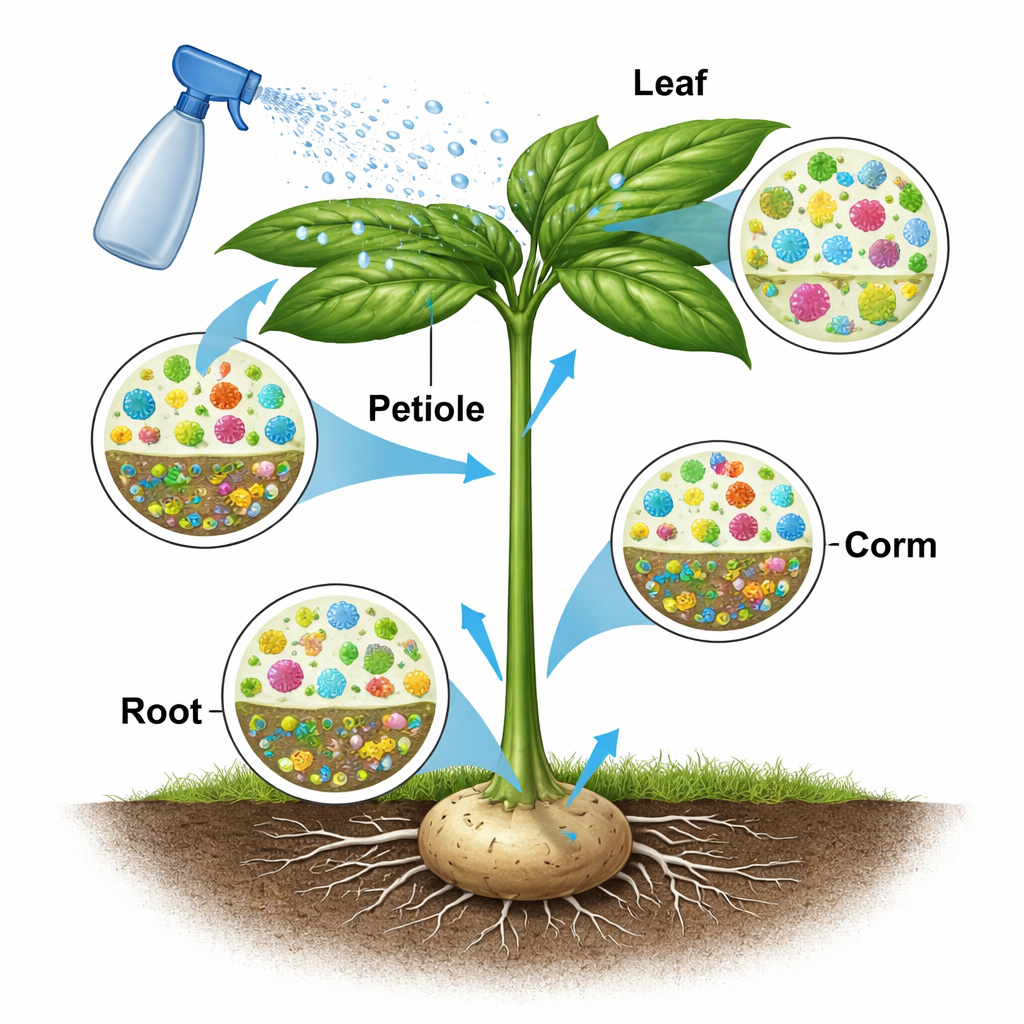
The researchers worked with Amorphophallus muelleri, an important konjac variety grown in China. They sprayed some fields with a dilute liquid selenium fertilizer and used plain water on others as a control. At harvest, they carefully separated the plants into four parts—corm (the swollen underground storage organ that is processed into food), roots, leaf stalks (petioles), and leaves—and measured how much selenium had accumulated in each. Foliar spraying turned out to be remarkably effective: selenium levels in treated corms, roots, and leaves were 83, 7, and 182 times higher, respectively, than in untreated plants, showing that a relatively modest spray can transform konjac into a selenium-enriched food.
The hidden partners inside konjac
Plants are not solitary organisms. They host rich communities of bacteria and fungi inside their tissues, known as endophytes, which can help them absorb nutrients, tolerate stress, and fend off disease. To see how these microscopic partners responded to selenium, the team extracted DNA from surface-sterilized pieces of each tissue and used high-throughput sequencing to read marker genes that identify bacteria and fungi. This allowed them to build a detailed census of which microbes lived where, how many distinct types were present, and how evenly those communities were distributed in treated versus untreated plants.
Roots and corms respond the most
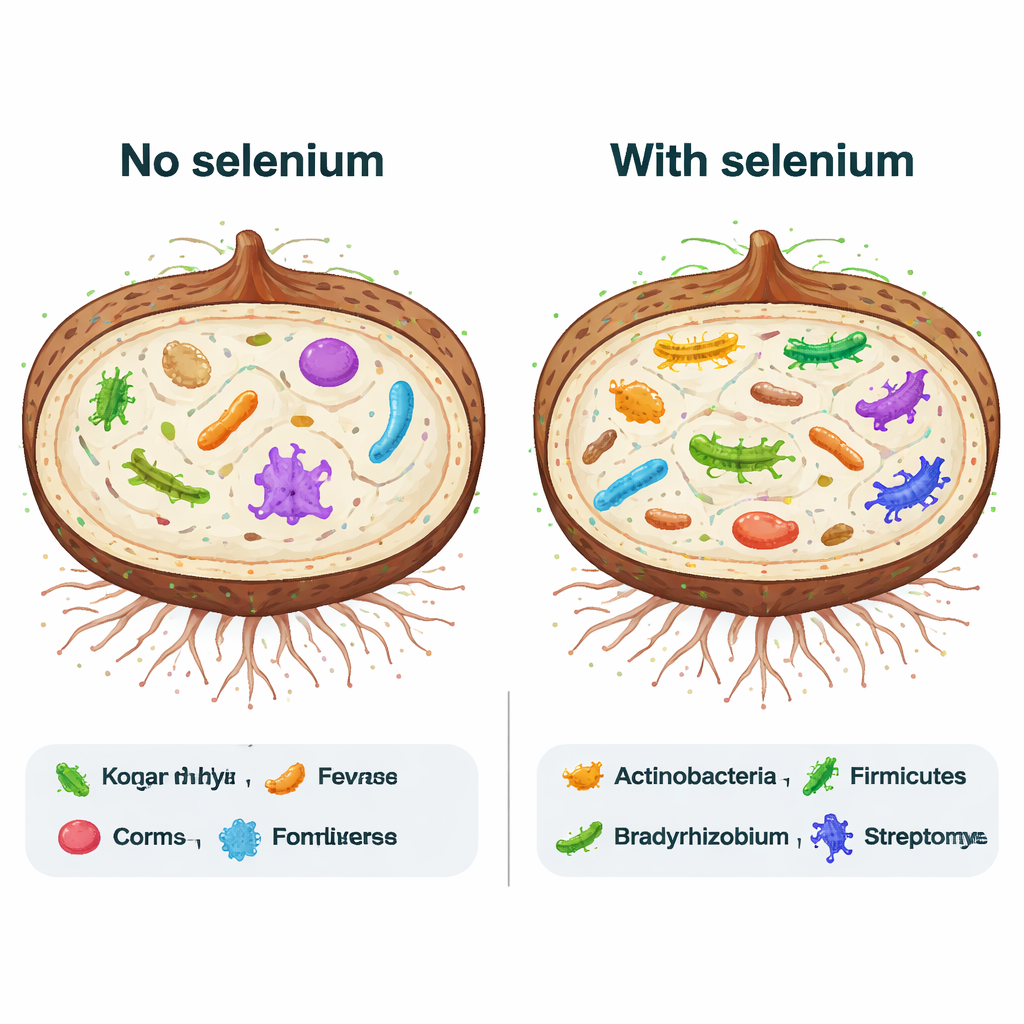
The most dramatic shifts occurred below ground. In corms and roots, the number of unique microbial types—especially fungi in the corm and both bacteria and fungi in the root—rose sharply after selenium treatment. Measures of diversity, which reflect both richness and balance among species, also climbed. Statistical analyses showed that the overall structure of microbial communities in selenium-treated roots differed strongly from that in control roots, while above-ground tissues changed less. These patterns suggest that the large jump in selenium inside corms and roots may be reshaping their internal environment, opening the door for a broader and more complex community of endophytes.
More helpful microbes and stronger connections
Looking more closely at which organisms became more common, the researchers found a tilt toward groups known to aid plant health. Beneficial bacterial phyla such as Actinobacteriota and Firmicutes increased in several tissues, along with well-studied genera including Bradyrhizobium, Mesorhizobium, Sphingomonas, and Streptomyces. These microbes can fix nitrogen, produce plant hormones, and secrete natural antibiotics that suppress disease. On the fungal side, certain groups that help decompose tough plant material and cycle nutrients also became more prominent. Network analyses—which map how often different microbes appear together—revealed that selenium-treated plants hosted denser webs of interaction. Within bacteria and within fungi, relationships were mostly cooperative, while links between bacteria and fungi tended to be competitive, a pattern thought to stabilize microbial communities and bolster plant resilience.
What this means for future foods
For non-specialists, the takeaway is straightforward: spraying selenium on konjac does more than fortify the plant with an essential human nutrient. It also nudges the plant’s internal microbiome toward greater diversity and a higher share of microbial “allies” that can support growth and disease resistance. While more work is needed to fine-tune selenium doses and confirm direct benefits for yield and plant health, this study suggests that carefully managed selenium fertilization could help produce konjac that is both richer in selenium for consumers and biologically better equipped to thrive in the field.
Citation: Yang, M., He, P., Wu, J. et al. Effects of exogenous selenium treatment on the composition of endophytic bacterial and fungal communities in Amorphophallus muelleri. Sci Rep 16, 5322 (2026). https://doi.org/10.1038/s41598-026-36279-7
Keywords: selenium-enriched crops, konjac microbiome, plant endophytes, beneficial soil bacteria, functional foods