Clear Sky Science · en
D-mannose alleviates rotenone-induced PD mouse model through microbiota-gut-brain axis
Sweet Molecule, Big Promise
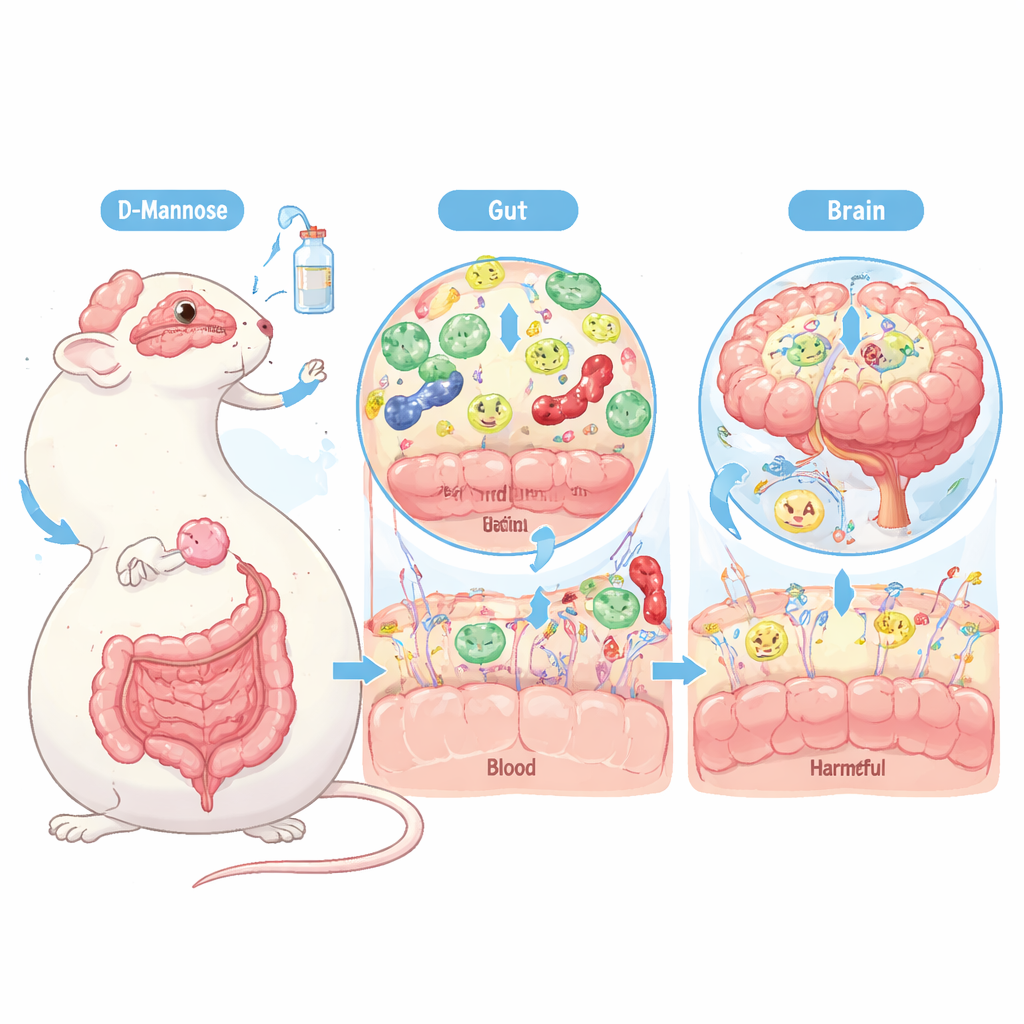
Parkinson’s disease is best known for causing tremors and slowness of movement, but many patients also struggle with stubborn constipation and other gut troubles years before diagnosis. This study explores an intriguing idea: could a simple sugar called D-mannose—already sold as a dietary supplement—ease Parkinson’s-like symptoms by calming inflammation in the gut and brain and restoring a healthier community of gut microbes in a mouse model of the disease?
Parkinson’s Starts Beyond the Brain
Parkinson’s disease affects millions of older adults and currently has no cure. Standard drugs help movement but do little to halt the ongoing loss of dopamine-producing brain cells. At the same time, many people with Parkinson’s suffer from chronic constipation and other digestive problems, hinting that the disease involves more than just the brain. Growing evidence points to a two-way “gut–brain” conversation, in which changes in gut bacteria and long-lasting inflammation in the intestines may help drive brain damage over time.
A Gentle Sugar Put to the Test
D-mannose is a naturally occurring sugar found in fruits and plant materials and is already used to help prevent urinary tract infections. It is considered safe, well tolerated, and does not strongly disturb normal metabolism, making it an attractive candidate for long-term use. In this study, researchers fed mice the pesticide rotenone, a well-established way to trigger Parkinson’s-like movement problems and gut dysfunction. After four weeks of rotenone, some mice received D-mannose in their drinking water for two additional weeks. The team then measured movement, gut function, gut bacteria, inflammation, and markers of brain health.
Better Movement and a Calmer Gut
Rotenone-treated mice developed classic Parkinson’s-like issues: they moved more slowly, were weaker on grip and balance tests, and showed sluggish bowel activity with shortened colons. When these mice drank D-mannose, their body weight loss eased, movement and grip strength improved, and they performed better on tasks that measure coordination and agility. Their gut function also rebounded—the colon lengthened, food moved through the intestines faster, and stool passed more normally. Under the microscope, the colon lining showed less injury and scarring, and chemical tests revealed lower levels of inflammatory molecules and bacterial toxins, suggesting that D-mannose helped restore the gut’s protective barrier.
Healthier Microbes and Protected Brain Cells
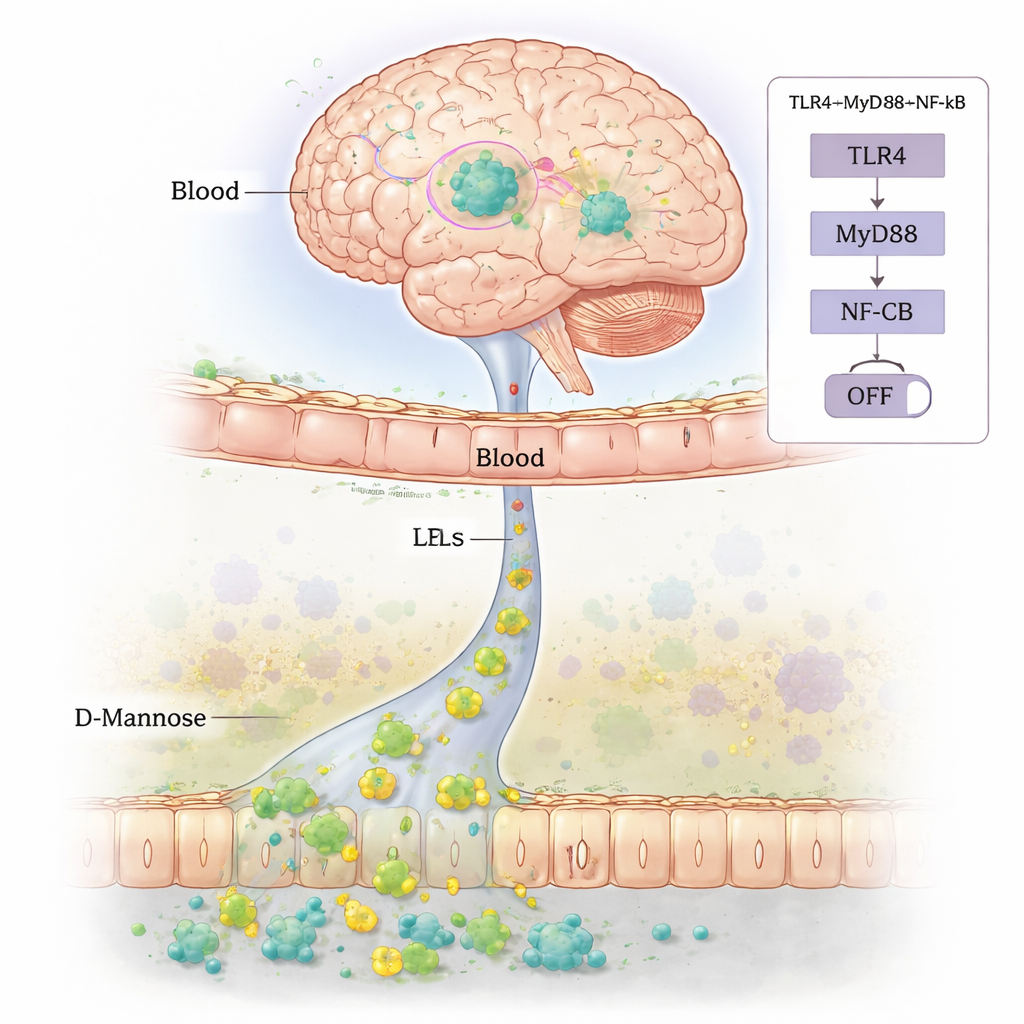
The researchers next examined the tiny inhabitants of the mice’s intestines. Rotenone disrupted the normal mix of gut bacteria, reducing overall variety and favoring groups linked to inflammation. D-mannose partially reversed these changes, nudging the microbial community back toward a healthier balance. At the same time, signs of inflammation in a key movement-related brain region, the substantia nigra, were reduced. Mice that received D-mannose had more surviving dopamine-producing neurons and fewer activated support cells (microglia and astrocytes) that usually swarm during brain inflammation. Levels of inflammatory messengers and a bacterial toxin called LPS were lower in the blood and brain, and proteins that help seal the blood–brain barrier were better preserved.
Quieting an Inflammatory Alarm Pathway
To understand how these changes might be linked, the team focused on a molecular alarm system inside immune cells. This system, built around the proteins TLR4, MyD88, and NF-κB, switches on when it detects bacterial products like LPS and then drives a strong inflammatory response. In rotenone-treated mice, this pathway was highly active in the brain. D-mannose dampened the signal: levels of TLR4, MyD88, and active NF-κB all fell, matching the drop in inflammation and cell damage. The findings suggest that by reshaping gut microbes, reinforcing the intestinal and brain barriers, and cutting down the flow of bacterial toxins into the bloodstream, D-mannose helps turn down this inflammatory alarm.
What This Could Mean for People
This work in mice does not prove that D-mannose can treat Parkinson’s disease in humans, but it highlights a compelling new direction. Rather than focusing solely on the brain, the study supports the idea that protecting gut health and calming the gut–brain conversation may help preserve vulnerable nerve cells. Because D-mannose is already widely used as a supplement and appears safe, it could one day become part of a broader strategy to manage Parkinson’s symptoms—if future clinical studies confirm that the benefits seen in mice translate to people.
Citation: Hong, Y., Ge, C., Jin, J. et al. D-mannose alleviates rotenone-induced PD mouse model through microbiota-gut-brain axis. Sci Rep 16, 5680 (2026). https://doi.org/10.1038/s41598-026-36272-0
Keywords: Parkinson’s disease, gut-brain axis, D-mannose, gut microbiota, neuroinflammation