Clear Sky Science · en
First record of Penicilliopsis clavariiformis Solms. on seeds of Diospyros ferrea (Willd.) Bakh. from the Northern Western Ghats, India
A Hidden Story Inside Forest Seeds
Deep in the misty hills of India’s Western Ghats, a microscopic drama is unfolding inside tree seeds. This study reveals how a rare fungus quietly colonizes the seeds of Diospyros ferrea, an evergreen tree valued for its hard wood and healing compounds. By uncovering this unseen partner—sometimes a destroyer, sometimes a potential source of useful chemicals—the researchers show that even familiar forests still hold surprising secrets worth exploring.
The Tree Behind Ebony Wood and Folk Medicine
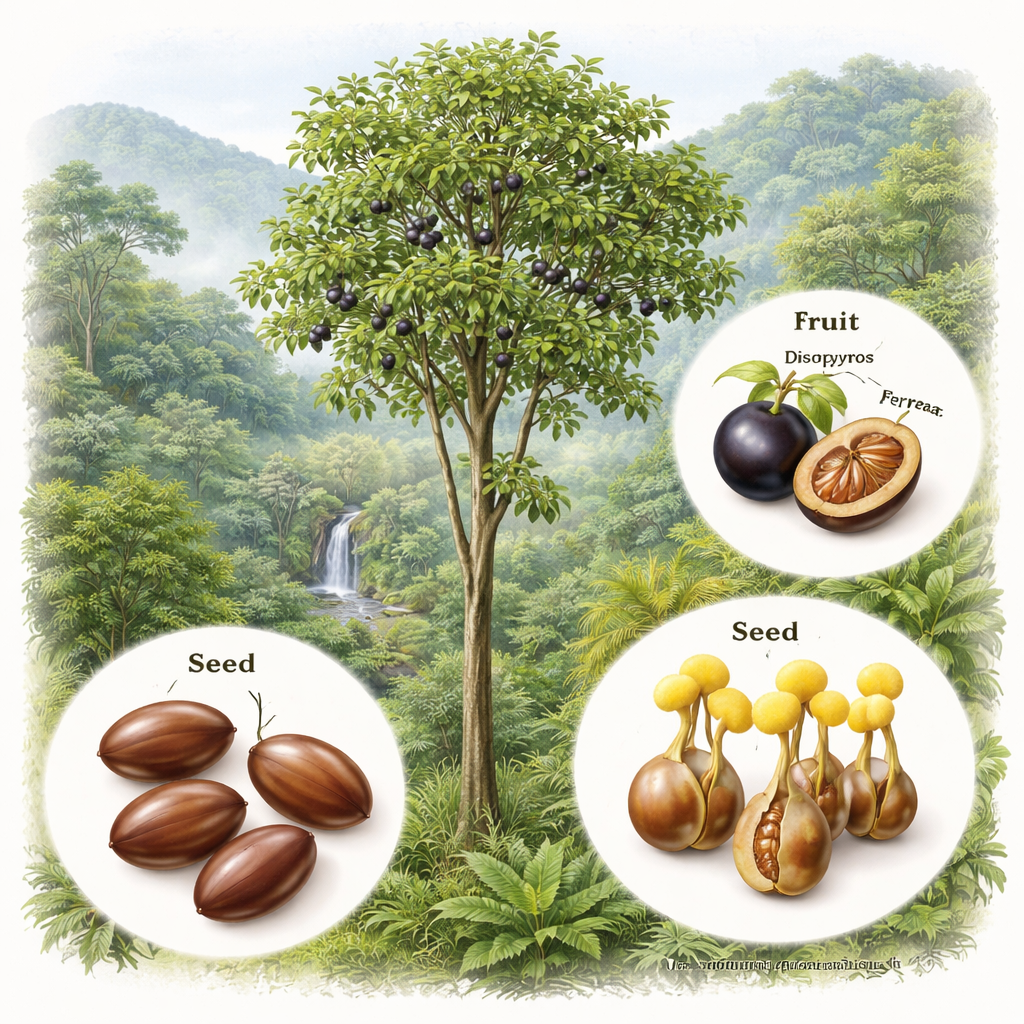
Diospyros ferrea belongs to the same group of trees that give us ebony, one of the world’s densest and most prized woods, used in luxury furniture and musical instruments. In parts of India, this tree is also tied to traditional medicine: its roots and leaves are used for treating indigestion, inflammation, wounds, and infections. Modern studies back up some of this folk wisdom, finding anti-inflammatory, antibacterial, antioxidant, and even anticancer activity in compounds extracted from related Diospyros species. Despite this ecological and economic importance, the seeds of these trees face constant threats from fungal diseases that can quietly weaken forests by damaging the next generation of trees.
A Rare Fungus with a Taste for Seeds
The fungus at the center of this work, Penicilliopsis clavariiformis, is no ordinary mold. It forms striking, yellow, club-shaped structures and can tolerate salty conditions that would halt many other fungi. Earlier reports had found it on seeds and fruits of other Diospyros trees in India and Africa, where it can cause seed rot and threaten rare species. Until now, however, it had never been formally recorded on Diospyros ferrea. The authors collected fruits and seeds from Manoli Reserve Forest in the Northern Western Ghats and used standard methods to surface-sterilize and culture any fungi growing inside. From the infected seeds, they isolated colonies that formed the characteristic yellow, club-like growths of P. clavariiformis.
Looking Closely: Shape, Color, and DNA
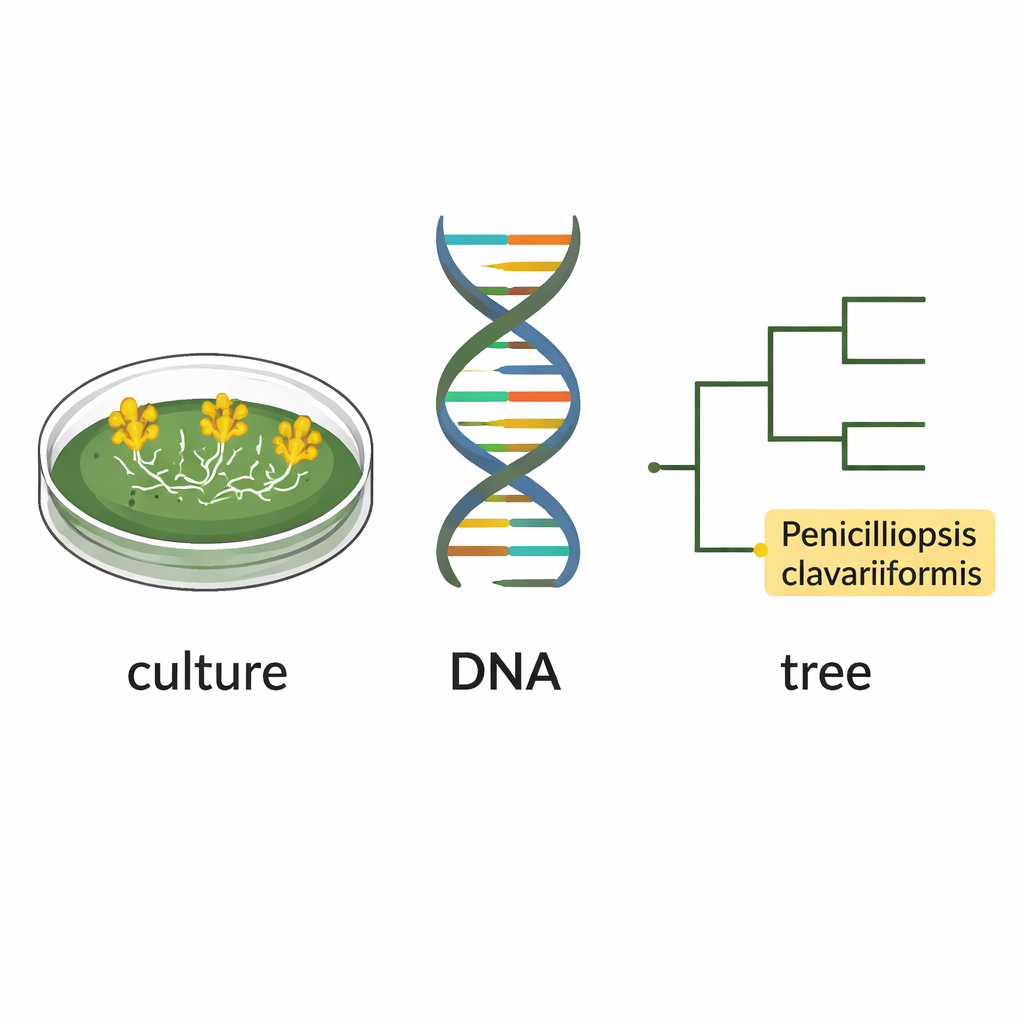
To be sure of the fungus’s identity, the team did more than simply glance at its color. Under the microscope, they examined its tiny structures: slender stalks with ring-like divisions, branching tips that produce chains of spores, and small, oval spores that stain a distinctive blue. These features matched earlier descriptions of P. clavariiformis from other Diospyros hosts. The researchers then extracted DNA from the fungal culture and amplified a commonly used genetic marker, the internal transcribed spacer (ITS) region. Comparing this sequence against an international database showed more than 99% similarity with confirmed P. clavariiformis entries, giving strong genetic support that they were dealing with the same species.
Placing the Fungus on the Tree of Life
Beyond matching a name, the scientists wanted to see where this fungus fits on the broader fungal family tree. Using ITS sequences from 37 related fungi, they built a branching diagram showing evolutionary relationships. The new isolate from D. ferrea clustered tightly with previously authenticated P. clavariiformis strains and formed a clearly separate group from closely related molds such as Penicillium. High statistical support for these branches confirmed both the species identity and the distinct status of the genus Penicilliopsis within its family. This careful combination of visible traits and DNA evidence reflects current best practice in fungal taxonomy.
Why Seed Fungi Matter for Forests
The discovery of P. clavariiformis on D. ferrea seeds adds another link in a pattern: so far, this fungus seems to associate only with trees in the Diospyros group and prefers seeds over soil. That narrow lifestyle hints at a long, specialized relationship with its hosts. For conservationists and forest managers, this matters because seed-inhabiting fungi can quietly reduce seed viability, limit natural regeneration, and threaten rare or economically important trees. At the same time, Penicilliopsis species produce powerful chemicals, including toxins and compounds with potential antiviral activity. Documenting where these fungi live, how they spread, and what they do is therefore important both for protecting forests and for tapping new sources of bioactive molecules.
A New Piece in the Forest Puzzle
For non-specialists, the main message of this study is straightforward: even common-looking seeds in a well-known forest can hide rare organisms that shape the future of the trees around them. By firmly identifying Penicilliopsis clavariiformis on the seeds of Diospyros ferrea, the researchers expand the known range of this fungus and highlight the Western Ghats as a hotspot of overlooked fungal diversity. Their work lays a foundation for future studies on how such fungi affect seed health and forest regeneration—and suggests that careful, science-based exploration of these hidden worlds may yield both better conservation strategies and new leads for medicine.
Citation: Bagam, P.H., Magdum, A.B., Shinde, K.V. et al. First record of Penicilliopsis clavariiformis Solms. on seeds of Diospyros ferrea (Willd.) Bakh. from the Northern Western Ghats, India. Sci Rep 16, 7656 (2026). https://doi.org/10.1038/s41598-026-36254-2
Keywords: seed fungi, forest health, Diospyros ferrea, Penicilliopsis clavariiformis, Western Ghats