Clear Sky Science · en
Cross sectional analysis of emotion regulation, psychological distress and well being of emerging adult students in Urban India post COVID 19
Why the Feelings of Young Adults Matter Now
Across the world, young adults are grappling with the emotional aftermath of the COVID-19 pandemic, and India is no exception. With the country home to one of the largest youth populations, how students cope with stress, sadness, and pressure has sweeping consequences for families, campuses, workplaces, and society at large. This study takes a close look at how college-going young adults in India’s biggest cities handle their emotions—and how those choices are tied to their mental health in the post-pandemic world.
How Students Try to Manage Difficult Emotions
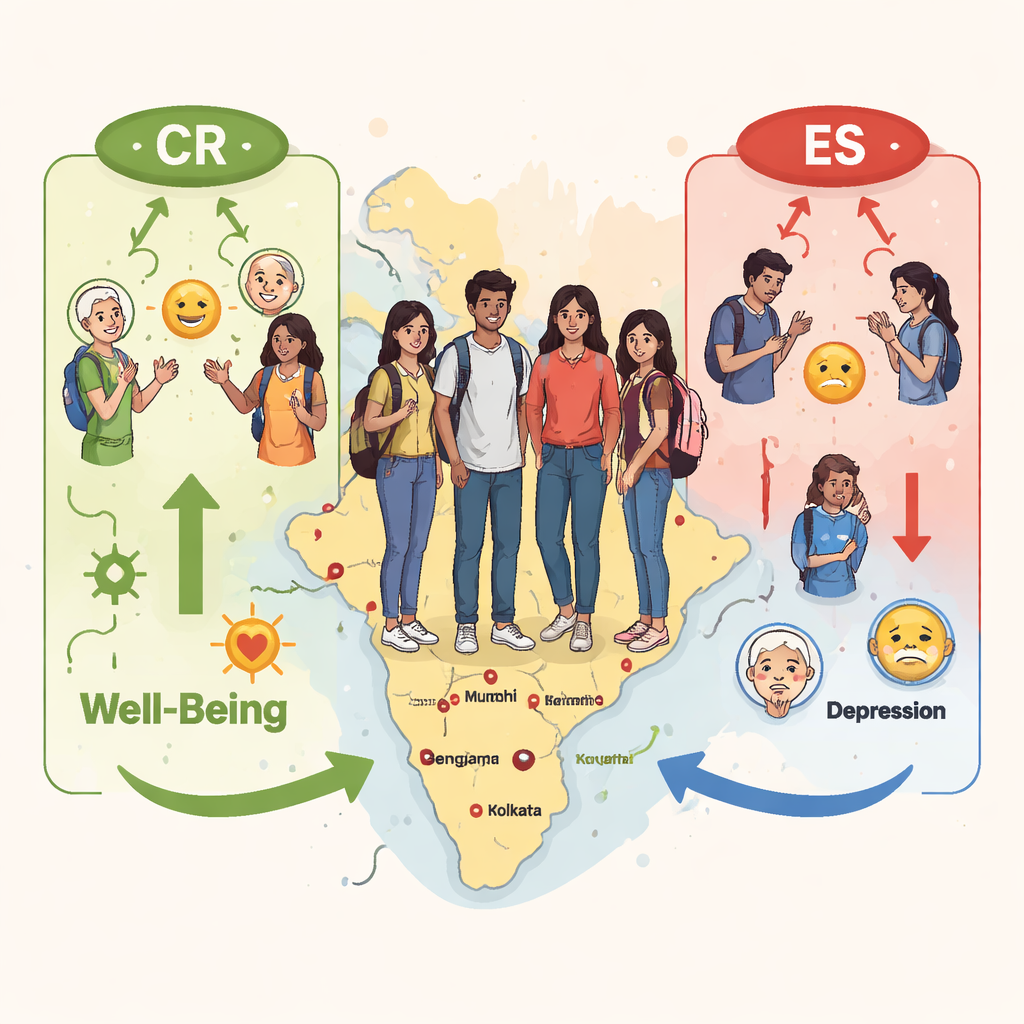
The researchers focused on two everyday ways people manage their feelings. The first, called “reframing,” involves changing how you think about a situation so it feels less threatening or more manageable—for example, viewing a tough exam as a challenge to grow rather than a disaster. The second, “holding it in,” means hiding what you feel on the outside, even if you are boiling on the inside. To explore these patterns, the team surveyed 1,628 students aged 18 to 29 from universities and colleges across all Tier-1 cities in India, including Delhi, Mumbai, Bengaluru, Chennai, Hyderabad, and others. Students filled out standard questionnaires that measured both their emotion habits and their levels of anxiety, depression, life satisfaction, and overall sense of well-being.
What the Study Revealed About Young Minds
The findings tell a mixed story of resilience and risk. Many students reported using reframing fairly often, and this strategy was linked to better emotional control, more positive feelings, and stronger overall mental health. At the same time, a worrying 42% of participants showed medium to high levels of “holding it in.” This habit was tied to greater anxiety and depression, more feelings of losing control, weaker emotional bonds with others, and lower life satisfaction. In simple terms, students who try to quietly swallow their feelings tend to suffer more inside, even if they look fine on the surface.
Differences Across Gender, Age, and Place
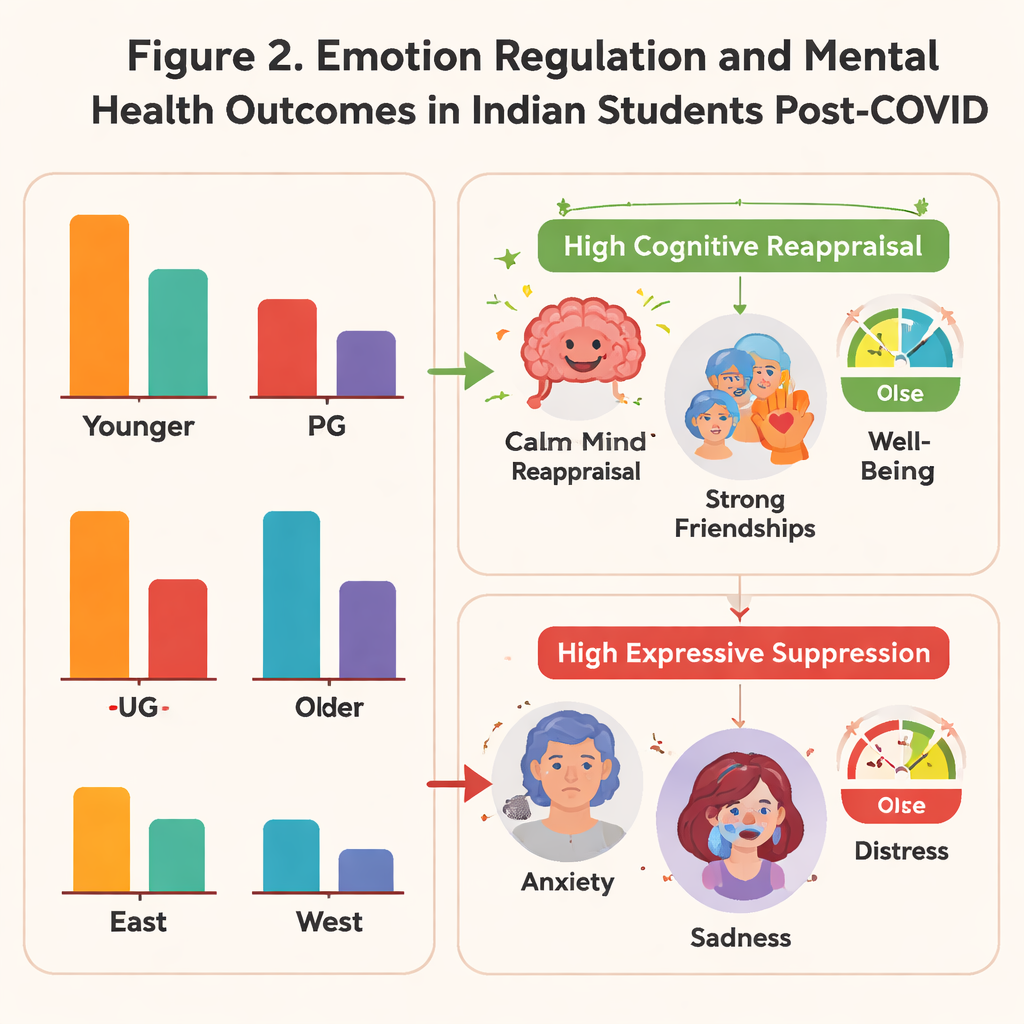
The study also uncovered meaningful differences between groups. Female students reported using reframing more than males but still showed higher anxiety, depression, and psychological distress overall, suggesting that their emotional load may be heavier even when they use healthier strategies. Younger students (18–20) and undergraduates used reframing less often than older students and postgraduates, hinting that emotional skills may grow with age and experience. City and regional differences emerged as well: for example, students in Hyderabad reported lower use of both reframing and holding it in, while students in Chennai, Pune, and Bengaluru showed higher levels of emotional suppression. Students from India’s western zone reported more frequent reframing than those from the east, reflecting how local culture and social norms shape how people deal with feelings.
How Emotion Habits Shape Mental Health
When the researchers compared emotion habits with mental health scores, the pattern was clear. Students who often reframed difficult situations tended to have more positive moods and stronger overall mental health, even though this strategy only weakly reduced anxiety and depression directly. In contrast, students who regularly hid their emotions were more likely to feel anxious, depressed, overwhelmed, and disconnected from others. These links held true even after the immediate crisis of COVID-19, suggesting that the pandemic amplified, rather than fundamentally changed, long-standing emotional habits and inequalities across gender and region.
What This Means for Students and Society
For a layperson, the message is straightforward: how young adults handle their emotions matters deeply for their mental health, and simply bottling up feelings can be harmful. In post-COVID urban India, many students are still struggling beneath the surface, especially young women and those in certain regions. The authors argue that colleges, families, policymakers, and mental health professionals need to work together to teach healthier skills like reframing, encourage open conversations about emotions, and design support systems that reflect cultural and regional realities. Helping students learn to rethink, rather than suppress, their feelings may be a key step toward a healthier, more resilient generation.
Citation: Kakollu, S., Haroon, A.P. & Joseph, S.D. Cross sectional analysis of emotion regulation, psychological distress and well being of emerging adult students in Urban India post COVID 19. Sci Rep 16, 6017 (2026). https://doi.org/10.1038/s41598-026-36253-3
Keywords: youth mental health, emotion regulation, college students India, post COVID stress, cognitive reappraisal