Clear Sky Science · en
Correlation analysis of the leaf color presentation of three red leaved cultivars of Aglaonema modestum
Why some houseplants glow red instead of green
Walk into any plant shop and you’ll see eye-catching houseplants with leaves splashed in bright reds and pinks. These colorful varieties of Aglaonema, a popular low-light foliage plant, owe their appeal to their unusual leaf colors. Yet growers often struggle to keep those reds from fading back to plain green. This study asks a simple question with big implications for indoor gardening and ornamental plant production: what’s happening inside the leaves that makes some plants stay vivid red while others lose their color?
Colorful leaves and what makes them special
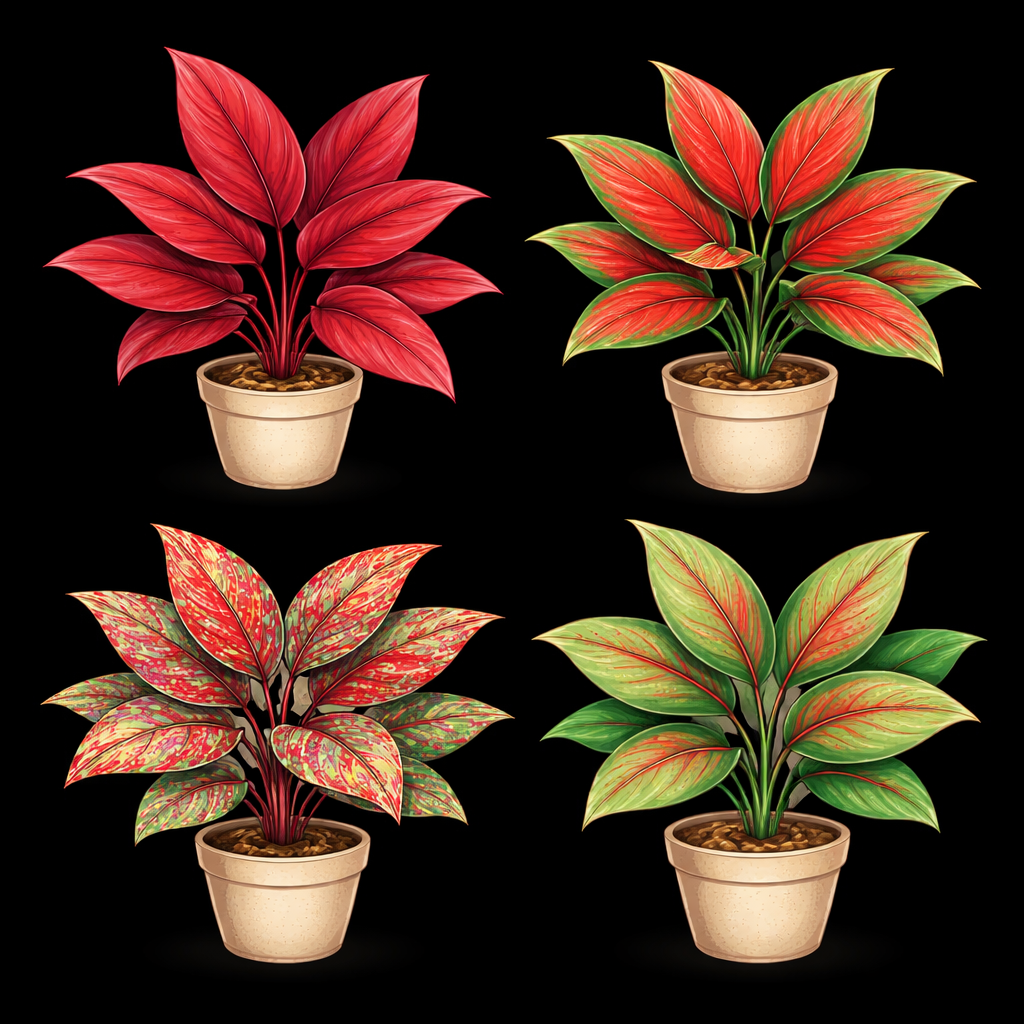
Aglaonema modestum is prized for thriving in shade and offering a rainbow of leaf patterns. The researcher focused on three red-leaf cultivars—Big Apple, China Red, and Redder Valentine—that together show four distinct leaf color types, from deep crimson to mostly green. All plants were grown under the same controlled greenhouse conditions, so differences in color would mainly reflect internal leaf chemistry rather than weather or light extremes. The goal was to link what we see with the naked eye—how bright, red, or yellow the leaves look—to the pigments and mineral nutrients hidden inside the tissue.
The pigments behind red and green
Leaf color depends largely on three families of pigments: chlorophylls that look green, carotenoids that appear yellow to orange, and anthocyanins that give red and purple tones. By carefully extracting and measuring these pigments, the study found that anthocyanins were the key to strong red color. The reddest leaves (one color type of Redder Valentine, called RI) had the highest anthocyanin levels and a high ratio of anthocyanin to chlorophyll. In contrast, the greenest leaves (RII) were packed with chlorophyll and had very little anthocyanin. Interestingly, the total amount of pigment was less important than their balance: plants with relatively more anthocyanin and less chlorophyll looked redder and more saturated, while those with abundant chlorophyll and little anthocyanin appeared greener even when other pigments were present.
The hidden role of mineral nutrients
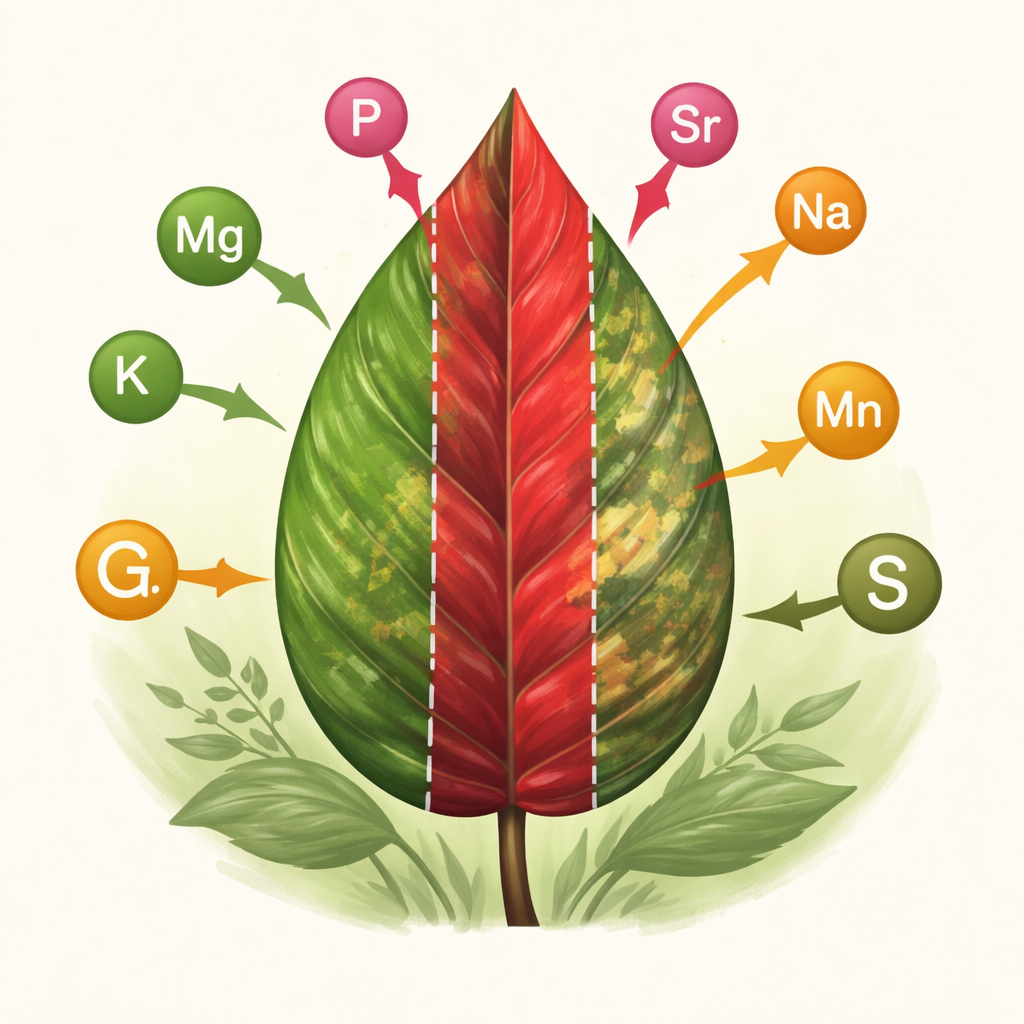
Colorful leaves are not just about pigments; they also reflect how plants take up and use mineral nutrients. The study measured a wide range of elements in the leaves, from common nutrients like nitrogen, phosphorus, potassium, and magnesium to trace metals and even tiny amounts of potentially toxic elements. Several nutrients stood out. Higher levels of phosphorus, magnesium, vanadium, copper, potassium, sodium, and sulfur tended to go hand in hand with higher anthocyanin content and stronger red color. On the other side, the elements manganese and strontium were linked to higher chlorophyll and carotenoid levels and lower anthocyanin, tilting leaves toward greener tones. Together, these patterns suggest that the plant’s nutrient balance can nudge its pigment system toward either red or green.
Interacting factors that shape leaf color
The study also checked the internal acidity (pH) of the leaf sap, because anthocyanin color can shift with pH. In these Aglaonema leaves, however, pH varied only slightly among color types and showed weak links to most color traits, suggesting it is not the main driver of the observed differences. Instead, leaf appearance emerged from a web of connections: as anthocyanin levels rose, chlorophyll and carotenoids often declined, and the ratios between pigments shifted. Nutrients such as potassium and sodium were associated with more anthocyanin and less chlorophyll, while manganese and strontium showed the opposite pattern. These correlations paint a picture in which mineral nutrition and pigment metabolism are tightly intertwined, with small shifts in nutrient supply potentially tipping the balance between red and green.
What this means for growers and plant lovers
For gardeners and commercial growers, the message is both promising and cautious. The work clearly shows that the most striking red Aglaonema leaves belong to plants with high anthocyanin levels and a favorable balance between red and green pigments, and that certain nutrients tend to accompany that redder look. However, the study was correlative: it mapped patterns, not cause-and-effect. The author emphasizes that before anyone rewrites fertilizer recipes, controlled experiments are needed to deliberately change levels of elements like potassium, phosphorus, magnesium, copper, manganese, and strontium and then track how leaf color responds. Still, this research offers a scientific roadmap for future trials and hints that, one day, fine-tuned nutrition could help keep red-leaf houseplants glowing reliably bright on windowsills and in greenhouses alike.
Citation: Hui, J. Correlation analysis of the leaf color presentation of three red leaved cultivars of Aglaonema modestum. Sci Rep 16, 5683 (2026). https://doi.org/10.1038/s41598-026-36250-6
Keywords: ornamental houseplants, leaf color, anthocyanins, mineral nutrition, Aglaonema modestum