Clear Sky Science · en
Psychological outcomes and resilience among evacuees and non-evacuees following the October 7 Hamas attack in Israel
Why this story matters
The Hamas attack on Israel on October 7, 2023, shook an entire country in a single day. Beyond the tragic loss of life and the horrifying violence, more than a quarter of a million people were forced to leave their homes. This study looks at how such a national shock affects the minds and daily lives of ordinary people—those who fled and those who stayed—and what inner strengths and social supports help them keep going.
Two groups living through the same disaster
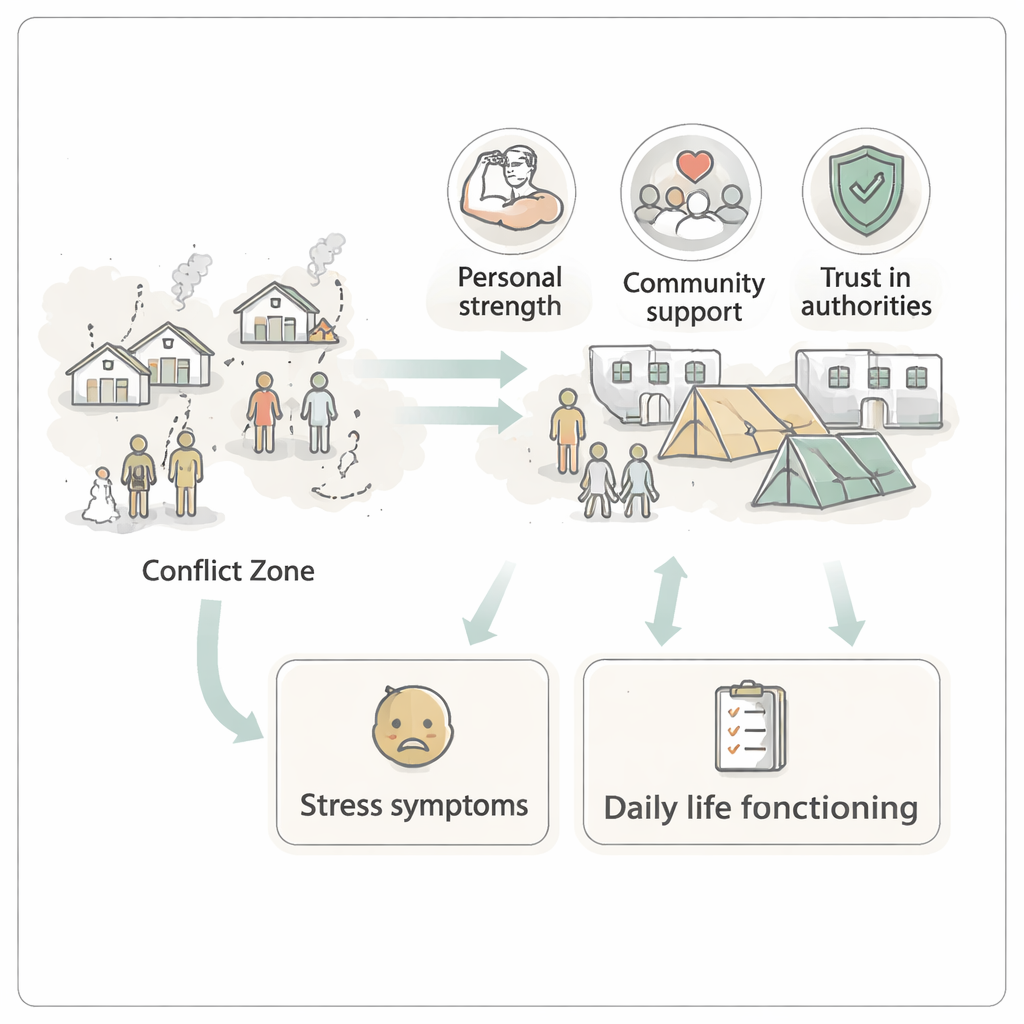
Researchers surveyed 636 Israeli Jewish adults a few months after the attack. About half had been evacuated from their homes near conflict zones, often with their entire families; the rest stayed in place. Both groups had lived through a time of sirens, shelters, ongoing fighting, and a constant flow of grim news. The team wanted to compare these two groups in terms of trauma exposure, symptoms of post-traumatic stress, and how well they were functioning in everyday life. They also measured three possible "buffers" against harm: a person’s own resilience (their ability to cope and adapt), the strength of their community support, and how much they trusted government and local authorities.
The heavy toll on mental health
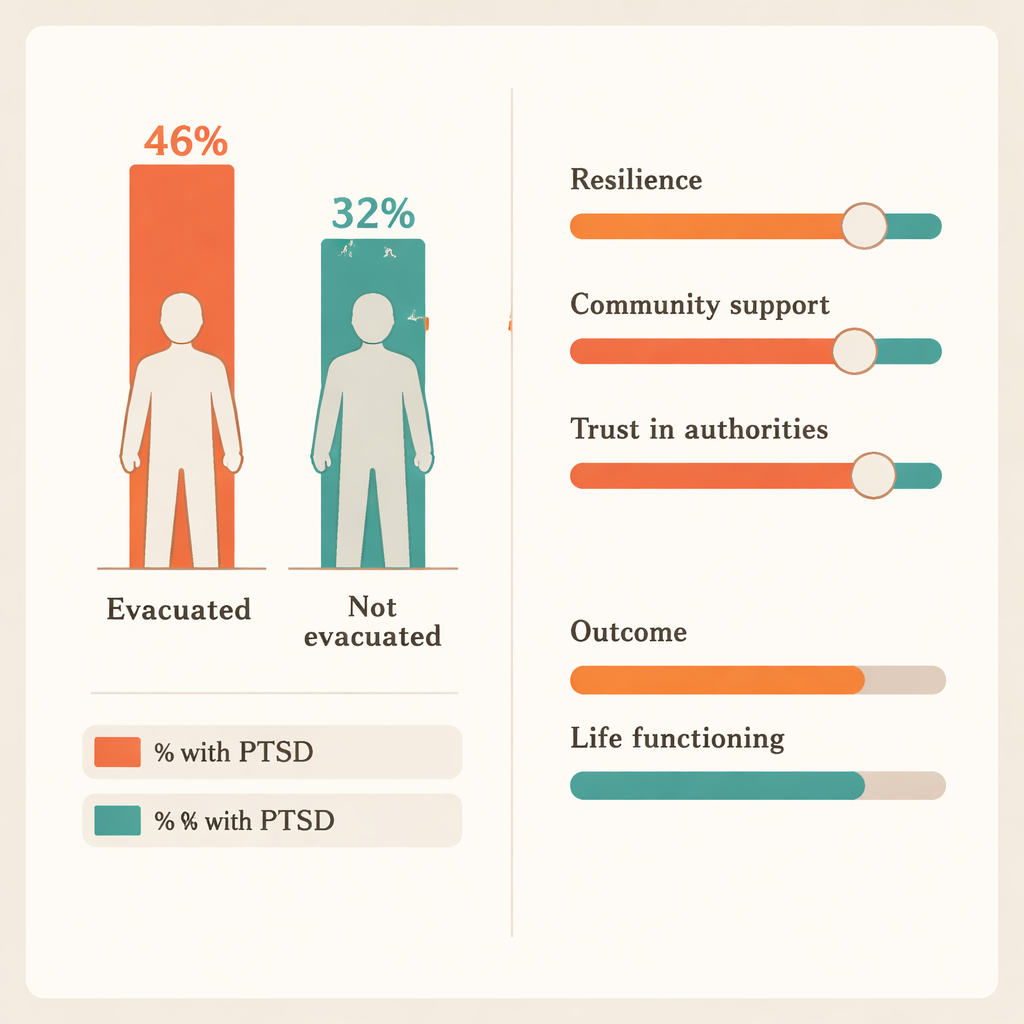
The results showed a striking level of psychological strain. Almost four in ten participants met the screening criteria for post-traumatic stress disorder (PTSD). Among evacuees, the figure was even higher—nearly one in two—while about one in three non-evacuees reached that threshold. Evacuees reported more direct encounters with danger and loss: hiding from gunfire and rockets, seeing violent scenes, knowing people who were injured, killed, or kidnapped, and in some cases having their homes hit. Not surprisingly, this greater exposure was tied to stronger post-traumatic stress symptoms and more difficulties in work, relationships, and daily tasks such as managing finances or social life.
Strength inside people and around them
Despite these hardships, evacuees and non-evacuees did not differ in their personal resilience or in how supportive they felt their communities were. On average, people in both groups believed they had inner coping resources and could count on neighbors and local networks if needed. In statistical analyses, higher personal resilience clearly stood out as a protective factor: people who rated themselves as more resilient reported fewer post-traumatic stress symptoms and better day-to-day functioning, even when they had been heavily exposed to danger and loss. Feeling that one’s community was cohesive and ready to help, and believing that institutions were working on citizens’ behalf, were also linked to better functioning, even if they did not erase symptoms entirely.
Shaken trust and unequal burdens
One important difference between the two groups lay in their trust in formal authorities. Evacuees, who had lived through chaotic evacuations and felt the state’s protection fail at the most basic level, reported lower trust in government and security institutions than those who were not evacuated. Overall, people who trusted authorities more tended to function better in daily life. The study also found gender gaps: women reported more post-traumatic stress and lower functioning, while men reported higher personal and community resilience. The authors suggest that intense public discussion of sexual violence during the attack may have increased distress among women, even among those not directly harmed.
What helps people recover
To a lay audience, the study’s bottom line is twofold. First, the psychological impact of October 7 reached far beyond the immediate battle zones; even people who were not displaced carried a heavy emotional burden. Second, not everyone was affected in the same way. Those who were evacuated faced both direct danger and the upheaval of losing their homes, which together increased their risk of PTSD and made everyday life harder. Yet the research also offers hope: strong personal resilience, supportive communities, and trust in public institutions all help people hold on to their ability to work, care for family, and maintain social ties. The authors argue that in the aftermath of such national crises, mental health support must go hand in hand with efforts to strengthen communities and rebuild public trust, with special attention to evacuated populations and to women, who often carry a disproportionate share of the emotional burden.
Citation: Shechory Bitton, M., Zvi, L. & Laufer, A. Psychological outcomes and resilience among evacuees and non-evacuees following the October 7 Hamas attack in Israel. Sci Rep 16, 5254 (2026). https://doi.org/10.1038/s41598-026-36246-2
Keywords: post-traumatic stress, forced evacuation, resilience, community support, trust in authorities