Clear Sky Science · en
Understanding purchase intention for genAI-enabled museum cultural and creative products using a SOR model
Why AI-Designed Museum Souvenirs Matter
From postcards to phone cases, museum souvenirs are no longer just pretty trinkets. Around the world, designers are turning to powerful generative AI tools to remix ancient motifs into fresh products. This shift raises a simple but pressing question: when people know that museum cultural and creative products are partly designed by AI, do they still want to buy them—and why? This study explores how shoppers react to AI-assisted designs in Chinese museums, and what makes these high-tech keepsakes feel valuable, authentic, and emotionally meaningful.
Blending Old Stories with New Tools
China has made museums central to cultural confidence and public education, encouraging “take-home museums” that extend a visit into daily life. At the same time, generative AI has exploded in use, letting designers quickly turn text prompts and image references into countless visual ideas. In museum product design, this means AI can combine colors, patterns, and symbols from historic collections into bags, notebooks, toys, and more. Yet this convenience also sparks doubts: are AI-made designs truly creative, and do they still respect cultural roots? Visitors may feel torn between curiosity about novel visuals and concern about losing human craftsmanship and authenticity.
How the Study Looked Inside the Decision
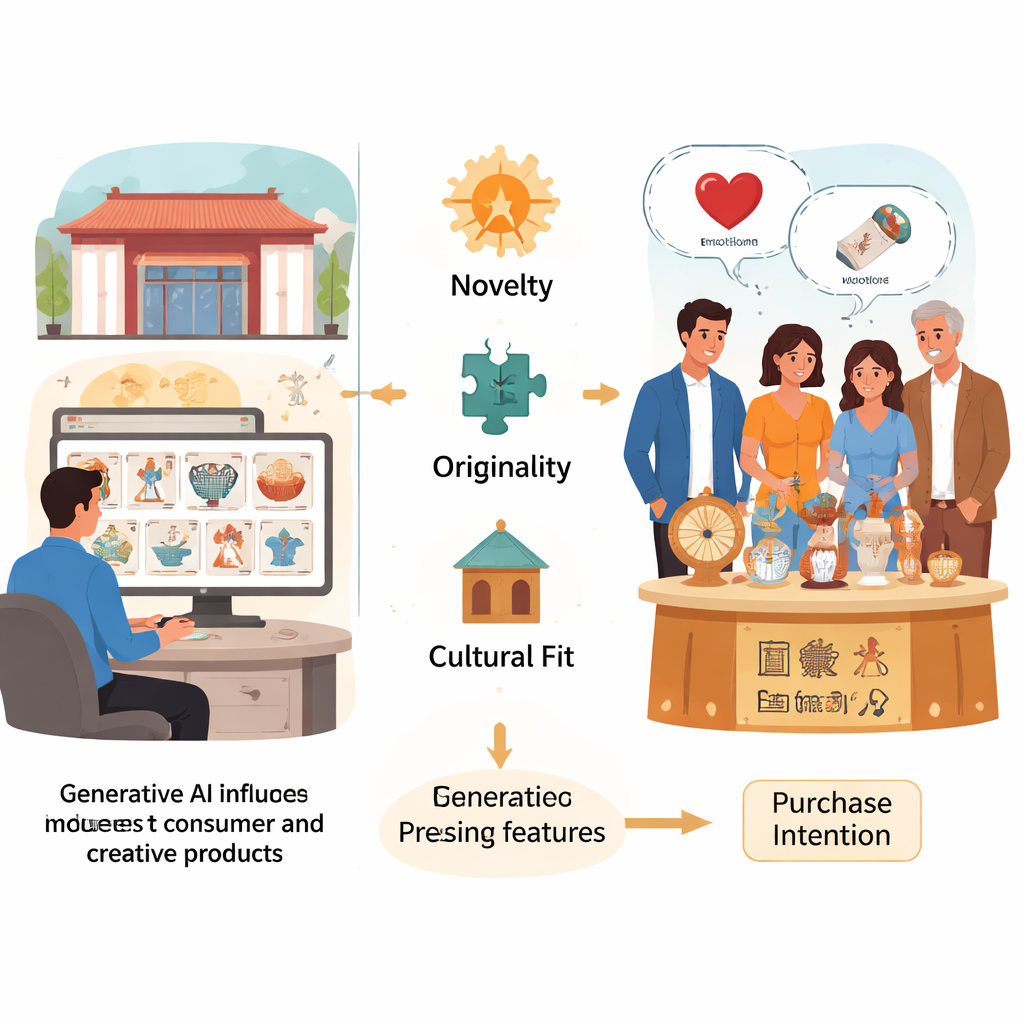
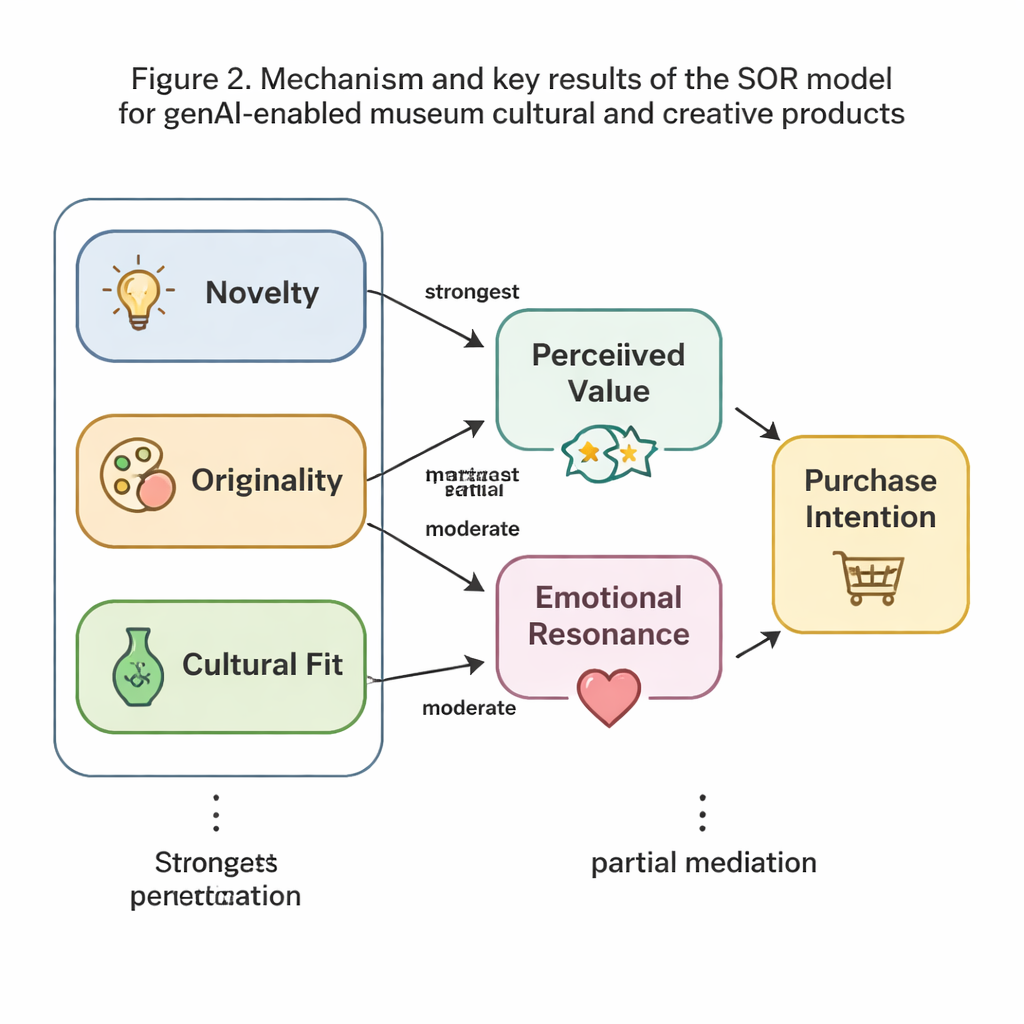
To unpack these mixed reactions, the researchers used a classic psychology lens known as the Stimulus–Organism–Response model. In plain terms, they asked: which design cues act as a stimulus, what happens inside the consumer’s mind and heart, and how does that lead to a choice? They focused on three visible features of AI-enabled museum products: how new and surprising they seem (novelty), how distinct and genuinely creative they feel (originality), and how well they fit the culture and museum story (cultural congruence, or cultural fit). Inside the consumer, they measured two kinds of reactions: perceived value—whether the product feels worth the money when function, looks, and cultural meaning are considered—and emotional resonance, the sense of being moved or reminded of cultural memories. The final response of interest was purchase intention: how likely people say they are to actually buy such items.
What 312 Chinese Consumers Revealed
The team surveyed 312 adults in mainland China who already had at least basic exposure to AI-designed museum products. Participants rated hypothetical AI-assisted items on the three design features, their sense of value, their emotional reactions, and their willingness to purchase. Using a statistical approach suited to complex cause-and-effect networks, the researchers tested how strongly each factor was linked. They found that all three design features—novelty, originality, and cultural fit—were positively connected to perceived value, emotional resonance, and purchase intention. In other words, people were more willing to buy AI-enabled products when they saw them as refreshingly different, meaningfully original, and faithful to the cultural source.
Different Design Strengths, Different Psychological Paths
Although all three features helped, they did not work in the same way. Novelty showed the strongest direct tie to purchase intention: products that “felt different from what I’ve seen before” nudged people most toward a “worth a try” mindset. Originality was especially powerful for stirring emotions, suggesting that visitors care not just about newness but about whether AI is used for thoughtful reinterpretations rather than simple copying. Cultural fit had the biggest impact on perceived value, reinforcing that respect for the museum’s stories and visitors’ own cultural identity remains a basic standard for judging whether a product is worthwhile. Perceived value and emotional resonance themselves each pushed purchase intention upward and acted as small but steady bridges between design features and buying interest, confirming that both “head” and “heart” matter.
What This Means for Museums and Visitors
For lay readers, the takeaway is reassuring: when AI is used carefully, people do not automatically reject AI-shaped heritage products. Instead, they seem to reward designs that balance eye-catching novelty with genuine originality and a clear link to cultural roots. The study suggests that museums and creative teams should treat cultural fit as a non-negotiable foundation, then layer in fresh and original twists that spark curiosity and emotion. Consumers, for their part, appear to judge AI-enabled souvenirs much as they would any other cultural item—by asking whether it feels authentic, meaningful, and worth the price—rather than reacting only to the technology behind it.
Citation: Shi, M., Guo, Q., Li, H. et al. Understanding purchase intention for genAI-enabled museum cultural and creative products using a SOR model. Sci Rep 16, 5858 (2026). https://doi.org/10.1038/s41598-026-36224-8
Keywords: generative AI, museum souvenirs, cultural heritage, consumer behavior, purchase intention