Clear Sky Science · en
Elevated serum uric acid before 20 weeks of gestation increases the risk of preeclampsia
Why this matters for expectant families
Preeclampsia is a dangerous complication of pregnancy that can threaten the lives of both mother and baby, often forcing early delivery. This study explores whether a simple blood test—measuring uric acid, a substance best known for its role in gout—early in pregnancy can flag women who are more likely to develop preeclampsia and give birth too soon.
A common blood chemical under the spotlight
Uric acid is produced when our bodies break down purines, which come from normal cell activity and from foods such as red meat and certain seafoods. In non-pregnant adults, high uric acid is linked to gout and other metabolic problems. During a healthy pregnancy, uric acid levels usually drop in the first months. In women who go on to develop preeclampsia—a condition marked by high blood pressure and organ stress after 20 weeks—doctors have long noticed that uric acid tends to be higher, but it has been unclear how early this increase appears and how strongly it predicts trouble ahead.
A very large look at early pregnancy
The researchers analyzed records from 44,609 women who were pregnant with a single baby and received care at three hospitals in China between 2018 and 2024. All had their uric acid measured before 20 weeks of pregnancy, at an average of about 11 weeks. Women with kidney disease, diabetes, high blood pressure before pregnancy, or multiple pregnancies were excluded to avoid confusion from other illnesses. The team then tracked who developed preeclampsia and who delivered early, before 37 weeks.
The risk rises in steps, not smoothly
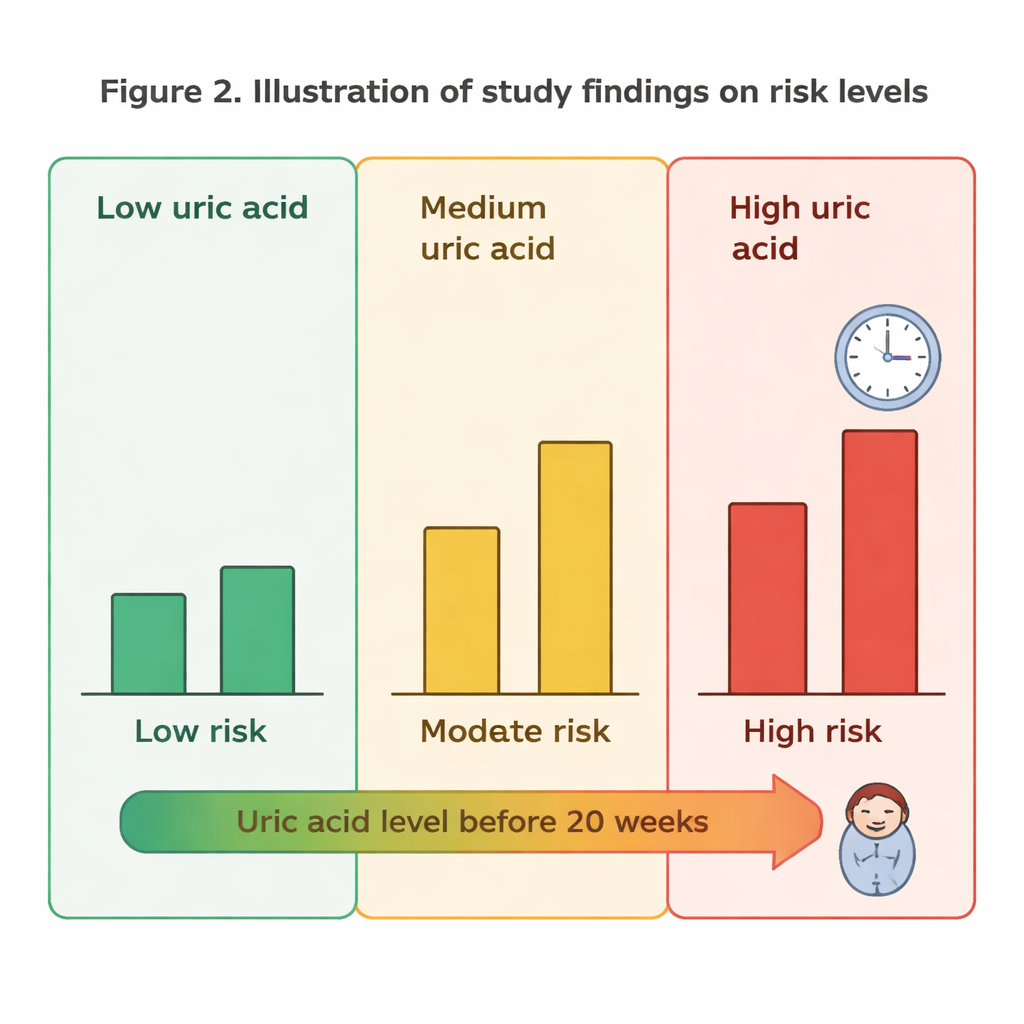
Instead of treating uric acid as simply “high” or “low,” the scientists examined how risk changed as levels increased. Using flexible statistical curves, they found a clear bend, or turning point, around a uric acid value that is lower than what doctors typically worry about in non-pregnant women. Below this point, rising uric acid was linked to a modest increase in preeclampsia risk. Above it, the risk climbed much faster. When women were grouped into three bands—low, medium, and high uric acid—the differences were striking: those in the medium band had about one-third higher odds of preeclampsia compared with the low group, while those in the highest band had roughly double the odds, even after accounting for age, body size, blood pressure, and many other factors.
Early warning for preeclampsia and early birth
The pattern was similar for preterm birth. Women with higher uric acid early in pregnancy were more likely to deliver early, and survival-style curves showed that birth tended to happen sooner in the groups with medium and especially high uric acid. Among women whose uric acid was already above the middle threshold before 20 weeks, about 8 percent developed preeclampsia—almost twice the rate seen in women with lower levels. Notably, the connection between uric acid and preeclampsia was seen across age groups and in both first-time and experienced mothers, but it appeared stronger in women who were underweight or of normal weight compared with those who were heavier.
What this could mean for pregnancy care
Although this study cannot prove that uric acid directly causes preeclampsia, it strengthens the case that unusually high levels early in pregnancy are a warning sign of unhealthy changes in the kidneys, blood vessels, and placenta. Because uric acid is cheap and easy to measure, adding this test to routine early prenatal blood work could help doctors identify women who might benefit from closer monitoring or preventive measures. The findings suggest that watching uric acid before 20 weeks of pregnancy could become a practical way to spot those at higher risk for preeclampsia and early delivery, potentially improving outcomes for mothers and their babies.
Citation: Zhao, C., Li, M., Li, Q. et al. Elevated serum uric acid before 20 weeks of gestation increases the risk of preeclampsia. Sci Rep 16, 5335 (2026). https://doi.org/10.1038/s41598-026-36218-6
Keywords: preeclampsia, uric acid, early pregnancy, preterm birth, pregnancy risk