Clear Sky Science · en
Cubosomal nanoparticles of lycopene as a novel platform for enhancement in antioxidant and anticancer properties with a molecular docking study
Tomato Power in a Tiny Package
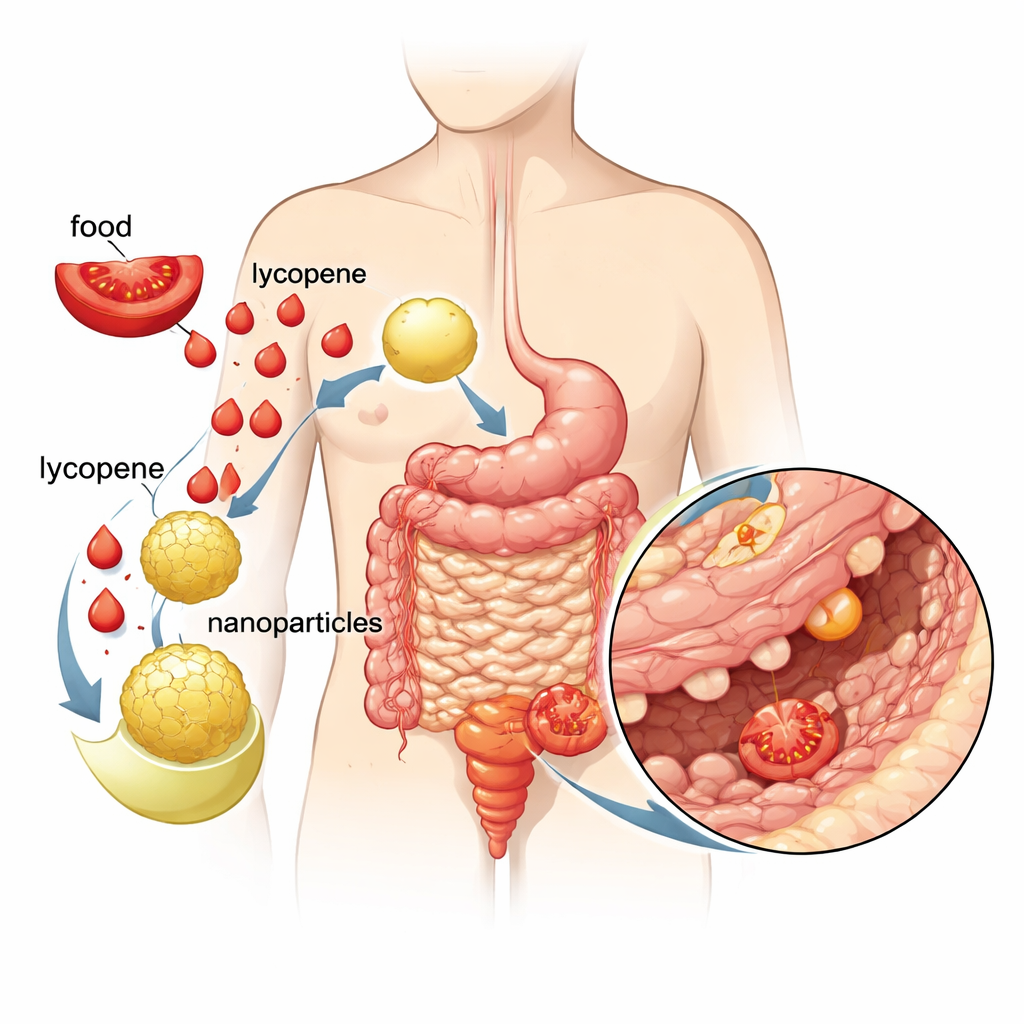
Many people have heard that eating tomatoes may help protect against cancer, thanks to a red pigment called lycopene. But lycopene on its own is hard for the body to absorb and doesn’t reach tumors very efficiently. This study explores a clever workaround: packing lycopene into ultra‑small fat-based particles called cubosomes to see whether this "shrink-wrapped tomato power" can better fight colon cancer cells in the lab.
Why Ordinary Lycopene Falls Short
Lycopene is a strong natural antioxidant found in tomatoes, watermelons, and other red fruits. It can neutralize harmful molecules known as free radicals, which damage DNA, proteins, and fats in our cells and contribute to chronic diseases such as cancer and heart disease. However, lycopene is extremely oily and does not dissolve well in water-based fluids like those in our digestive system. As a result, only a small fraction of what we eat actually makes it into the bloodstream and on to target tissues. This poor solubility and instability limit lycopene’s usefulness as a practical therapy, even though its protective potential is well documented.
Building a Better Carrier
To overcome these hurdles, the researchers created cubosomal nanoparticles—tiny, soft particles made from biocompatible lipids and stabilizers that arrange themselves into a sponge-like, honeycomb interior. These structures can trap oily molecules such as lycopene inside, shield them from degradation, and release them gradually. In this work, the team successfully loaded lycopene into cubosomes about 150 nanometers wide, with most of the lycopene efficiently trapped inside. Tests showed that more than three-quarters of the lycopene was released into solution within 15 minutes, a dramatic improvement compared with lycopene alone, which barely dissolves in water.
Testing Antioxidant and Cancer-Fighting Strength
The scientists then compared plain lycopene and lycopene cubosomes in two ways. First, they measured how well each could neutralize free radicals using standard antioxidant tests. In both tests, the nano‑packaged lycopene required far lower amounts to achieve the same antioxidant effect, indicating much stronger activity. Second, they exposed human colon cancer cells (HT‑29) to either form. Using a standard viability test, they found that cubosomal lycopene killed cancer cells more efficiently than free lycopene, meaning lower doses were needed to cut cell growth in half. Flow‑cytometry experiments revealed that the nanoparticle form pushed many more cells into a resting phase where they stop dividing, and triggered a marked rise in programmed cell death (apoptosis) compared with untreated cells.
Peeking Inside the Cell’s Control Circuits
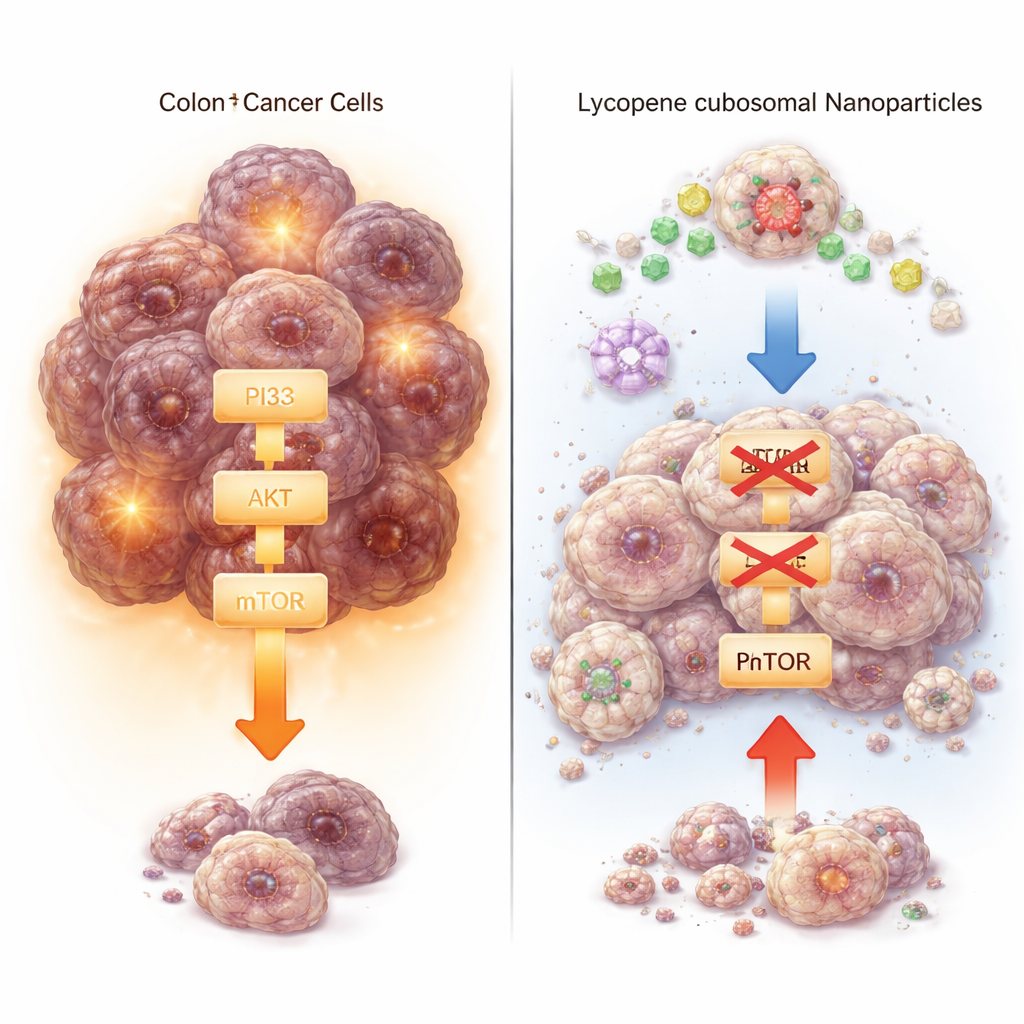
Beyond simply counting surviving cells, the team examined key molecular switches that control growth and death. They focused on the PI3K–AKT–mTOR pathway, a chain of signals that cancer cells often use to stay alive and multiply, and on proteins that either promote or block cell suicide. Using gene-expression tests and protein measurements, they found that both plain lycopene and lycopene cubosomes dialed down PI3K, AKT, mTOR, and the survival protein Bcl‑2, while boosting the death‑executing enzyme caspase‑3. These shifts were consistently stronger with the cubosomal form. Computer docking simulations supported the idea that lycopene can fit into the active pocket of PI3K, suggesting a direct way it might interfere with this growth pathway.
What This Could Mean for Future Treatments
Put simply, wrapping lycopene in cubosomal nanoparticles made it easier to dissolve, more stable, and far more potent in lab tests. The nano‑form not only neutralized damaging molecules more effectively but also shut down cancer cell growth signals and encouraged those cells to self-destruct. While these results are from cell cultures and computer models—not from patients—they point to a promising strategy: using smart fat-based nanoparticles to turn a familiar dietary compound into a targeted helper against colon cancer. If future animal and clinical studies confirm these benefits and safety, lycopene cubosomes could complement existing therapies by offering a gentler, more natural way to support antioxidant defenses and weaken tumor cells.
Citation: Alsunbul, M., El-Masry, T.A., El-Bouseary, M.M. et al. Cubosomal nanoparticles of lycopene as a novel platform for enhancement in antioxidant and anticancer properties with a molecular docking study. Sci Rep 16, 5941 (2026). https://doi.org/10.1038/s41598-026-36217-7
Keywords: lycopene, nanoparticles, colon cancer, antioxidants, drug delivery