Clear Sky Science · en
School bullying predicts malevolent creativity in middle school students through anger and hostile attribution bias
Why this matters for parents and teachers
Most people think of bullying as name-calling or pushing in the hallway, but its impact can reach far beyond bruised feelings. This study suggests that for some middle school students, repeated bullying may actually fuel a dark kind of creativity—come up with new, clever ways to hurt others, get revenge, or manipulate situations. Understanding how and why this happens can help adults spot warning signs early and guide young people toward healthier ways of coping.
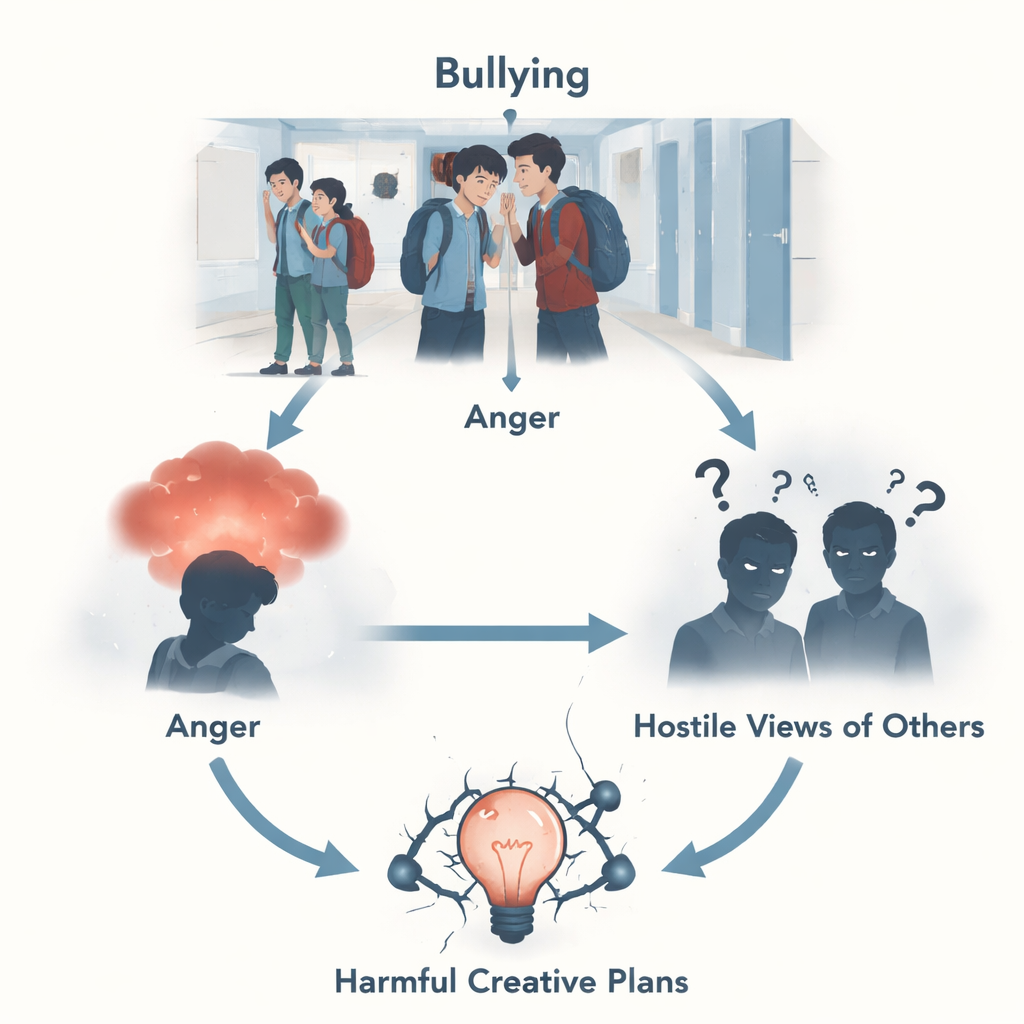
From hurt feelings to harmful ideas
The researchers focused on a concept they call "malevolent creativity"—using imagination and problem-solving skills for destructive purposes instead of helpful ones. Examples include inventing new ways to spread rumors, designing subtle pranks that are hard to trace, or coming up with clever lies that damage someone’s reputation. While creativity is usually celebrated, this darker side shows how the same mental tools can be turned toward harm when children feel cornered or mistreated.
What the study did in real classrooms
The team surveyed 1,038 students aged 11 to 14 from a junior high school in China. Students answered questions about how often they were bullied at school, how easily they became angry, how likely they were to assume that others meant to hurt them, and how often they used sneaky or harmful tactics in daily life. The bullying questions covered physical, verbal, and social forms, such as exclusion. Other questionnaires measured anger, the tendency to see other people’s actions as hostile, and the use of cunning or hurtful strategies (like lying, pranking, or plotting revenge). The researchers then used statistical models to see how these factors fit together.
How bullying shapes emotions and thinking
The results painted a consistent picture. Students who reported more bullying also reported more anger, stronger expectations that others were out to get them, and higher levels of malevolent creativity. Bullying did not just push directly toward harmful ideas; it seemed to work through both feelings and thoughts. First, repeated bullying acted as a long-term source of stress and unfairness, stirring up anger. Second, over time, bullied students were more likely to interpret unclear situations—like someone not answering a message—as deliberate insults or threats. This habit of assuming bad intentions, called hostile attribution bias, made aggressive plans and schemes seem more reasonable or even justified in their minds.
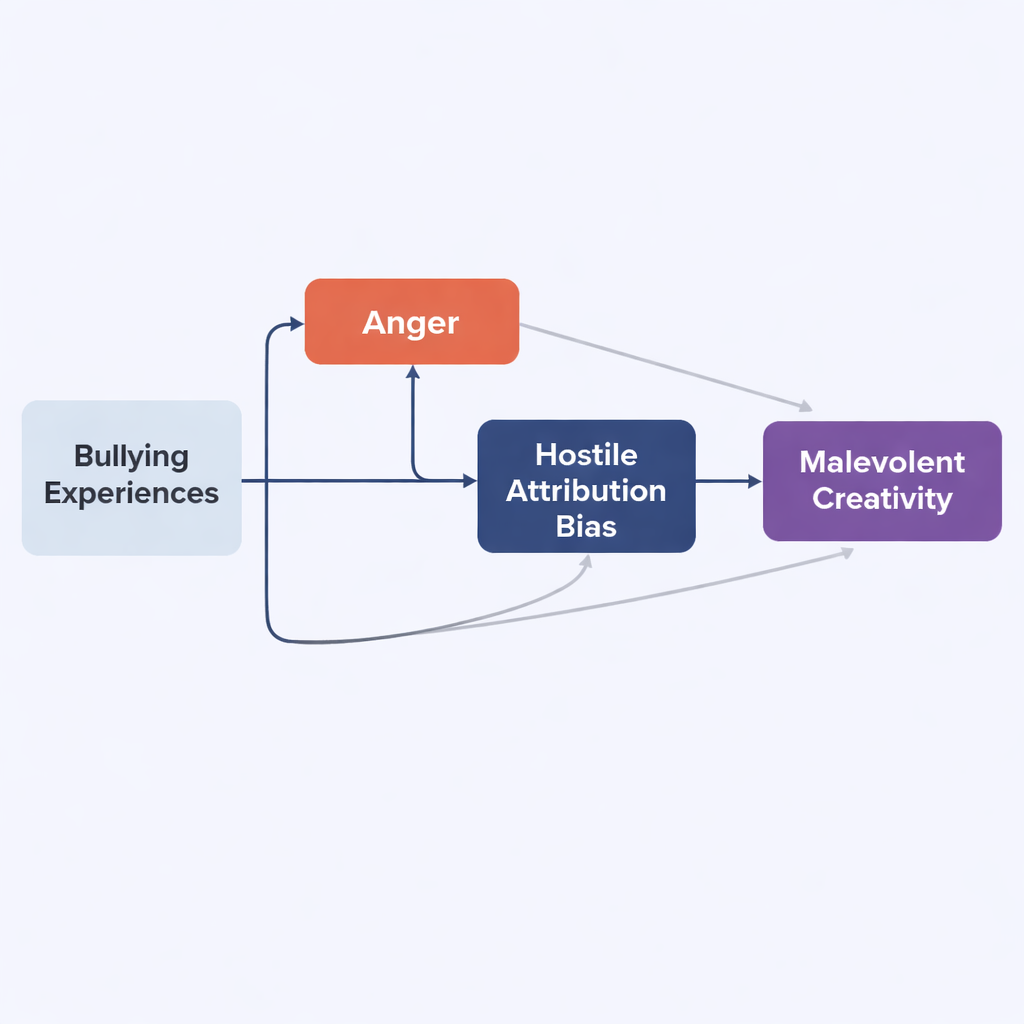
A chain reaction inside the mind
When the researchers looked closely at the pattern of connections, they found three key routes linking bullying to harmful creativity. In one route, bullying increased anger, and anger alone made students more likely to think up hurtful ways of responding. In a second route, bullying encouraged a suspicious mindset, which in turn supported malevolent creativity. Most importantly, a third route showed a chain: bullying led to anger, anger then strengthened the tendency to see others as hostile, and together these pushed students toward more calculated, creative forms of harm. In total, these emotional and thinking patterns explained around 40 percent of the link between bullying and malevolent creativity.
What this means in everyday school life
For a layperson, the takeaway is straightforward: bullying doesn’t just create victims and aggressors in the usual sense. It can also turn some victims into inventive plotters of revenge. When a child is repeatedly hurt, they may not lash out immediately; instead, they may quietly develop clever but harmful strategies that are harder for adults to detect. The study suggests that helping students manage anger and challenging their automatic assumption that “everyone is against me” could interrupt this chain reaction. By teaching emotional skills and more balanced ways of interpreting others’ behavior, schools and families may not only reduce bullying, but also prevent the growth of hidden, harmful forms of creativity that damage classmates and school climate over time.
Citation: Huang, W., Kong, L., Wu, Y. et al. School bullying predicts malevolent creativity in middle school students through anger and hostile attribution bias. Sci Rep 16, 5259 (2026). https://doi.org/10.1038/s41598-026-36211-z
Keywords: school bullying, adolescent anger, hostile attribution bias, malevolent creativity, youth mental health