Clear Sky Science · en
Agro-morphological and phytochemical diversity among Alcea Kurdica populations using multivariate analyses
Why these wild flowers matter
Across the hills of western Iran and neighboring Iraq, a tall hollyhock-like flower called Alcea kurdica grows in roadside patches and rocky slopes. Far from being just another pretty wildflower, it is packed with natural compounds used in traditional remedies for coughs, ulcers, infections, and inflammation. As interest in plant-based medicines and cosmetics grows worldwide, knowing which wild populations carry the richest mix of useful substances becomes crucial for both industry and conservation. This study set out to map that hidden diversity and identify the most promising wild stands for future farming and product development. 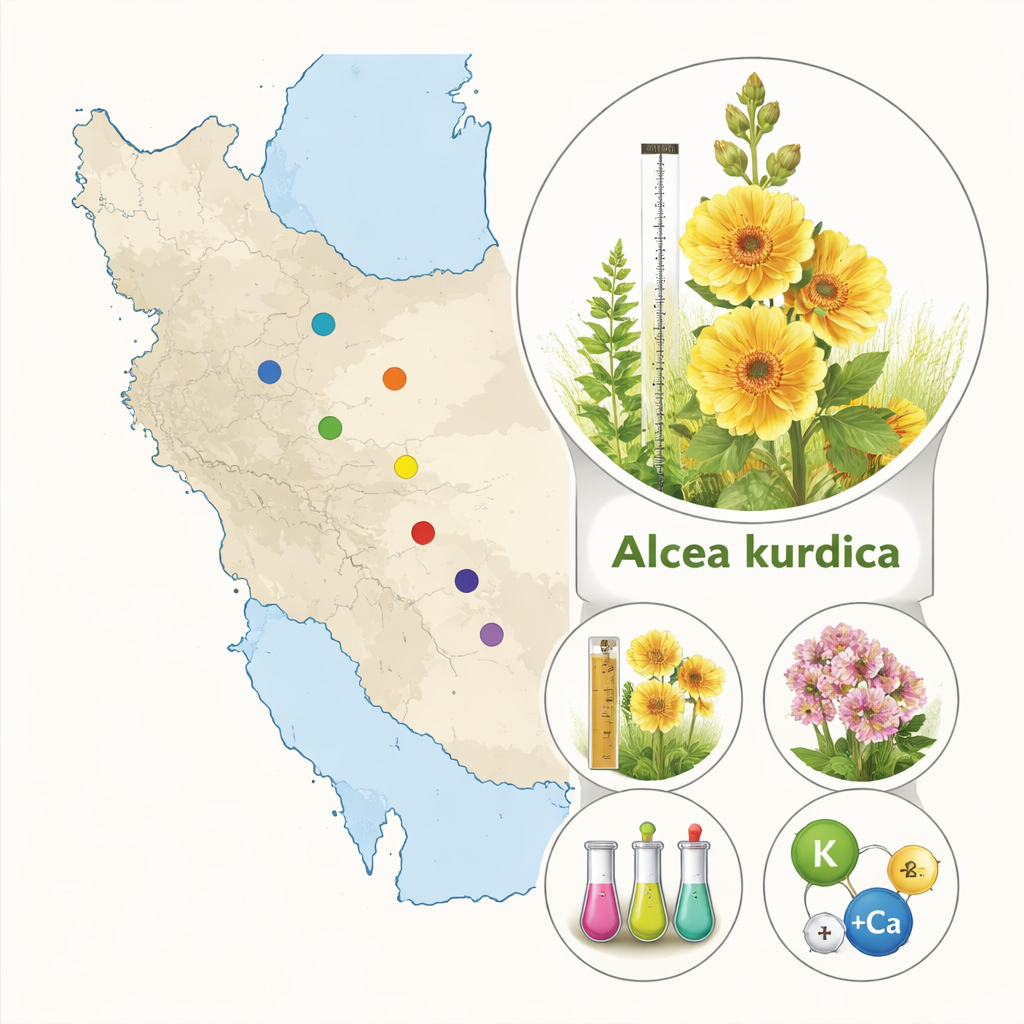
Seven mountain stands under the microscope
The researchers collected plants from seven naturally occurring populations of Alcea kurdica scattered across western and northwestern Iran, from Mahabad and Urmia to Lorestan. These sites span different altitudes, temperatures, and rainfall patterns. In the lab, the team carefully measured classic visible traits—such as plant height, number of side branches, flower size, and total flower weight—and combined them with detailed chemical tests on the dried petals. Rather than focusing on genetics directly, the goal was to capture the full range of forms and chemistries that the species can show under real field conditions.
From stem height to flower chemistry
The seven populations turned out to differ dramatically in how they look and grow. In some stands, plants rose just half a meter from the ground; in others, they shot up to more than two meters. The number of flowers per plant ranged from a dozen to well over a hundred, and flower weight varied almost tenfold. One population, labeled AKP2, produced especially tall plants with many large flowers and very high dry flower weight, making it attractive wherever sheer floral biomass is a priority. Another population, AKP5, stood out for deep-colored, purple flowers rich in gel-like mucilage and vivid pigments known as anthocyanins. These visible differences already suggested that different wild stands might be suited to different end uses.
Natural gels, pigments, and protectors
The chemical tests confirmed that the flowers are tiny biochemical factories. The petals contained notable amounts of mucilage—a soothing, jelly-like carbohydrate used in herbal syrups, skin-care products, and food textures—as well as sugars, mineral nutrients, and a range of plant defense compounds. These included phenolic molecules and flavonoids such as apigenin, kaempferol, rutin, and chlorogenic acid, many of which are valued as antioxidants. Levels varied sharply between populations: AKP5 had the highest total phenolic content and anthocyanin pigments, while AKP2 led in total flavonoids and carbohydrates. Some populations also showed richer stores of minerals like potassium, calcium, and magnesium within the flower tissues. When the team measured antioxidant power—a simple readout of how well the extracts can neutralize damaging reactive molecules—populations with more phenolics and flavonoids reliably scored higher.
Patterns in diversity and what they reveal
To make sense of this many traits at once, the researchers turned to multivariate statistics, clustering populations that behaved similarly and teasing out which features moved together. Populations with taller plants and heavier flowers tended to have more anthocyanin pigments as well, while those richest in carbohydrates often carried fewer flowers. Other clusters grouped stands that shared high levels of mucilage and minerals or strong antioxidant capacity. These patterns suggest that flower form, growth, and chemistry are tightly intertwined, likely shaped by both the plants’ genetic makeup and the local environment—soil, climate, and altitude. The analysis also helped pinpoint which populations combine desirable traits, such as large floral yields plus a favorable mix of health-related compounds. 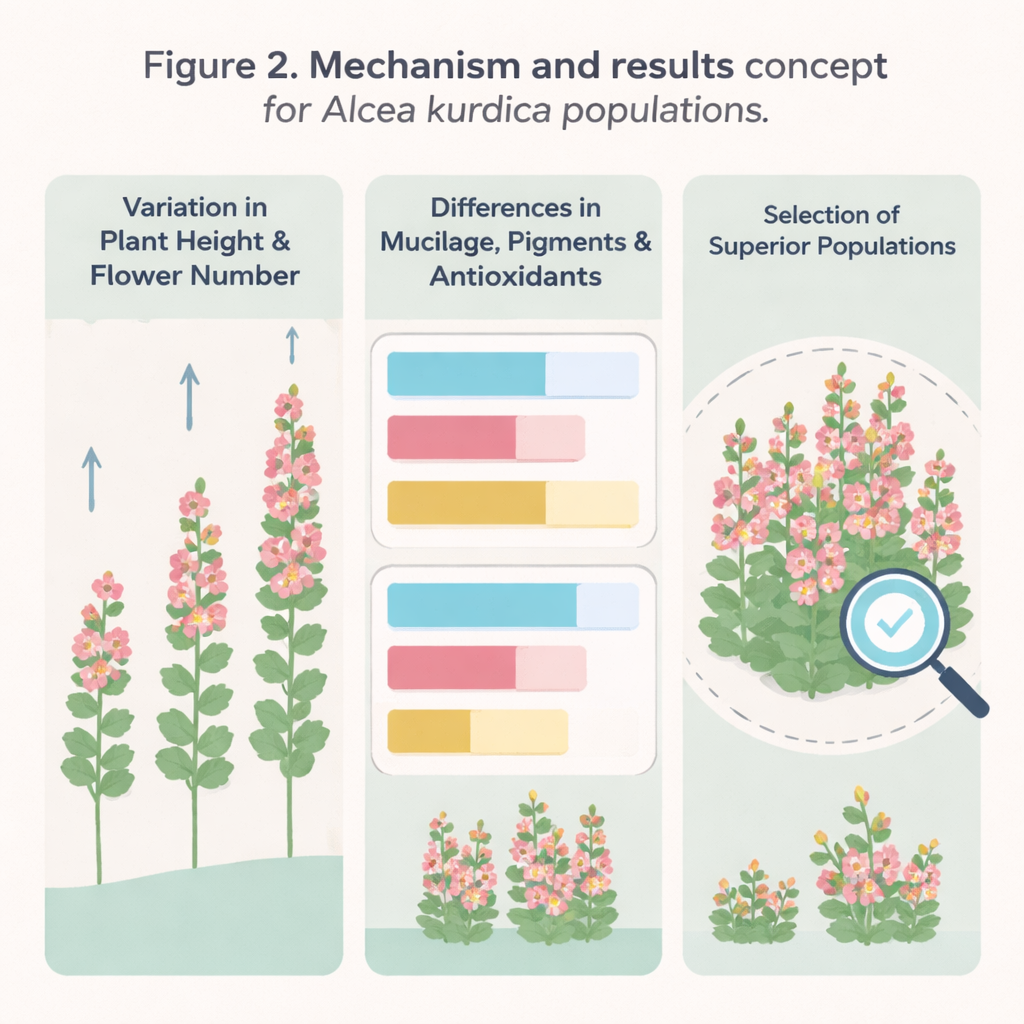
Wild resources for future gardens and remedies
By showing just how diverse Alcea kurdica is across its range, this work turns a scattered set of wild stands into a practical menu for breeders, farmers, and product developers. Some populations appear ideal for extracting soothing mucilage; others shine as sources of natural colorants and antioxidants; still others offer outstanding plant size and flower number for ornamental use or large-scale harvesting. Although the study does not yet separate genetic from environmental causes, it provides a roadmap for selecting superior populations to bring into cultivation, test in common gardens, and eventually develop into uniform, high-quality varieties. For the lay reader, the message is simple: what looks like the same wild flower on a mountain slope can, in fact, hide a wealth of subtle differences—differences that could feed tomorrow’s medicines, cosmetics, and nutritionally enriched foods while supporting the conservation of this regional botanical treasure.
Citation: Tafreshi, Y.M., Eghlima, G., Esmaeili, G. et al. Agro-morphological and phytochemical diversity among Alcea Kurdica populations using multivariate analyses. Sci Rep 16, 5748 (2026). https://doi.org/10.1038/s41598-026-36183-0
Keywords: medicinal plants, plant diversity, natural antioxidants, herbal remedies, crop domestication