Clear Sky Science · en
Measuring football fever through wearable technology
Why Your Heart Races When Your Team Plays
Anyone who has watched a big football match knows the feeling: sweaty palms, pounding heart, and the sense that the game matters almost as much to you as to the players on the pitch. This study turns that familiar “football fever” into hard numbers. By tracking hundreds of fans with smartwatches during a historic German cup final, the researchers show just how strongly a match can grip the body as well as the mind—and why that matters for both our enjoyment and our health.
Turning Passion into Measurable Data
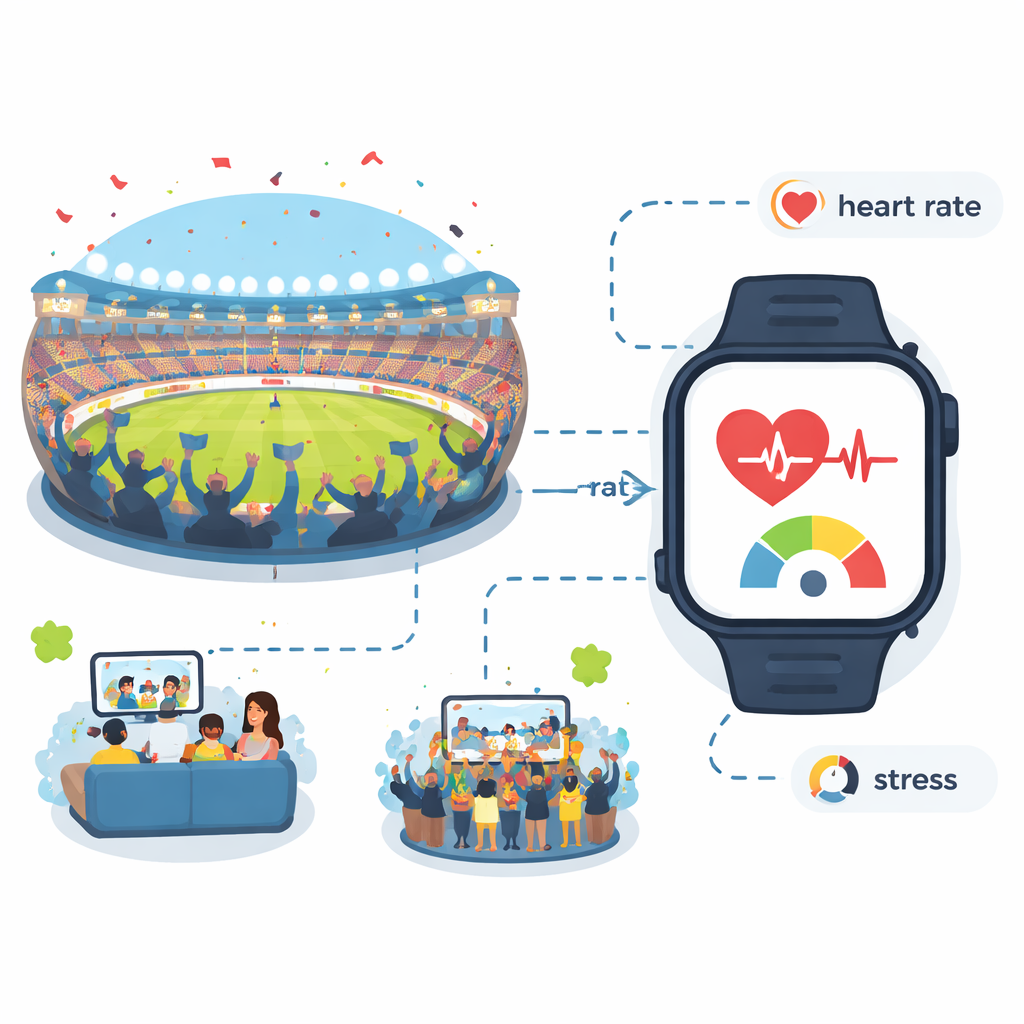
The researchers focused on the 2025 German Football Association (DFB) Cup final, where third-division club Arminia Bielefeld faced top-tier VfB Stuttgart in Berlin. For Bielefeld supporters, this was a once-in-a-generation event, making it an ideal natural experiment. The team recruited 229 adult fans who already owned Garmin smartwatches and followed them for about 12 weeks—10 days before the final and more than two months afterward. The watches automatically recorded heart rate and a stress index based on heartbeat patterns, giving the scientists millions of data points from everyday life and from the match itself. A follow-up survey of 37 volunteers added context about age, gender, club membership, match attendance, alcohol use and where they watched the game—at home, at public screenings or in the stadium.
How Matchday Physically Differs from a Normal Day
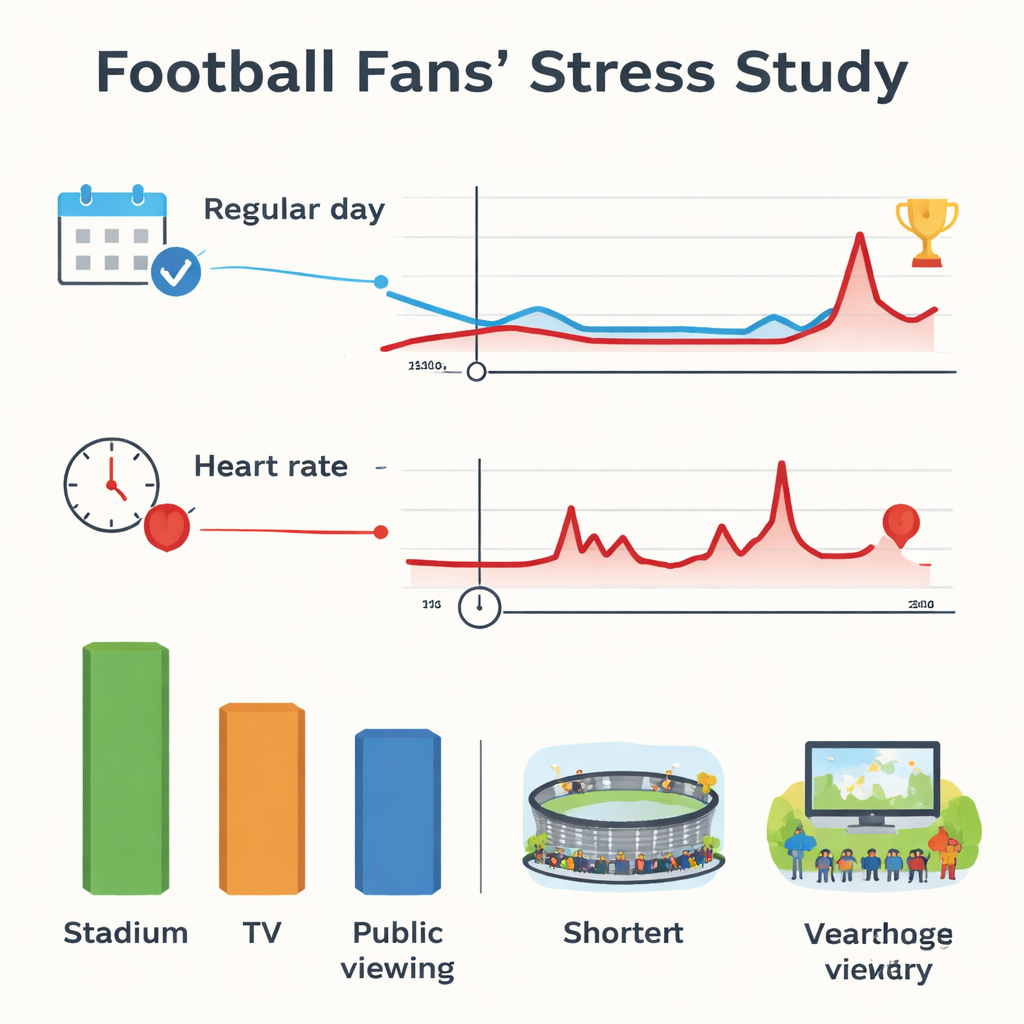
By comparing the day of the cup final with dozens of regular, non‑match days, the team found that fans’ bodies behaved very differently when their club played for a trophy. On ordinary days, stress levels were lowest at night, climbed after people woke up, and showed clear differences between workdays and weekends. Saturdays were usually the most stressful, likely because people went out more and were generally more active. On the day of the final, however, stress readings were clearly higher at every hour than on regular Saturdays, even exceeding what was typical for the top 10 percent of stressful Saturdays. Average stress was already elevated during the preceding night, rose steadily through the day and peaked in the early evening right before kick-off—then stayed higher than normal well after the match ended.
Inside the Ninety Minutes of Nerves
The minute‑by‑minute match data reveal how fans’ hearts mirrored the drama on the pitch—though not always in ways the betting odds would predict. At kick‑off, average heart rates for Bielefeld fans surged to about 96 beats per minute, well above typical resting levels, and were highest during the first quarter of an hour when the outcome was still wide open. As Stuttgart quickly took a 3–0 lead and the odds swung heavily in their favor, fans’ heart rates gradually fell, reaching their lowest point after Stuttgart’s fourth goal early in the second half. Later, when Bielefeld scored twice near the end—a proud moment but one that barely changed the statistical chance of a comeback—fans’ heart rates jumped again by around 10 beats per minute. Physiologically, supporters reacted as if the match had suddenly become exciting again, even though the objective likelihood of a turnaround remained tiny.
Where and How You Watch Changes the Strain
The survey data show that not all viewing experiences are equal. Fans who watched in the Berlin stadium had the highest average heart rates during the match, roughly a quarter higher than those watching elsewhere. Peaks above 100 beats per minute were common in the stands, especially after Bielefeld’s late goals. Viewers at public gatherings and those at home showed lower, though still elevated, heart rates. Alcohol made a measurable difference as well: fans who reported drinking had higher heart rates throughout the match, particularly in the second half and after Bielefeld’s first goal. Travel plans also mattered. Supporters who only arrived in Berlin on matchday had higher stress levels throughout the day than those who came the day before, likely because of early departures, long journeys, crowded fan events and late travel home.
What Football Fever Means for Enjoyment and Health
To a layperson, the core message is simple: big matches really do get under your skin. This study shows that a high‑stakes football game can raise fans’ heart rates and stress levels far above everyday values for many hours, particularly when they watch in person, drink alcohol or combine the match with a long, busy travel day. For most healthy people, this intense arousal is part of the thrill of being a fan, but it may pose risks for those with heart problems or other vulnerabilities. At the same time, the work highlights how modern wearables can quietly track our bodies during real‑world events, offering a powerful, non‑invasive way to study emotion, stress and crowd behavior well beyond the lab.
Citation: Adam, T., Bauer, J., Deutscher, C. et al. Measuring football fever through wearable technology. Sci Rep 16, 3866 (2026). https://doi.org/10.1038/s41598-026-36182-1
Keywords: football fans, wearable technology, heart rate, stress, sports spectatorship