Clear Sky Science · en
The relationship between health promotion and renewable energy sources in the attitudes of Polish medical students
Why Your Health and Clean Energy Belong Together
Most of us think of personal health and clean energy as separate worlds: one about eating well and exercising, the other about solar panels and wind farms. This study of Polish medical students suggests they are more closely linked than we might imagine. The researchers asked whether young people training to become health professionals who strongly value healthy lifestyles are also more likely to support renewable energy — and what personal factors shape these views.
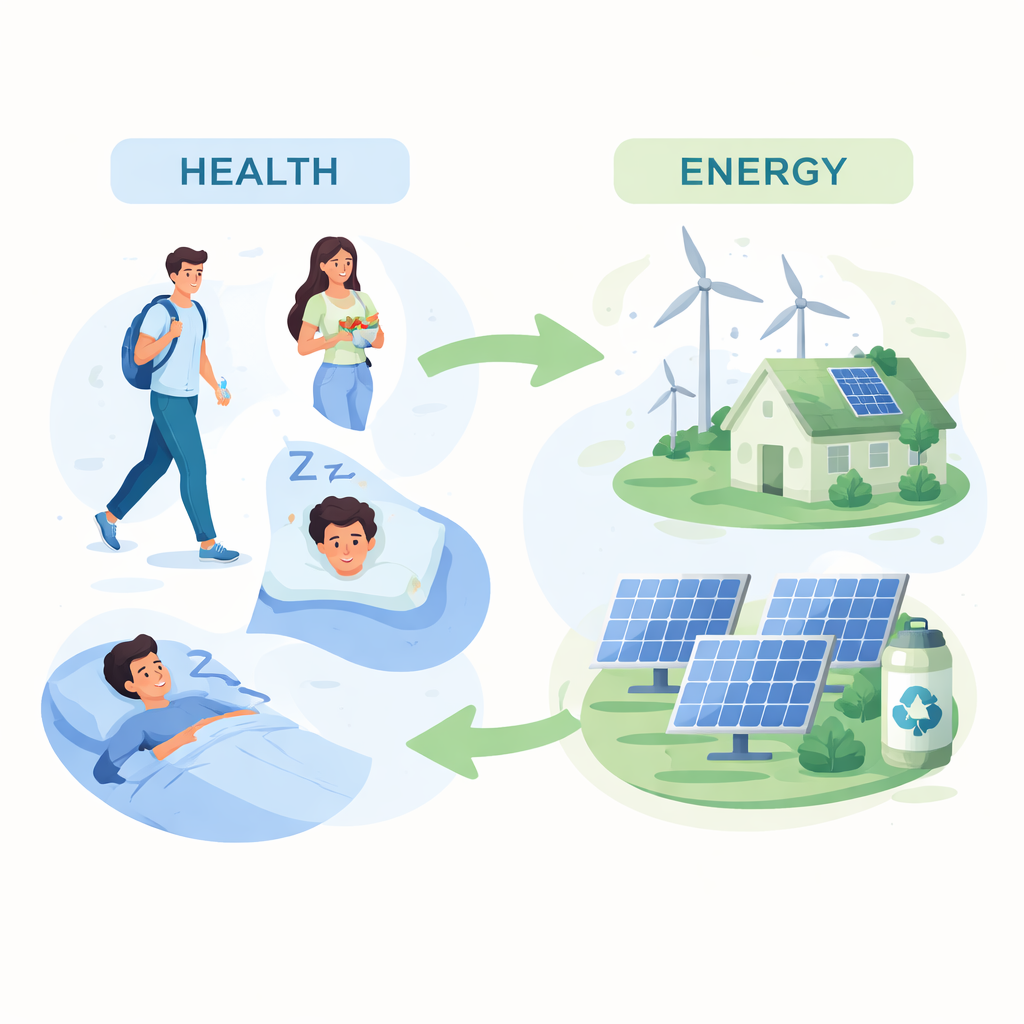
Young Future Doctors Under the Microscope
The study surveyed 504 students at a medical college in Rzeszow, Poland, most of them in their early twenties. They represented a range of programs, including medicine, nursing, physiotherapy and dietetics, and studied either full-time (tuition-free) or part-time (fee-paying). The researchers developed two simple questionnaires. One measured how strongly students favored everyday health-promoting behaviors, such as good diet, physical activity and avoiding harmful habits. The other measured how willing they were to support or install renewable energy sources such as solar or wind power. Each student received a score on both scales.
Who Backs Clean Energy the Most?
On average, students had fairly positive views of renewable energy, but some groups stood out. Women scored higher than men on pro-renewable attitudes. Students who described their political views as left-wing or liberal were more supportive of renewable energy than conservative or undecided students. Part-time students, who typically pay for their education and may be more sensitive to economic issues, also showed stronger support for renewables than full-time students. Interestingly, other factors such as age, hometown (city versus village), body weight and general health rating did not clearly change how students felt about clean energy.
What Shapes Their Health Mindset?
Students also tended to hold strong health-promoting attitudes overall, but again, some subgroups differed. Those who said they were strongly involved in religion reported more health-focused attitudes than those who were weakly involved or indifferent. Students who rated their own health as “very good” showed more enthusiasm for healthy behaviors than those who rated their health as only moderate or poor. Field of study mattered as well: dietetics students scored higher on health-promotion than peers in medicine or physiotherapy, echoing their focus on food and lifestyle. In contrast, gender, political views, study mode and body weight did not significantly alter health attitudes.
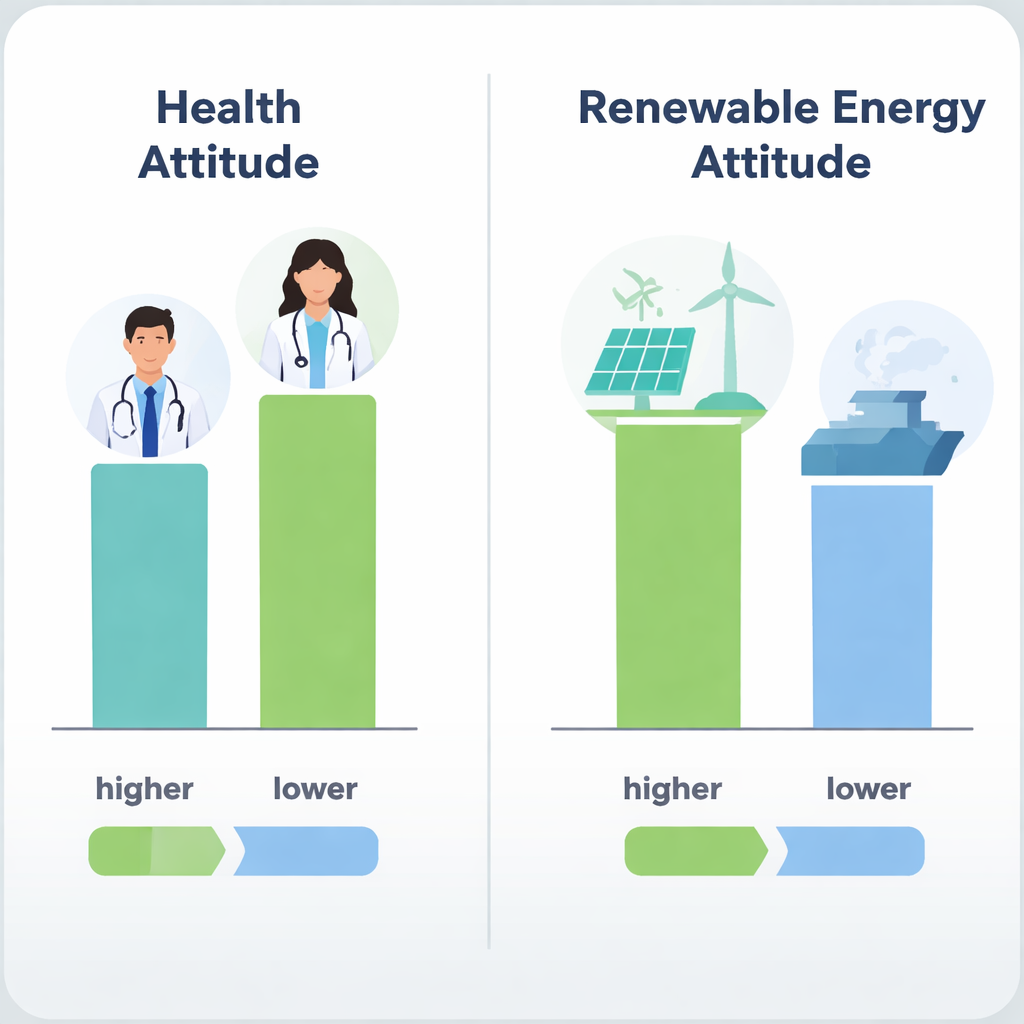
The Hidden Link Between Health Habits and Green Power
The key finding emerged when the researchers compared the two sets of scores. Students who were more committed to health-promoting behaviors were also more favorable toward renewable energy, and this relationship was statistically significant. In simple terms, the stronger a student’s focus on healthy living, the more likely they were to support clean energy — and the reverse also held. Although the connection was moderate rather than overwhelming, it suggests that caring about one’s own health and caring about the planet’s climate tend to grow together in this group of future health professionals.
What This Means for Everyday Life and Policy
For a lay reader, the message is straightforward: people who value their health are also more open to greener energy choices. The study suggests that teaching medical students about renewable energy and its health benefits could reinforce both kinds of attitudes at once. Because factors such as political views, religious commitment, field of study and study mode can change over time, they provide opportunities for education and public policy to work together. By nurturing healthy lifestyles and explaining how clean energy improves air quality and reduces disease, societies may encourage a generation of doctors and nurses who advocate not only for patients in the clinic, but also for cleaner, healthier environments outside it.
Citation: Perenc, L., Podgórska-Bednarz, J. The relationship between health promotion and renewable energy sources in the attitudes of Polish medical students. Sci Rep 16, 6787 (2026). https://doi.org/10.1038/s41598-026-36180-3
Keywords: health promotion, renewable energy, medical students, climate and health, environmental attitudes