Clear Sky Science · en
Unveiling the significance of Netrin-1 and Netrin-4 in metabolic syndrome
Why these hidden blood signals matter
Metabolic syndrome is a common but often silent condition that sharply raises the risk of heart disease and type 2 diabetes. Doctors already track things like waist size, blood sugar, and cholesterol to spot it. This study asks a new question: can two little-known blood proteins, called netrin‑1 and netrin‑4, act as early warning signals of the metabolic and inflammatory stress that underlies this syndrome?
A closer look at metabolic syndrome
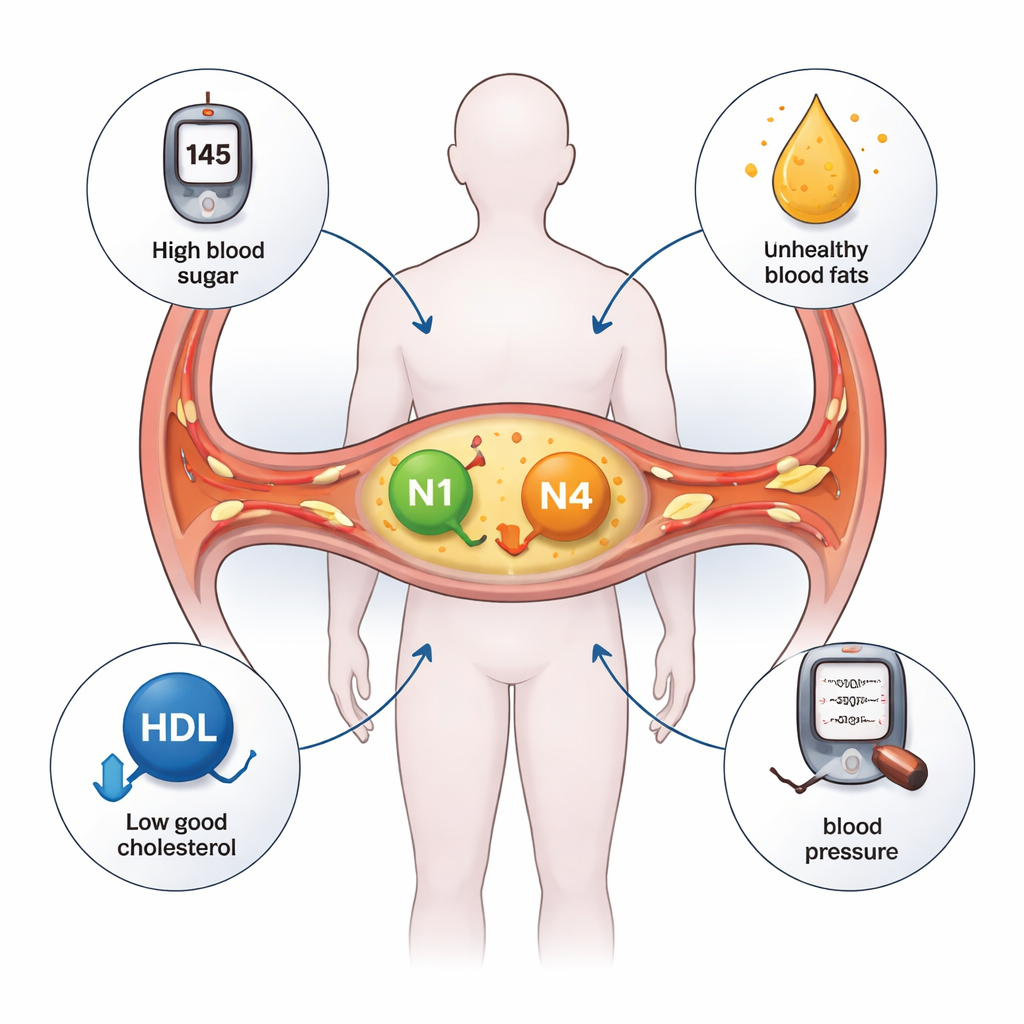
Metabolic syndrome is not a single disease but a cluster of problems that tend to travel together: large waistline, high blood pressure, high fasting blood sugar, high triglycerides, and low levels of “good” HDL cholesterol. Having at least three of these puts a person in the metabolic syndrome category and greatly increases their chances of developing type 2 diabetes and cardiovascular disease. Modern lifestyles marked by sedentary behavior and calorie-dense diets have made this cluster increasingly common worldwide. At the core of the syndrome are swollen fat cells in the abdomen, low-grade chronic inflammation, and resistance to insulin, the hormone that helps move sugar from blood into cells.
Introducing netrin‑1 and netrin‑4
Netrin‑1 and netrin‑4 are signaling proteins best known for helping nerve cells find their way during brain development. More recently, researchers have learned that they also influence how immune cells move, how blood vessels behave, and how inflammation is controlled. Netrin‑1 can dampen the production of inflammatory molecules and support insulin-producing cells in the pancreas. Netrin‑4 is found in blood vessel lining cells and appears to help maintain vessel stability and support hormone production, including insulin. Because metabolic syndrome involves both inflammation and blood vessel stress, the authors wondered whether these two proteins might rise and fall with the metabolic strain seen in affected patients.
What the researchers measured
The team studied 40 adults with metabolic syndrome and 40 healthy adults of similar age and sex. None had major illnesses that could confuse the results. All participants had their waist size, body mass index, blood pressure, blood sugar, insulin, cholesterol profile, and inflammation marker C‑reactive protein measured. The researchers then used a sensitive laboratory test to measure blood levels of netrin‑1 and netrin‑4. This allowed them to compare average levels between groups and to see how strongly each protein tracked with key metabolic risk factors.
How netrins tracked with metabolic stress
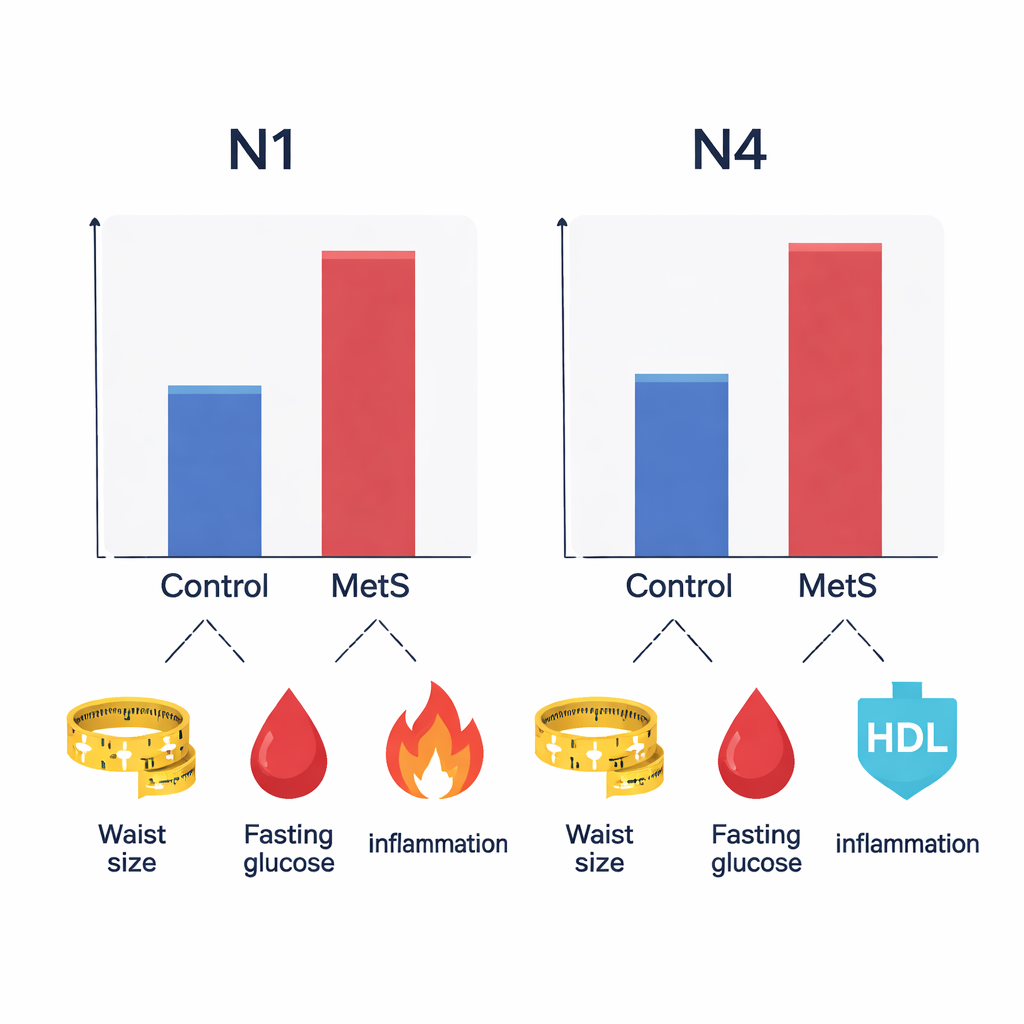
Both netrin‑1 and netrin‑4 were clearly higher in people with metabolic syndrome than in healthy controls. Individuals with the syndrome also showed the expected pattern of higher body mass index, larger waist size, higher fasting glucose and triglycerides, and lower HDL cholesterol. When the researchers looked at relationships between variables rather than simple group averages, they found that higher netrin levels tended to go hand in hand with higher body weight, higher fasting glucose and long‑term blood sugar (HbA1c), higher triglycerides, and higher C‑reactive protein. Both netrins were lower when HDL cholesterol was higher. These patterns suggest that netrin‑1 and netrin‑4 rise in the same metabolic and inflammatory environment that defines metabolic syndrome.
How well these signals distinguished patients
To test whether these proteins might help flag who has metabolic syndrome, the team used statistical models and diagnostic performance curves. In a model that considered several factors at once, netrin‑4—along with fasting glucose—remained independently linked to having the syndrome, whereas netrin‑1 did not. When the authors asked how well each marker separated patients from controls, netrin‑1 showed good sensitivity (it picked up most people with the condition), while netrin‑4 showed very high specificity (its high values were rarely seen in healthy individuals). However, traditional measures such as waist size, body mass index, triglycerides, HDL, and especially fasting glucose still performed as well as or better than the netrins in identifying metabolic syndrome.
What this means for future health care
The study suggests that netrin‑1 and netrin‑4 are not just bystanders of nerve growth but are closely tied to the metabolic and inflammatory stress that accompanies metabolic syndrome. Higher levels of these proteins in the blood appear to mirror the burden of excess abdominal fat, disturbed blood sugar, unhealthy blood fats, and chronic low‑grade inflammation. Netrin‑4, in particular, shows promise as a highly specific sign of this disturbed state. Still, the work is based on a single snapshot in time and a modest number of participants, so it cannot prove that changing netrin levels cause disease. Larger, longer-term studies are needed to determine whether tracking these hidden signals could someday help doctors refine risk prediction or tailor treatment for people on the road to diabetes and heart disease.
Citation: Kıran, T.R., Ayyıldız, G., Keskin, L. et al. Unveiling the significance of Netrin-1 and Netrin-4 in metabolic syndrome. Sci Rep 16, 5814 (2026). https://doi.org/10.1038/s41598-026-36172-3
Keywords: metabolic syndrome, insulin resistance, inflammation, biomarkers, cardiometabolic health