Clear Sky Science · en
Multi-objective optimization identifies cultivation strategies for balancing yield, quality, and resource efficiency in hydroponic netted melon
Why melons and math matter to your table
Sweet, netted melons are a prized treat, but growing them in high‑tech greenhouses can be expensive and resource‑hungry. This study asks a question that matters to both farmers and consumers: can we grow melons in a way that is profitable, delicious, and gentle on water and materials at the same time? By borrowing ideas from engineering and economics, the researchers show how to fine‑tune modern hydroponic systems so that different farms can choose the mix of yield, flavor, and efficiency that best fits their goals.
Three kinds of melons, three growing styles
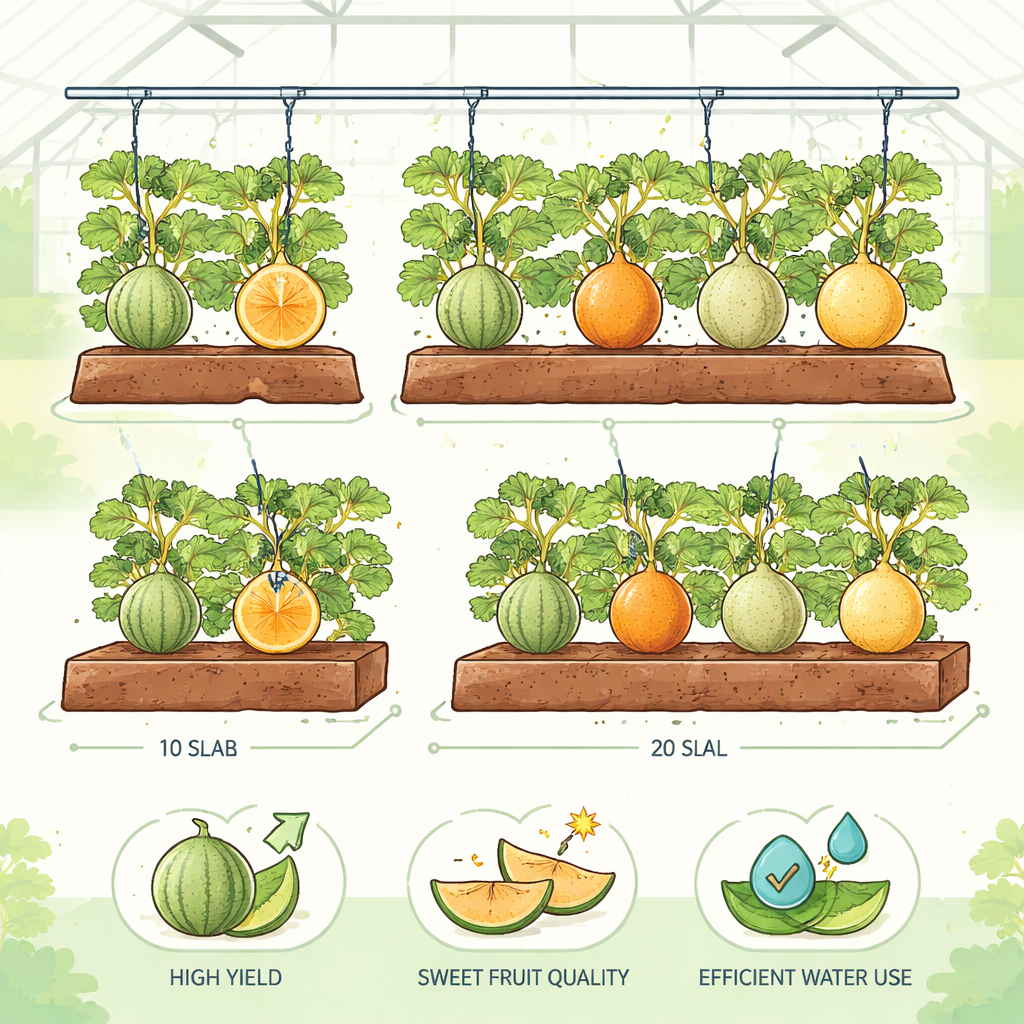
The team worked in a glass greenhouse, growing three commercial netted melon types that represent common market choices. One, called ‘Kingstar’, naturally produces large fruits. Another, ‘Dalgona’, is bred for smaller but very sweet melons. ‘Hero’ sits in between. Plants were raised not in soil but in coir slabs—rectangular blocks made from coconut fiber—supplied with nutrient solution through drip lines. The researchers compared two slab sizes, a standard 20‑liter volume and a smaller 10‑liter volume, and planted either three or four plants per slab to mimic low and high planting densities. This design let them test, in combination, how variety, root space, and crowding affect harvest, sweetness, and costs.
Balancing quantity, sweetness, and water use
When plants were packed more closely—four instead of three per slab—total tonnage of fruit per area rose by about one‑fifth. But that gain came with smaller individual fruits and, in many cases, lower internal quality. A key surprise was that shrinking the root zone from 20 to 10 liters did not reduce the overall harvest, yet clearly improved how efficiently plants used water and how sweet the flesh became. The smaller slabs subtly restricted root growth and water availability, nudging plants to invest more in fruit rather than leaves. Across all melon types, the 10‑liter setup delivered higher sugar levels and better water productivity—more kilograms of melon per cubic meter of irrigation—than the roomier standard.
From measurements to smart choices
Instead of focusing on one outcome at a time, the researchers combined six indicators: sugar content, total yield, water productivity, average fruit weight, flesh thickness, and farm profit. They then used a "Pareto" approach, a way of mapping options so that no single choice is best on every count, but some choices clearly beat others overall. This three‑dimensional view made trade‑offs visible: some treatments excelled in sweetness but lagged in tonnage; others used water sparingly but earned less money because market prices reward flavor more than conservation. Statistical analysis showed that profit tracked quality scores much more than sheer yield, underscoring that, for melon growers, producing a tastier fruit often matters more than producing a heavier one.
Three winning strategies for different farms
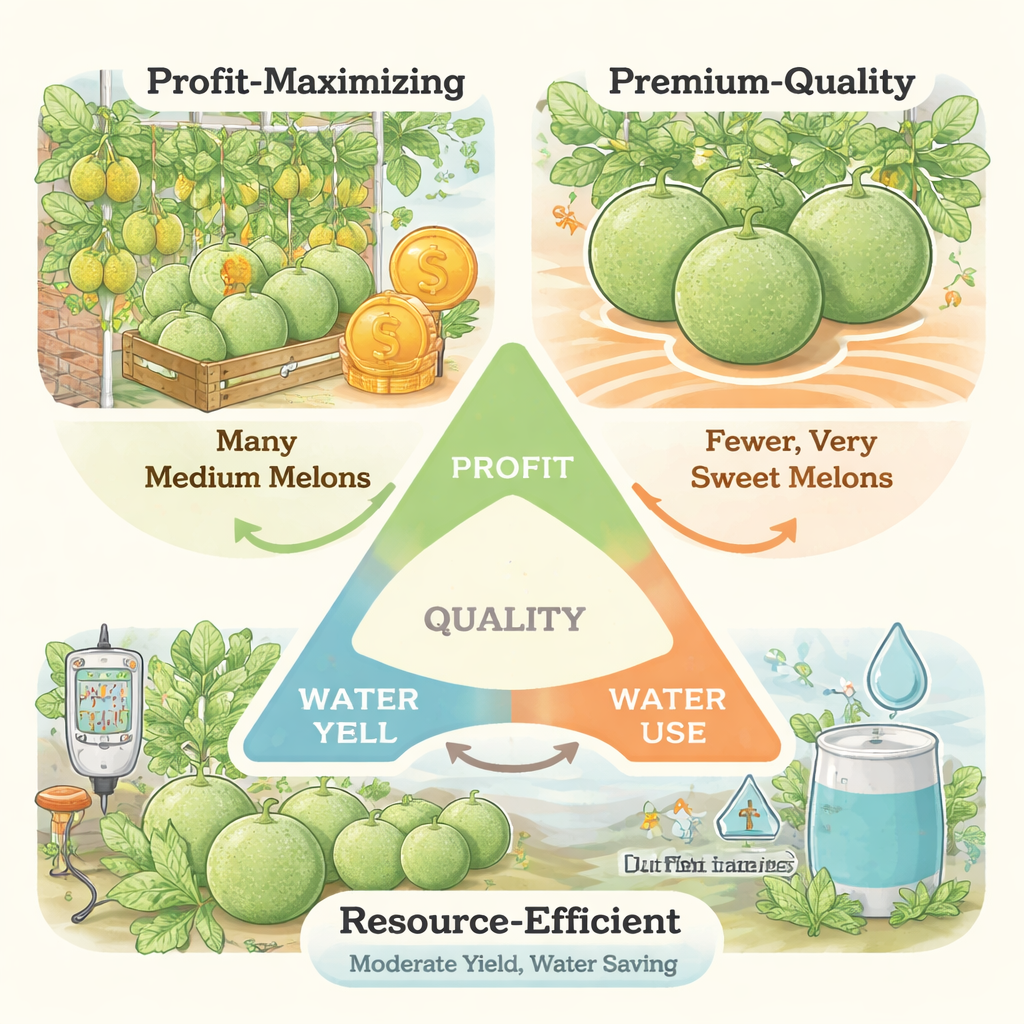
The optimization maps revealed three standout strategies, each tailored to a different type of grower. For farms chasing maximum profit in mainstream markets, ‘Hero’ grown in 10‑liter slabs with four plants per slab offered the highest return on investment, exceeding typical greenhouse income levels. For premium gift or department‑store markets, ‘Dalgona’ in 10‑liter slabs with three plants per slab produced smaller, extremely sweet fruits, with every melon qualifying as top grade. For operations that prioritize saving water and substrate, ‘Kingstar’ in 10‑liter slabs with three plants per slab delivered the best water productivity while still maintaining acceptable fruit quality and yield. All systems remained profitable, but these three combinations occupied the “frontier” where improving one goal would require sacrificing another.
What this means for future greenhouse food
For non‑specialists, the main message is that modern greenhouse farming does not have to choose blindly between more fruit, better flavor, and less resource use. By shrinking substrate volume and carefully selecting plant density and variety, growers can steer their systems toward higher profits, luxury‑grade sweetness, or greater water savings. The study shows that smaller root zones and thoughtful variety choice can beat conventional, more generous setups, offering a roadmap for more sustainable and customized melon production in a warming, resource‑limited world.
Citation: Lim, M.Y., Yoon, S., Kim, S.J. et al. Multi-objective optimization identifies cultivation strategies for balancing yield, quality, and resource efficiency in hydroponic netted melon. Sci Rep 16, 5710 (2026). https://doi.org/10.1038/s41598-026-36171-4
Keywords: hydroponic melons, greenhouse farming, fruit quality, water productivity, sustainable agriculture