Clear Sky Science · en
Possible implications of the variability of the most allergenic plant pollen seasons in Poland
Why Warmer Weather Matters for Allergy Season
For millions of people with hay fever or asthma, the calendar is written not in months but in pollen peaks. This study from Poland asks a question that concerns anyone who sneezes through spring and summer: as the climate warms, how are the most troublesome pollen seasons changing? By tracking five common allergenic plants across the country for two decades, the researchers show that rising temperatures are reshaping when and how intensely these plants release pollen—information that could help patients and doctors prepare for future allergy seasons.
Tracking Pollen Across a Changing Country
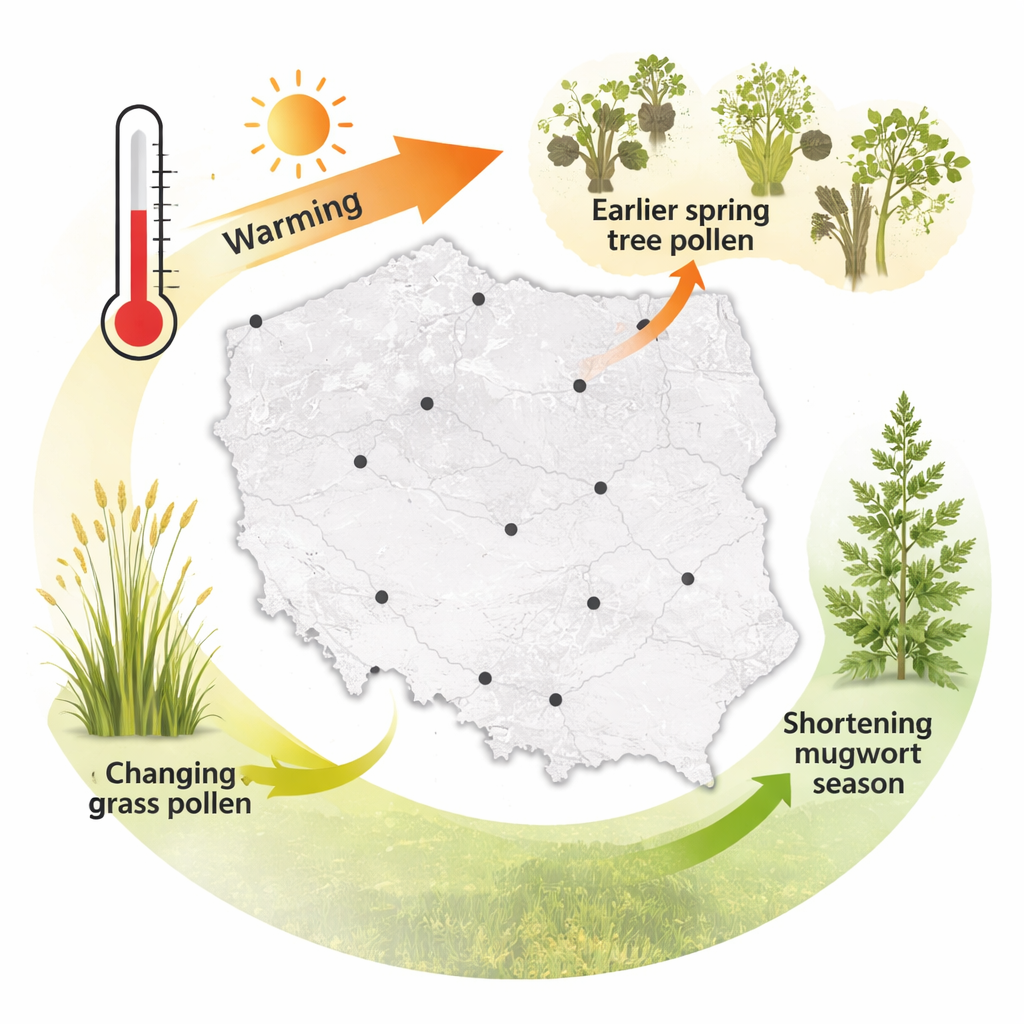
To understand long‑term changes, scientists monitored pollen from alder, hazel, birch, grasses, and mugwort at eight sites scattered across Poland, from coastal Szczecin to mountain‑fringed Kraków and Rzeszów. Using standardized air samplers mounted on rooftops, they counted daily pollen grains from 2001 to 2020 and calculated key features of each season: when it started and ended, how long it lasted, how high the daily peaks were, and the overall seasonal load. They then compared these data with detailed temperature records going back to 1961, allowing them to link shifts in pollen behavior with decades of gradual warming.
Earlier Springs for Tree Pollen
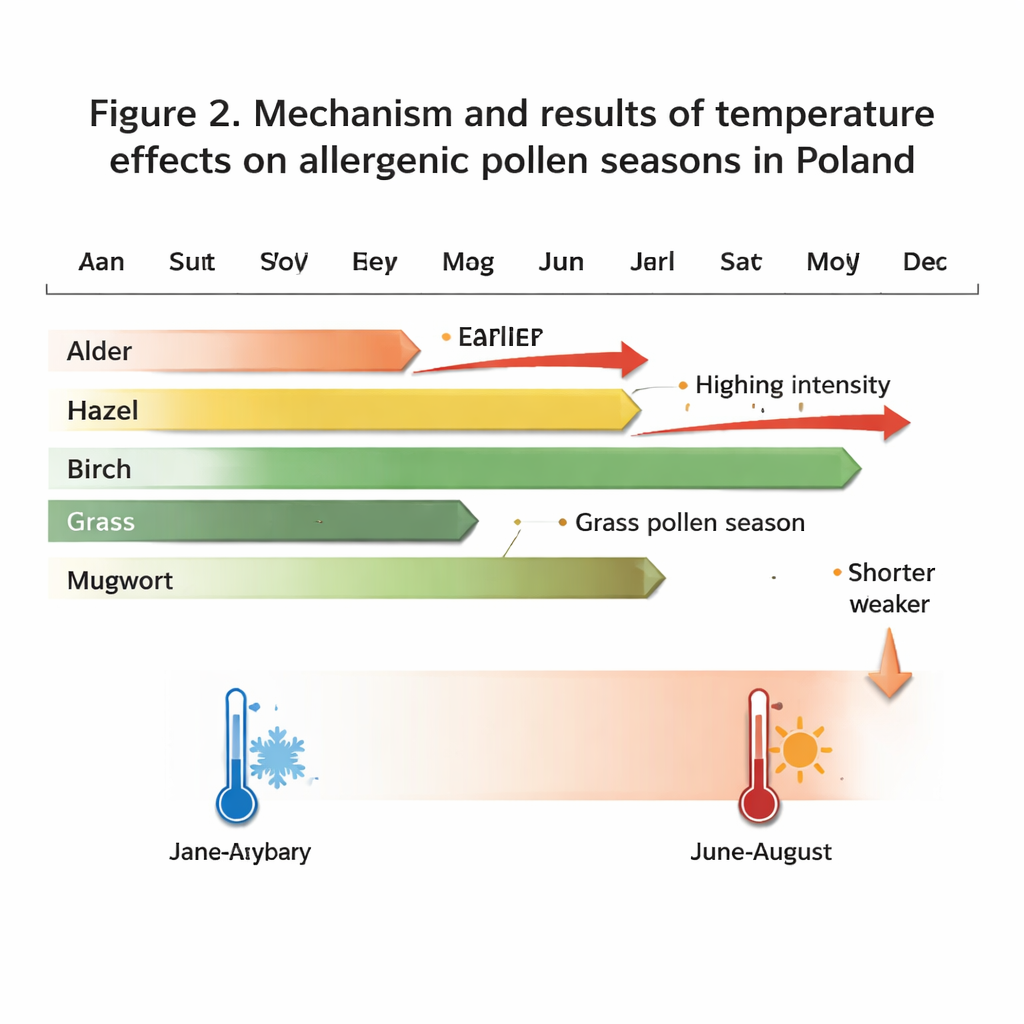
The clearest signal appeared in early‑flowering trees. Alder and hazel, which typically kick off the pollen year in late winter, showed highly variable but generally earlier start dates that closely followed January and February temperatures: warm winters meant earlier pollen in the air. Birch, the major spring culprit for many allergy sufferers, also shifted. Across most locations, birch pollen season began earlier—about 12 days per decade in some areas—and was tightly linked to temperatures in March and April. The study also confirmed a repeating pattern of "strong" and "weak" birch years, with the overall intensity of seasons rising in some cities, adding another layer of unpredictability for patients.
Grasses and Mugwort: Summer Allergies in Flux
Grass pollen, a leading trigger of seasonal hay fever, behaved somewhat differently. The timing of grass seasons was relatively stable from year to year, often starting in early May, especially in southern Poland. However, the total amount of grass pollen in the air tended to decrease over time at several stations. Hot, dry summers appeared to limit grass growth and pollen production, whereas warm and humid summers were linked to more intense seasons. Mugwort, an important late‑summer weed allergen, showed a clear shortening of its pollen season—by roughly half a week per decade on average and even more in some southern cities. Lower temperatures in June and July, combined with complex local conditions, contributed to this shorter and generally weaker mugwort season.
Climate Warming and Uneven Health Risks
Temperature records from 1961 to 2020 revealed a steady rise in average air temperature at all study sites, with the biggest increases in key months like January, April, July, August, and December. This warming translated into more days when pollen levels, particularly for alder, exceeded health‑based thresholds, although for grasses and mugwort such very high days became less frequent in many places. The study suggests that people allergic to tree pollen may face longer periods of intense exposure at the start of the year, while those sensitive to grasses and mugwort might experience shorter or less predictable seasons, strongly shaped by heat waves and rainfall patterns.
What This Means for People With Allergies
For the layperson, the message is straightforward: climate change is not only about hotter days; it is also reshaping when and how strongly allergy seasons strike. In Poland, warmer winters are nudging tree pollen seasons earlier and making some of them more intense, while summer conditions are altering how much grass and mugwort pollen fills the air. Knowing these trends can help patients and clinicians fine‑tune the timing of medications and immunotherapy, and it underscores the need for reliable pollen forecasts in a warming world. As temperatures continue to climb, planning for allergy care will increasingly depend on understanding—and anticipating—these shifting pollen calendars.
Citation: Myszkowska, D., Kubik-Komar, A., Piotrowicz, K. et al. Possible implications of the variability of the most allergenic plant pollen seasons in Poland. Sci Rep 16, 6182 (2026). https://doi.org/10.1038/s41598-026-36159-0
Keywords: pollen seasons, climate warming, allergic rhinitis, tree and grass pollen, Poland