Clear Sky Science · en
Relationships between nutrition, training frequency, and anthropometric characteristics in elite archers
Why Food and Practice Matter in a “Quiet” Olympic Sport
At first glance, archery looks calm and almost effortless—just an athlete, a bow, and a distant target. Yet behind every accurate arrow lies hours of training, physical control, and mental focus. This study lifts the curtain on what fuels elite archers: how often they train, how they eat, and how their body shape and size may relate to performance. Understanding these links helps explain why careful diet planning and structured practice matter even in sports that don’t look obviously exhausting.
Who the Archers Were and What Was Measured
The researchers surveyed 51 world-class archers from 22 countries, all competing at the highest international level, such as World Cups and World Championships. Through an online questionnaire, athletes reported basic body measurements (height, weight, body mass index, and waist size), their typical number of training hours per day and days per week, and details about their eating habits. These included whether they had access to a sports nutritionist, received professional advice, followed a tailored meal plan, and how much protein, carbohydrate, and fat they usually consumed during training and competition periods.
How Often They Trained and How Their Bodies Looked
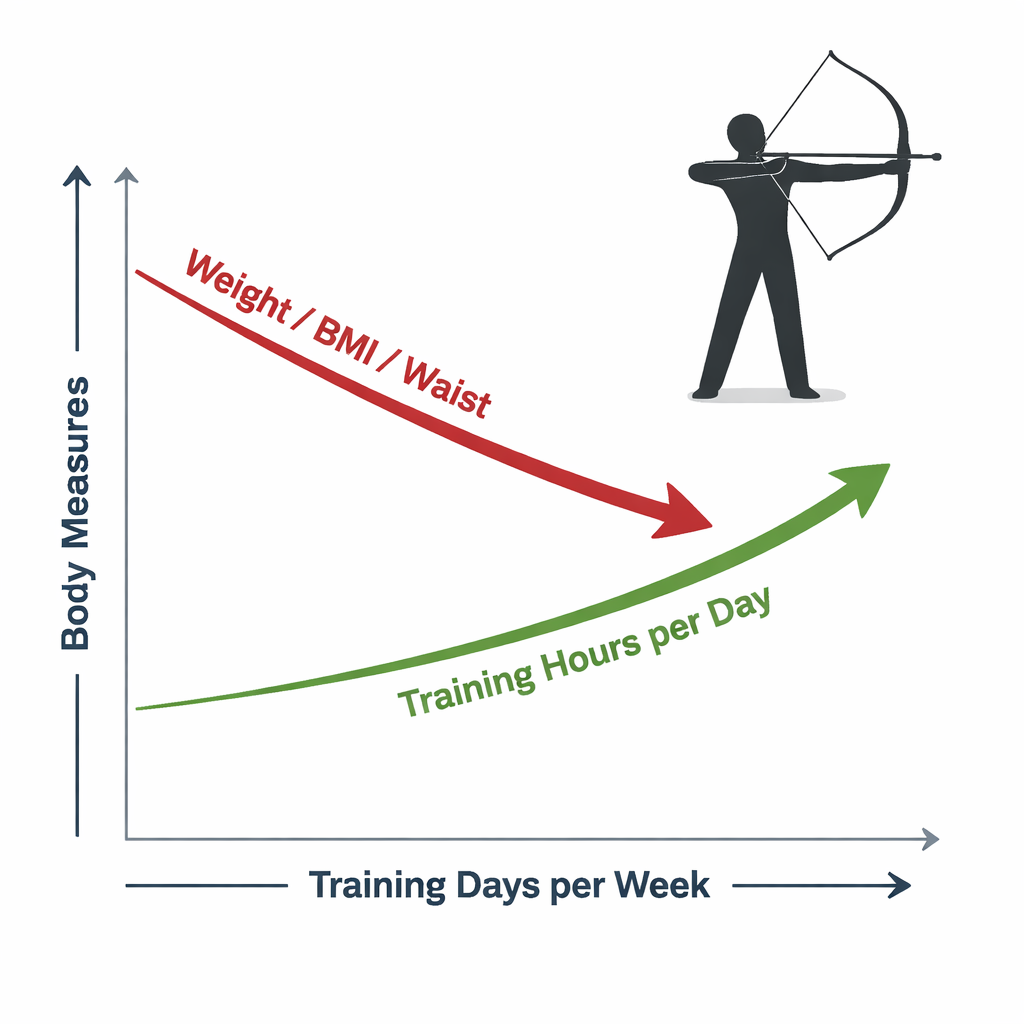
Most archers trained several hours a day and almost every day of the week. The largest group practiced about three hours daily, and many trained six days a week. Body mass index (BMI) among participants ranged from lean to clearly above the ideal range, with just over half in the “normal” category and about 45% having higher body mass. The analysis revealed a clear pattern: archers who trained more days per week tended to have lower weight, BMI, and waist circumference. In other words, more frequent training was linked to leaner body profiles, while those with higher weight and waist size generally trained fewer days.
Eating Habits and Access to Expert Advice
Despite competing at the top level, fewer than half of the archers had access to a sports nutritionist, and only about a third regularly received advice from qualified nutrition experts. Nearly three quarters said their national archery association did not oversee or support their nutrition. Many athletes were not following any special or structured diet at the time of the survey, and more than half had never received a personalized meal plan. Still, most archers felt that their diet was healthy and that they had enough energy throughout the day, even though their reported food patterns often did not match common sports nutrition guidelines.
When Guidance and Planning Make a Difference
Comparisons between groups showed that access to expert nutrition support was not just a formality. Archers who had a sports nutritionist, received professional advice, or followed a tailored plan differed in important ways from those who did not. They tended to train more hours per day and more days per week, and they often had lower BMI and smaller waist size. Athletes whose associations took an active role in their diet, or whose eating was formally monitored, also showed healthier body measures and higher training loads. These patterns suggest that organized nutrition planning and oversight are closely tied to both how much athletes train and how their bodies adapt.
What This Means for Archers and Coaches
For a lay reader, the message is straightforward: even in a sport that looks “static,” like archery, food and training routines matter a great deal. In this group of elite athletes, those who trained more often were generally leaner, and those with access to expert nutrition guidance tended to have body shapes and training habits that are more likely to support top performance. The study is based on a relatively small sample and on self-reported data, so it cannot prove cause and effect. However, it strongly suggests that thoughtful diet planning—supported by nutrition professionals and sports organizations—could help archers train more effectively, maintain healthier body composition, and possibly hit their targets with greater consistency.
Citation: Uršulin-Trstenjak, N., Mlinarić, A., Šarkanj, B. et al. Relationships between nutrition, training frequency, and anthropometric characteristics in elite archers. Sci Rep 16, 5187 (2026). https://doi.org/10.1038/s41598-026-36151-8
Keywords: archery, sports nutrition, training frequency, body composition, elite athletes