Clear Sky Science · en
Updated global prevalence and ethnic diversity of von Willebrand disease based on population genetics analysis
Hidden Bleeding Risk Around the Globe
Many people bruise easily, have heavy periods, or bleed longer than expected after surgery without ever knowing why. This study looks at von Willebrand disease, the most common inherited bleeding disorder, and asks a simple but crucial question: how many people worldwide quietly carry the genetic changes that cause it? By sifting through an enormous DNA database from more than 800,000 individuals, the authors show that von Willebrand disease is far more frequent than traditional statistics suggest, meaning millions of people may be living with an undiagnosed bleeding tendency.
The Body’s First Responder for Bleeding
When a blood vessel is injured, the body relies on a large protein called von Willebrand factor to act as a kind of molecular Velcro. It helps platelets stick to damaged vessel walls and also chaperones another clotting protein, factor VIII, protecting it from breakdown. If von Willebrand factor is missing, present in low amounts, or does not work properly, clots form more slowly and bleeding lasts longer. Von Willebrand disease comes in several forms: some reduce the amount of von Willebrand factor (types 1 and 3), while others change how it works (the type 2 variants). Some types are inherited when a person gets just one faulty copy of the gene, others require two faulty copies, one from each parent.
Using Big DNA Data as a Global Microscope
Traditionally, estimates of how common von Willebrand disease is have come from clinics, patient registries, or small community surveys. These approaches miss people who are never tested, misdiagnosed, or have only mild symptoms. The researchers instead turned to the Genome Aggregation Database (gnomAD), the largest public collection of human DNA sequences, containing exome or whole-genome data from 807,162 people of diverse backgrounds. They pulled out every change in the von Willebrand factor gene and then carefully filtered these variants using clinical databases, expert guidelines, and computer prediction tools to identify 321 changes strongly linked to disease. For the most severe form (type 3), they also included larger gene disruptions that shut the gene off entirely.
How Common Each Bleeding Type Really Is
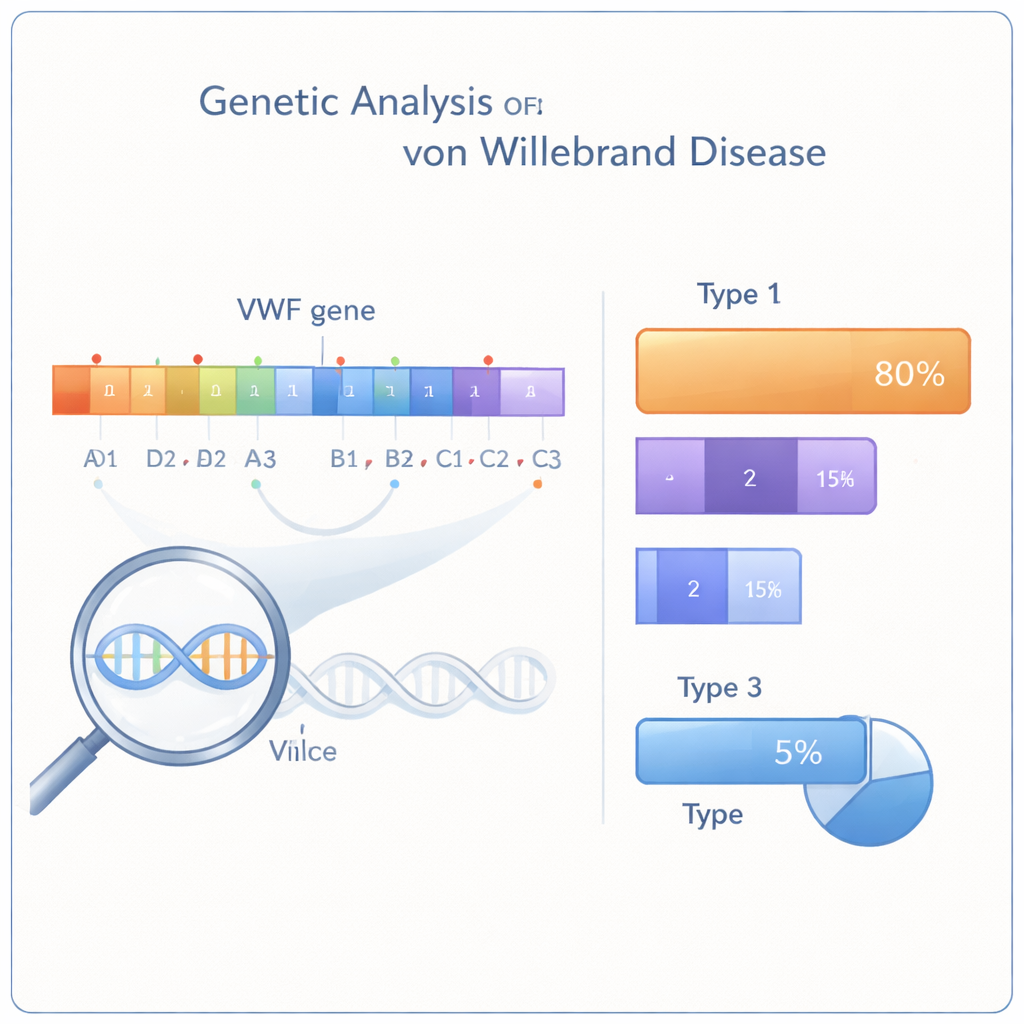
Armed with the frequency of each disease-causing variant in the database, the team used standard population genetics equations to estimate how often the different forms of von Willebrand disease should appear in the general population. They found that type 1, the mildest and most common form, affects about 11 in every 1,000 people—around 88 million individuals worldwide if applied to Earth’s population. The type 2 forms, which involve faulty function rather than a simple shortage, each occur in roughly 1 to 2 people per 1,000. The rarest forms, types 2N and 3, are still far from vanishingly rare: about 34 and 1.8 people per million, respectively. These numbers are much higher than counts from clinical registries, strongly suggesting that most affected individuals have never been formally diagnosed.
Differences Across Populations
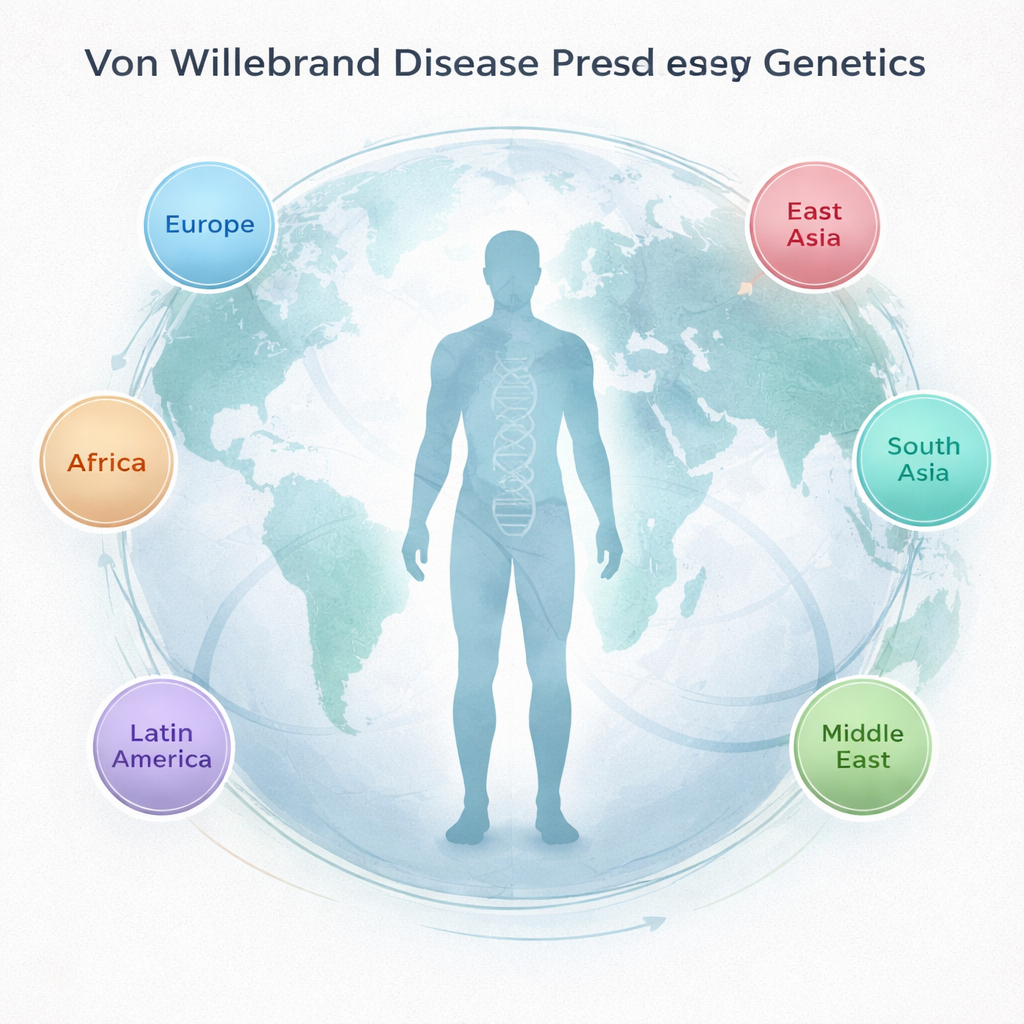
The genetic data also revealed that von Willebrand disease does not affect all groups equally. While type 1 appears in all ancestries and is particularly frequent in people of European descent, certain rare types cluster in specific ethnic backgrounds. For example, a single variant called p.Arg854Gln largely explains the higher frequency of type 2N in European and Finnish populations, whereas the most severe form, type 3, is especially common in South Asian groups compared with others. Many other variants were shared across multiple ancestries, while some appeared almost uniquely in one region. These patterns reflect how human populations have migrated, mixed, and experienced genetic “founder” effects—situations in which a small ancestral community passes on particular variants at higher rates.
What These Findings Mean for Patients
Because the authors deliberately took a conservative approach—excluding very common variants and many large or hard-to-detect genetic changes—the true prevalence of von Willebrand disease may be even higher than their estimates. Taken together, the work paints a picture of a common but underrecognized condition that quietly affects tens of millions of people. For the general public, the message is that frequent nosebleeds, heavy menstrual bleeding, or prolonged bleeding after dental work or surgery deserve attention, especially if they run in families. For health systems, the study argues for better awareness, easier access to testing, and more tailored approaches that consider a person’s genetic background. In plain terms, von Willebrand disease is not a rare curiosity—it is a widespread, often silent disorder, and recognizing it earlier could spare many people years of unexplained symptoms and prevent serious bleeding complications.
Citation: Seidizadeh, O., Cairo, A., Oriani, C. et al. Updated global prevalence and ethnic diversity of von Willebrand disease based on population genetics analysis. Sci Rep 16, 5824 (2026). https://doi.org/10.1038/s41598-026-36145-6
Keywords: von Willebrand disease, inherited bleeding, genetic prevalence, population genetics, gnomAD