Clear Sky Science · en
Green synthesis and characterizations of zinc oxide nanoparticles using acorn fruit extract for antimicrobial, larvicidal and in silico activities
Fighting Superbugs and Mosquitoes with Tree Seeds
Antibiotic-resistant infections and mosquito-borne diseases are two of today’s most worrying health threats. This study explores a surprisingly simple ally against both: the humble acorn. By using acorn fruit to create tiny particles of zinc oxide, the researchers developed a natural, low-cost material that can kill dangerous bacteria and mosquito larvae, and even block a key enzyme that helps microbes resist antibiotics.
Turning Acorns into Tiny Fighters
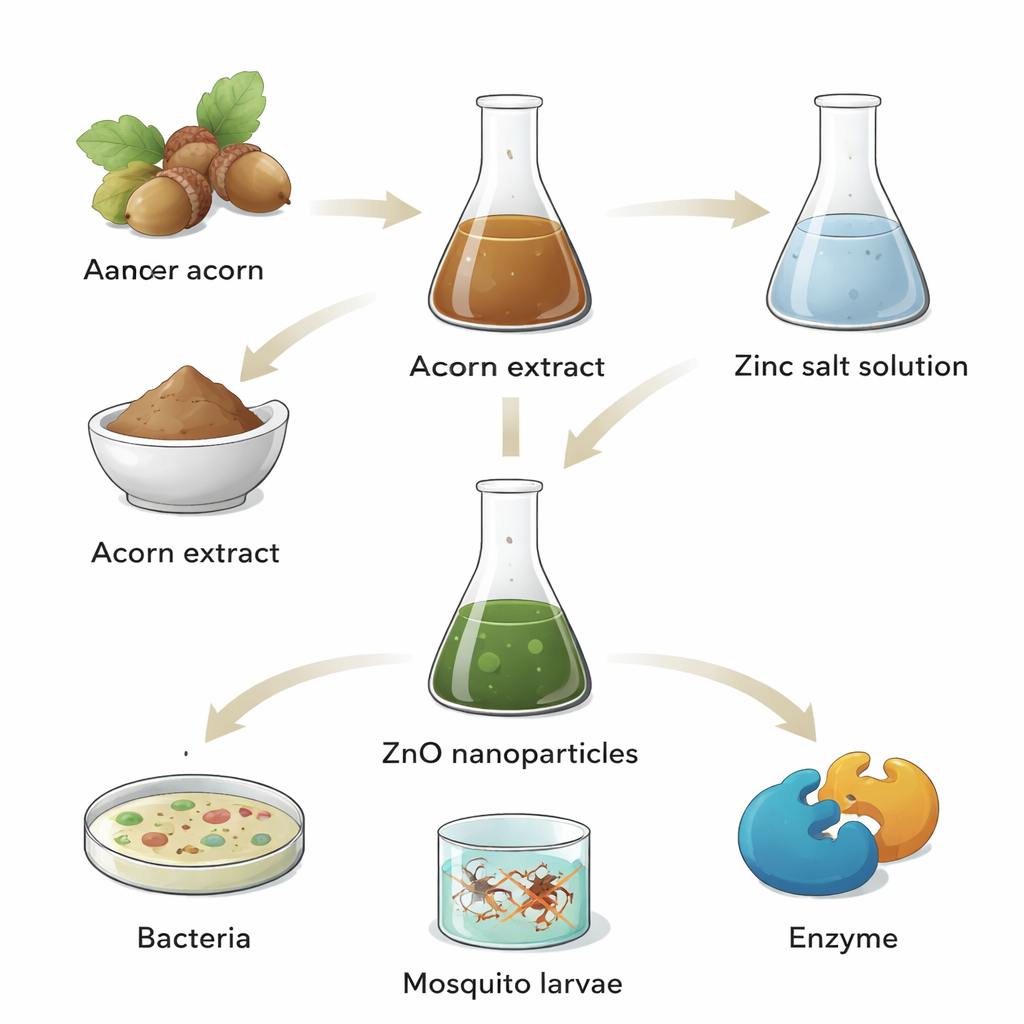
The team started by collecting acorns from oak trees in northern Pakistan. Instead of using harsh chemicals, they prepared a water-based extract from dried, ground acorn fruits. This extract was then mixed with a zinc salt solution and gently heated. A visible color change from yellowish to dark brown signaled that zinc oxide nanoparticles had formed, with plant compounds in the acorn acting as both the “fuel” and the stabilizer for these tiny structures. This eco-friendly process, often called “green synthesis,” avoids toxic solvents and makes use of a renewable natural resource.
Checking the Shape and Stability of the Particles
To be sure they had made the right kind of particles, the scientists turned to a suite of standard tests. Light absorption measurements showed a clear signal typical of zinc oxide at the nanoscale, while infrared analysis confirmed that natural chemicals from the acorn coated the particle surfaces. X-ray studies revealed that the particles had a well-ordered crystal structure, and their average size was in the tens of billionths of a meter. Electron microscope images showed mostly small, similarly sized grains with only mild clumping—common for plant-made nanoparticles. A measurement called zeta potential indicated that the particles carried a negative charge in water, helping them stay stable instead of sticking together.
Stopping Bacteria That Outsmart Antibiotics
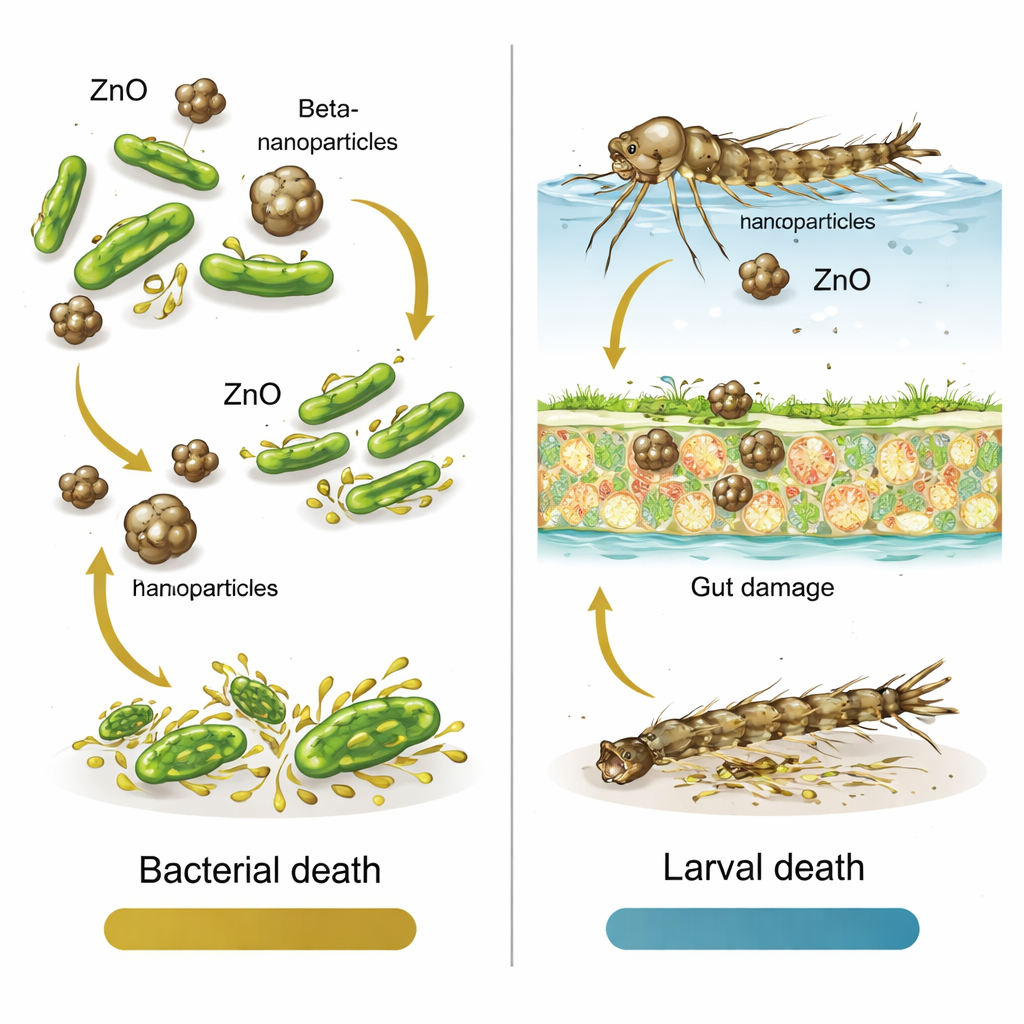
The researchers then asked how well these acorn-based nanoparticles could tackle two common and medically important bacteria: Escherichia coli and Staphylococcus aureus. Using a standard lab test, they placed different concentrations of nanoparticles into wells on agar plates seeded with the microbes. Clear rings where bacteria failed to grow—“zones of inhibition”—widened as the nanoparticle dose increased, and were consistently larger than those produced by the antibiotic amoxicillin at the same concentrations. Computer docking experiments provided a clue to why: the zinc oxide particles were predicted to bind strongly to beta-lactamase, an enzyme many bacteria use to break down beta-lactam antibiotics. By latching onto this enzyme more tightly than amoxicillin itself, the nanoparticles may shut down this key defense and restore our ability to kill resistant microbes.
Targeting Mosquito Larvae in Their Watery Home
Beyond germs, the team tested whether the same nanoparticles could be used against mosquito larvae of Culex quinquefasciatus, a species that spreads several serious diseases. When they added increasing amounts of nanoparticles to water containing the larvae, deaths rose sharply with dose and time, reaching complete mortality at the highest level tested. Microscopic examination of the larvae’s midgut—the main digestive tube—revealed severe internal damage: swollen and ruptured cells, loss of protective microvilli, and leakage of cell contents into the gut cavity. These structural injuries explain why the larvae could not survive and suggest that the nanoparticles act from the inside, after being swallowed.
Promise and Limits of a Natural Nano-Tool
Overall, the study shows that zinc oxide nanoparticles made with acorn extract can strongly inhibit disease-causing bacteria, block a crucial resistance enzyme, and efficiently kill mosquito larvae, all using a simple, plant-based method. For non-specialists, the take-home message is that everyday natural materials like acorns can be transformed into powerful microscopic tools that may help us slow antibiotic resistance and reduce mosquito populations in an environmentally friendlier way. The authors caution that they tested only two bacterial species, one mosquito species and one enzyme, so much more work is needed before such particles could be widely used. Still, the findings point toward a future in which green nanotechnology turns common tree seeds into part of our public-health toolkit.
Citation: Umar, M., Ahmad, M., Sadeeq, M. et al. Green synthesis and characterizations of zinc oxide nanoparticles using acorn fruit extract for antimicrobial, larvicidal and in silico activities. Sci Rep 16, 7072 (2026). https://doi.org/10.1038/s41598-026-36137-6
Keywords: green nanotechnology, zinc oxide nanoparticles, antibiotic resistance, mosquito control, acorn extract