Clear Sky Science · en
Loss of the CoA-degrading enzyme NUDT19 exacerbates albuminuria and disrupts renal lipid homeostasis in high fat diet-fed mice
Why Fatty Foods Can Strain Your Kidneys
Many people know that a high‑fat diet can be hard on the heart, but fewer realize it can quietly damage the kidneys too. This study explores a little‑known kidney enzyme called NUDT19 and shows how losing it makes high‑fat diets more harmful. By looking inside mouse kidneys at how fats are handled and how proteins leak into the urine, the researchers reveal a new way that our bodies try to protect the kidneys from dietary fat overload.
A Kidney Enzyme with a Quiet but Crucial Job
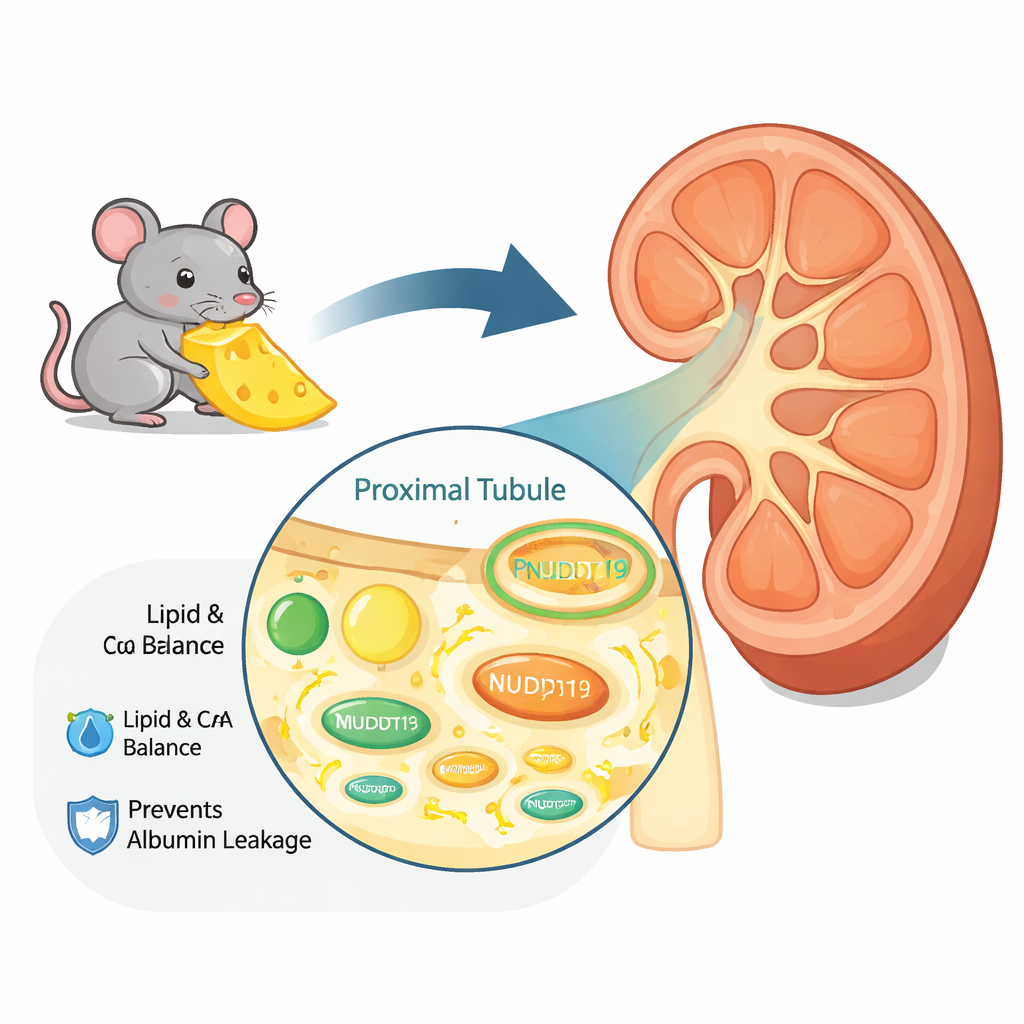
The kidneys are restless machines that burn large amounts of energy to filter blood and reclaim valuable substances. Much of this work happens in tubular cells packed with energy factories (mitochondria) and fat‑processing stations (peroxisomes). NUDT19 sits inside peroxisomes and helps break down a key metabolic helper called coenzyme A (CoA). Although this sounds technical, the basic idea is that NUDT19 helps keep fat‑related chemistry in balance inside kidney cells. Because NUDT19 is found mostly in kidneys and is reduced in diabetic kidney disease, the authors asked whether it becomes especially important when the body is flooded with fat.
Testing Kidneys Under a High‑Fat Challenge
To probe NUDT19’s role, the team compared normal mice with mice completely lacking the Nudt19 gene. Both groups were fed either a standard low‑fat diet or a high‑fat diet for 15 weeks, roughly modeling long‑term rich eating. As expected, all high‑fat‑fed mice gained weight, built up fat mass, and developed higher blood sugar and cholesterol, regardless of whether they had NUDT19. At first glance their kidneys looked similar under the microscope, and total kidney fat and cholesterol content did not differ between groups. This meant any problems arising from NUDT19 loss were subtle and not simply due to big fat deposits clogging the tissue.
When Albumin Starts Slipping Through
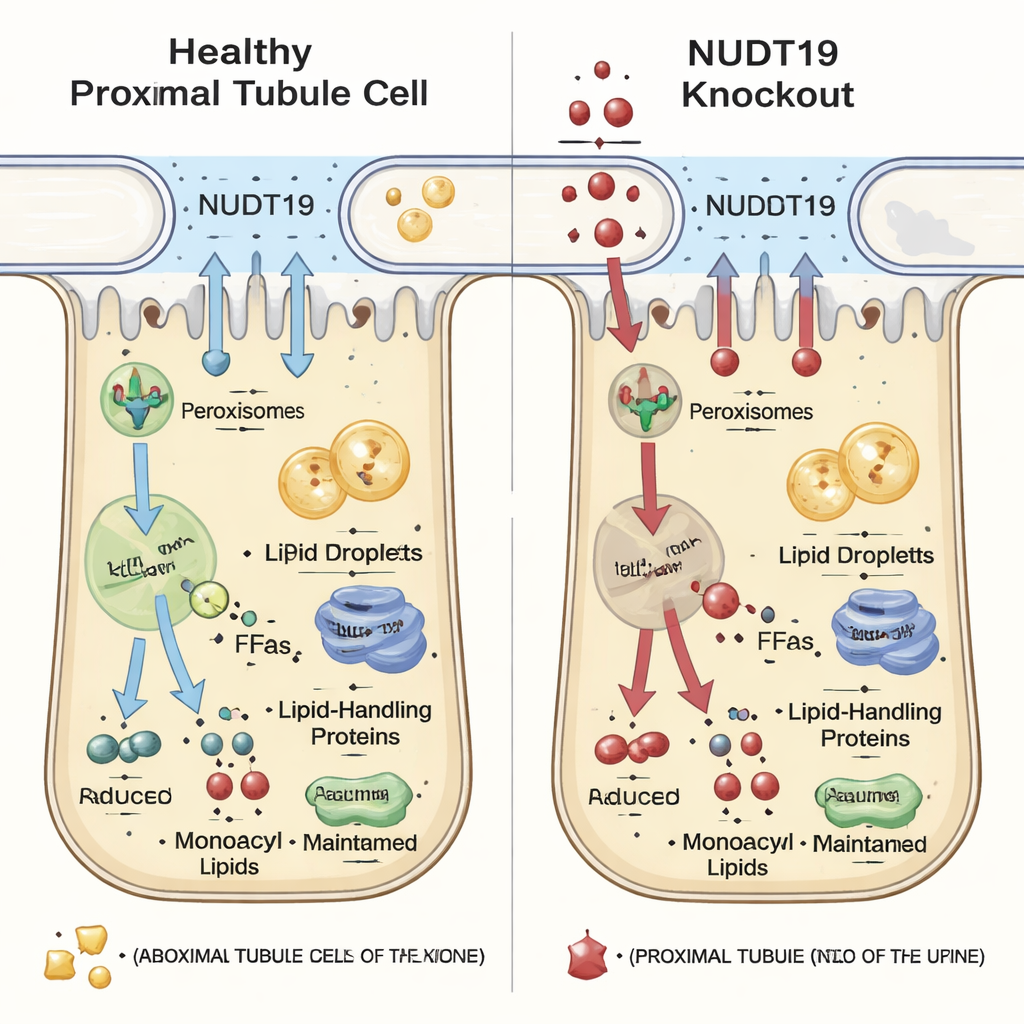
The clearest trouble showed up in the urine. High‑fat feeding increased the amount of albumin, a major blood protein, that escaped into the urine in normal mice—a warning sign called albuminuria. In mice lacking NUDT19, this leak was significantly worse, even though overall kidney filtration (measured by creatinine clearance) and blood albumin levels stayed normal. In other words, the kidneys of NUDT19‑deficient mice filtered blood about as well as normal kidneys, but they were poorer at reabsorbing albumin back into the body. This points to a defect in tubular handling of albumin rather than a simple breakdown of the kidney’s filter.
Hidden Shifts in Fat Chemistry Inside the Kidney
To figure out why albumin reabsorption faltered, the researchers took a broad look at thousands of small molecules and proteins in the kidney cortex. They found a striking drop in non‑esterified (free) fatty acids and in several single‑fat‑tail molecules, such as monoacylglycerols and fatty‑acid‑linked messengers, in NUDT19‑deficient kidneys under high‑fat feeding. At the same time, a handful of proteins involved in handling fats—enzymes tied to fat breakdown in peroxisomes and mitochondria, a lipid droplet‑associated protein, and a lipoprotein receptor called LSR—changed in abundance. These shifts suggest that losing NUDT19 quietly rewires lipid metabolism, reducing certain fatty acids and signaling fats that may be important for normal albumin uptake, even though bulk triglyceride and cholesterol levels remain unchanged.
Broader Ripples: Blood Pressure and Signaling Molecules
The study also uncovered changes in a lysosomal enzyme called PRCP, which can trim hormone fragments such as angiotensin II that help control both blood pressure and albumin handling by kidney tubules. NUDT19‑deficient mice on a high‑fat diet had higher PRCP levels in the kidney and tended to have lower blood pressure than normal mice. This hints that altered fat metabolism inside peroxisomes may indirectly influence hormone signaling and blood flow, further affecting how much albumin leaks or is reclaimed.
What This Means for Human Kidney Health
In simple terms, NUDT19 acts like a local traffic controller for fat chemistry inside kidney cells. When dietary fat is high, this control system becomes more important. Without NUDT19, key fat‑related molecules and proteins shift in ways that make kidney tubules less able to pull albumin back from the forming urine, leading to increased albumin loss—a hallmark of early kidney damage. Because NUDT19 levels are reduced in several kidney diseases, understanding and possibly boosting its activity could one day offer a new way to protect kidneys from the silent strain of high‑fat diets and metabolic disorders.
Citation: Saporito, D.C., King, R.D., Vickers, S.D. et al. Loss of the CoA-degrading enzyme NUDT19 exacerbates albuminuria and disrupts renal lipid homeostasis in high fat diet-fed mice. Sci Rep 16, 5820 (2026). https://doi.org/10.1038/s41598-026-36136-7
Keywords: kidney, high fat diet, albuminuria, lipid metabolism, peroxisomes