Clear Sky Science · en
Urinary incontinence 12 years after obstetric anal sphincter injury in a longitudinal case control study
Why Leaking Urine Years After Childbirth Matters
Many women quietly live with urine leakage years after having children, often assuming it is an unavoidable price of motherhood. This study followed women for more than a decade after childbirth to ask a specific question: if a woman suffered a severe tear involving the anal sphincter during vaginal birth, is she more likely to have troublesome urine leakage 12 years later than women who did not have such a tear? The answer helps doctors better counsel pregnant women and design treatments that truly prevent long‑term problems.
Looking at Mothers Over the Long Haul
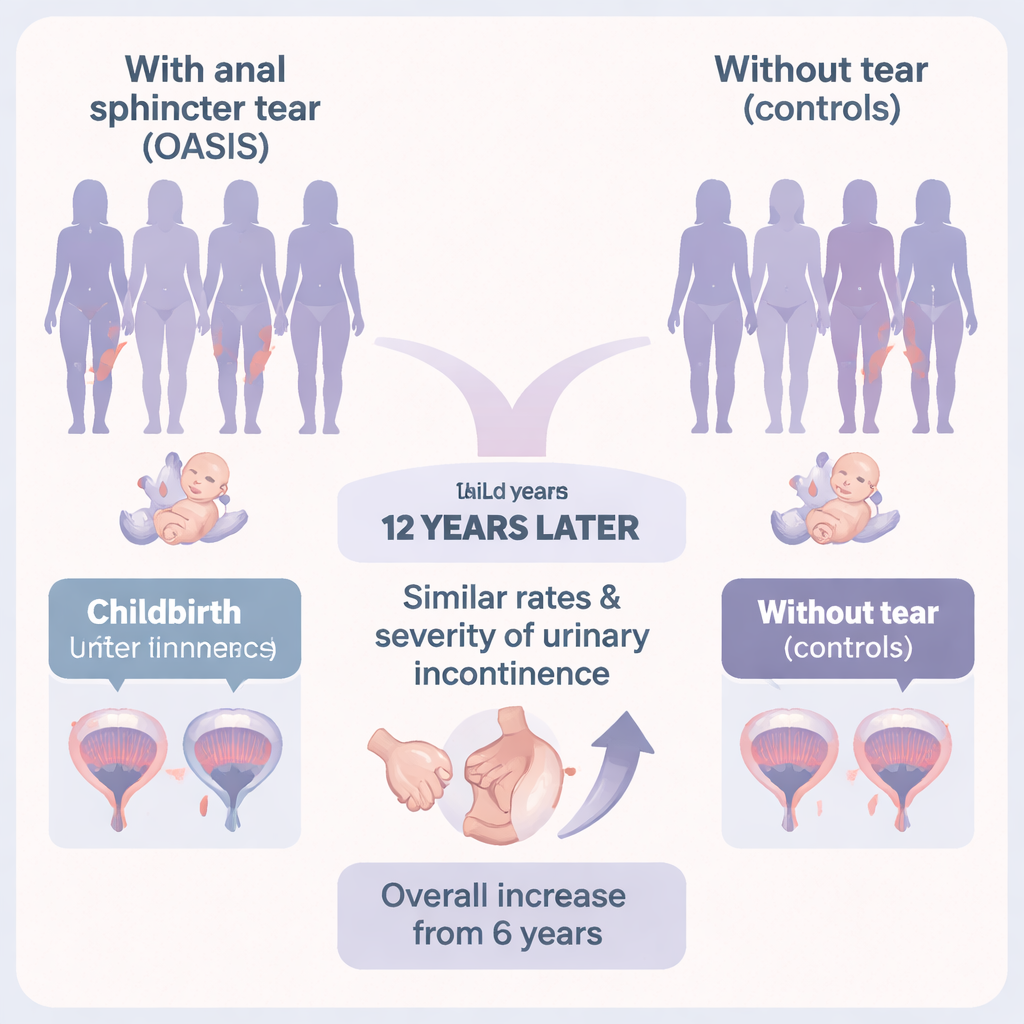
The researchers drew on delivery records from a large Swiss hospital, identifying over 13,000 women who had a single baby in head‑first position between 1996 and 2006. Among them, about 1.5% experienced a serious tear called an obstetric anal sphincter injury (OASIS), where the muscles controlling the anus are damaged during birth. Years earlier, the same team had studied a subgroup of these women and found that, at six years after delivery, those with OASIS reported more frequent urination and more leakage during physical activity than similar women without such tears. To see what happens in the longer term, they contacted the very same women again around 12 years after delivery and asked them detailed questions about bladder symptoms and daily life.
How Symptoms and Daily Life Were Measured
Women received a mailed questionnaire that collected updated information on their age, health, and lifestyle, along with two standard tools for assessing urinary problems. One, the Urogenital Distress Inventory (UDI‑6), asks how bothersome specific symptoms are, such as urgency, leakage with effort, or difficulty emptying the bladder. The other, the Incontinence Impact Questionnaire (IIQ‑7), measures how much urine leakage interferes with activities like exercise, travel, social events, and emotional well‑being. Answers such as “moderately” or “greatly” bothered were counted as meaningful problems. The researchers compared scores between 52 women with a prior sphincter tear and 144 carefully matched controls without such tears, and they also tracked how scores had changed since the six‑year follow‑up.
What Happened 12 Years After Birth
By the time the women completed the second survey, they were on average 42 years old and about 12 years past the birth in question. Surprisingly, the women who had suffered an anal sphincter tear no longer reported worse bladder symptoms than the control group. The average impact of urinary leakage on quality of life, captured by the IIQ‑7 score, was low and similar in both groups. Likewise, the overall severity of urinary symptoms measured by the UDI‑6 did not differ meaningfully between women with and without OASIS, and the proportion with more severe symptoms was nearly identical. In other words, the gap that had been visible six years after birth had faded by year twelve.
When Age Matters More Than the Birth Injury
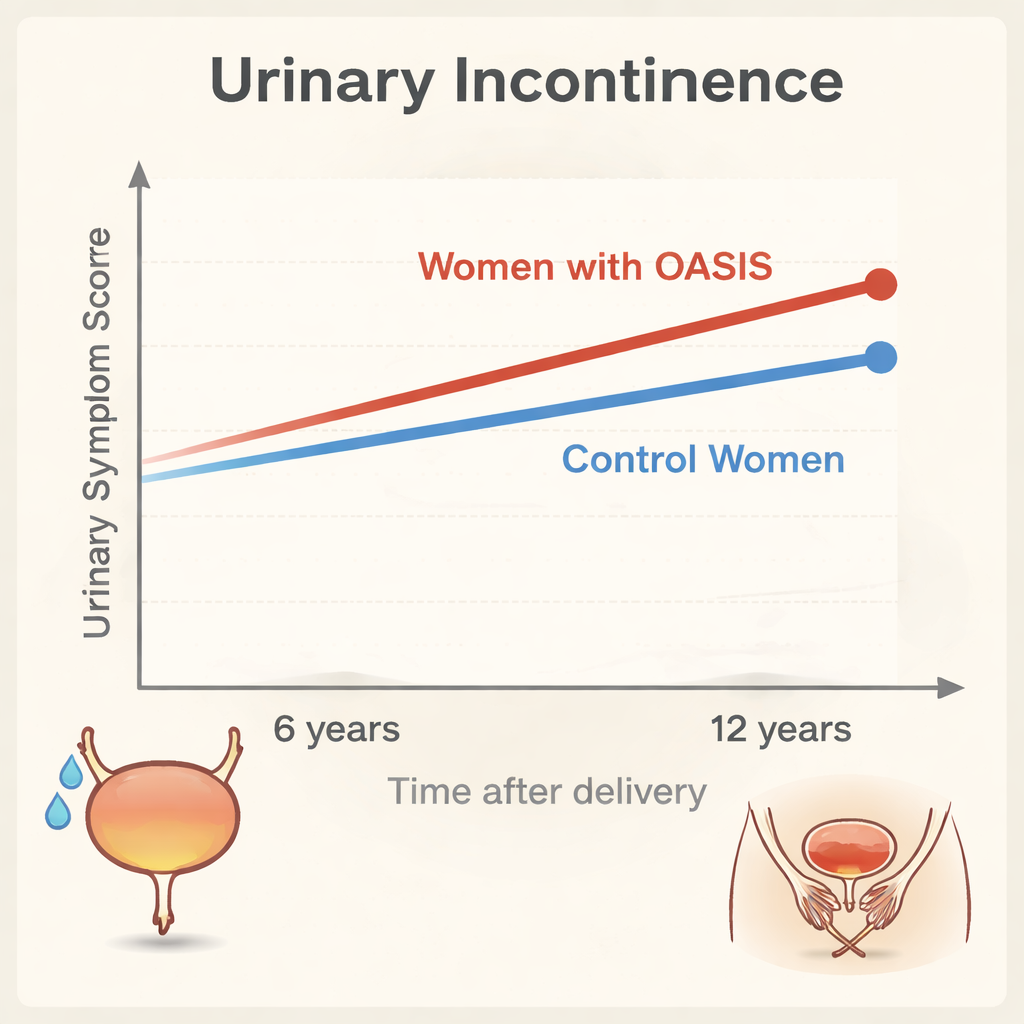
Although the two groups looked alike at 12 years, urinary problems had worsened across the entire group over time. On average, women’s UDI‑6 scores rose between six and 12 years, showing that symptoms became more common or more bothersome with age. The increase was clearly significant in the control group and milder in the OASIS group, but both showed an upward trend. The authors suggest that aging, repeated strain on the pelvic floor, weight gain, chronic coughing, constipation, and other life factors may gradually weaken the tissues that support the bladder and urethra. Many women with OASIS also received more pelvic‑floor physiotherapy, which may have helped them catch up or even fare slightly better over the long term.
What Women and Clinicians Can Take Away
Put simply, this long‑term study suggests that a severe tear involving the anal sphincter at birth does not, by itself, condemn a woman to worse urine leakage 12 years later. Instead, urinary incontinence tends to become more common as women age, regardless of whether they had this particular type of injury. That makes early prevention and treatment—such as pelvic‑floor exercises, healthy weight, and open discussion with doctors—especially important for all mothers. The message is reassuring: while serious birth tears do need careful repair and follow‑up, long‑term bladder problems are shaped more by overall pelvic health and aging than by this single injury alone.
Citation: Rham, M.d., Tarasi, B., Lepigeon, K. et al. Urinary incontinence 12 years after obstetric anal sphincter injury in a longitudinal case control study. Sci Rep 16, 5179 (2026). https://doi.org/10.1038/s41598-026-36123-y
Keywords: urinary incontinence, childbirth, pelvic floor, perineal tears, women’s health