Clear Sky Science · en
Digital twin-based intelligent risk assessment and decision support system for university student entrepreneurial projects
Why student startups need a digital safety net
Across campuses, more students than ever are turning class projects into real companies. Yet most of these ventures fold within a few years, often not because the ideas are bad, but because teams do not see trouble coming in time to react. This paper presents a new kind of "digital safety net" for student founders: a system that builds a living virtual copy of each startup so risks can be spotted early, explored safely, and addressed before they sink the business.
Turning a startup into a living virtual model
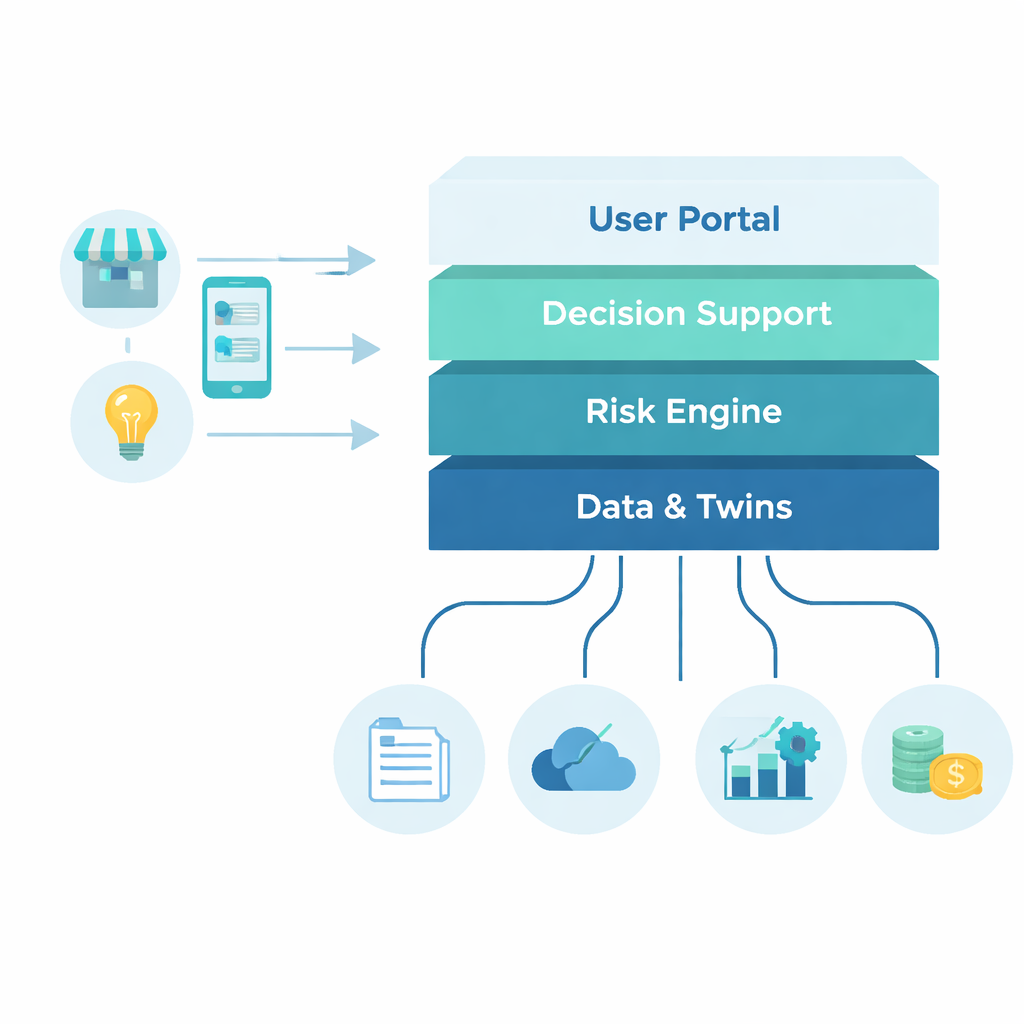
At the heart of the work is the idea of a digital twin: a constantly updated virtual version of something that exists in the real world. Instead of mirroring a jet engine or a factory line, this system mirrors student-run ventures. It pulls together data about the team, money flows, customers, markets, and partnerships into a structured model that updates in near real time. As the startup gains or loses users, burns cash faster or slower, or changes direction, the twin is updated to reflect those shifts, allowing software to "watch" the venture far more steadily than any human mentor could.
Seeing risk as a moving target, not a snapshot
Traditional startup risk checks tend to be static: a one-off scorecard, a mentor’s gut feel, or a financial review at the end of the term. The authors argue that this snapshot style misses what really hurts student teams—fast-moving chains of events that build quietly and then suddenly break the venture. Their system instead treats risk as something that evolves over time and spreads between areas. It tracks four big zones of danger—market, money, operations, and strategy—and studies how trouble in one area, such as rising customer-acquisition costs, can trigger cash problems and then team or product strain. By analyzing patterns across 2,847 real student projects from 23 universities, the system learns which early signals usually precede serious trouble.
Teaching the twin to predict and explain
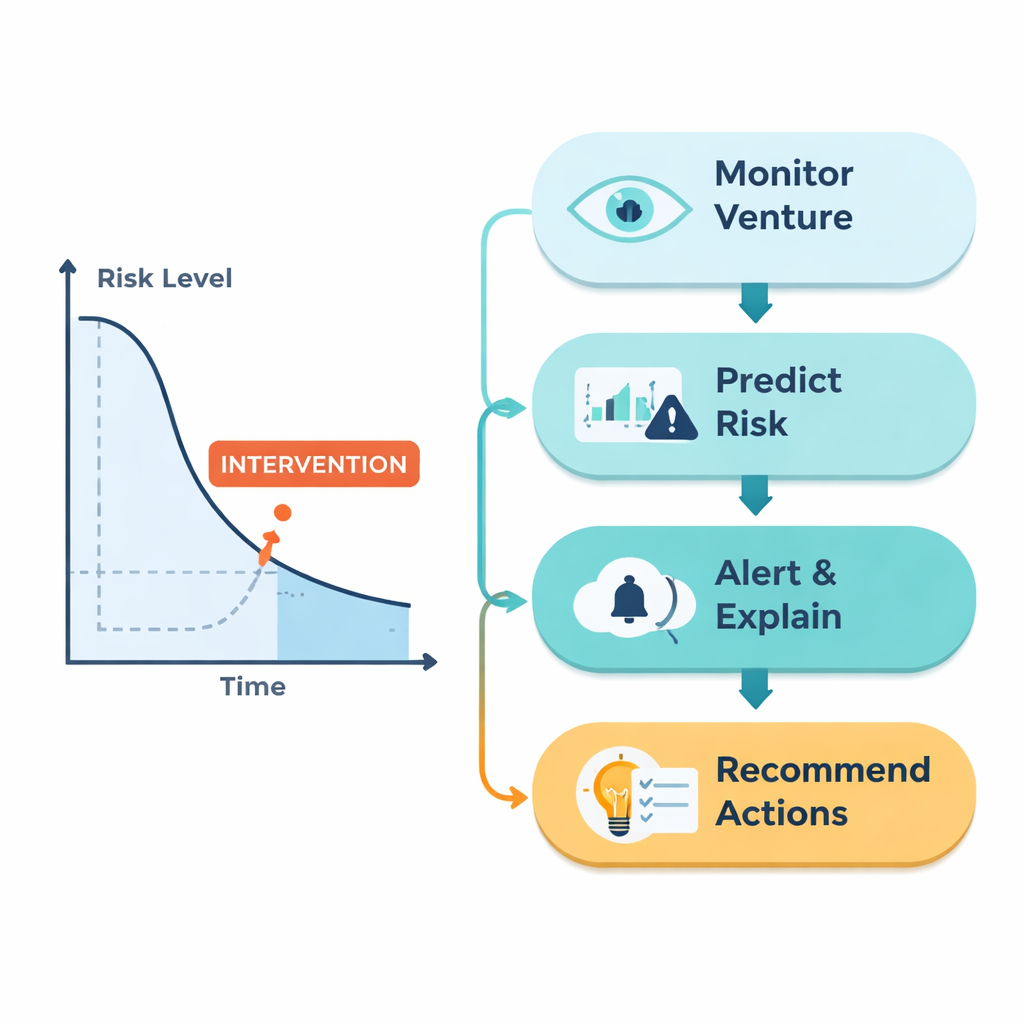
To make the twin useful, the researchers combine several machine learning methods, each good at a different kind of pattern. One model focuses on classifying ventures into low, medium, or high risk; another looks at which factors matter most, such as team skill mix, runway, or market growth; a third studies time-series data to forecast how risk is likely to rise or fall over the coming months. These models work together as a voting team to produce a single risk forecast and a confidence level. Crucially for students, the system does not just output a score—it highlights which indicators are driving that score, for example unstable cash flow or slipping milestone completion, so founders can understand where to act.
From early warnings to concrete advice
The digital twin is wrapped in an advice layer that turns predictions into next steps. When risk crosses certain thresholds, the system moves from quiet monitoring to caution, warning, or critical alerts. For each alert, it suggests tailored options, such as cutting burn rate, renegotiating a partnership, adjusting launch timing, or focusing on specific customer segments. In trials, the system typically raised alarms about serious issues more than three weeks before they fully hit. Projects that followed its suggestions saw about a 24 percent jump in survival compared with similar teams using more traditional dashboards or mentor-only guidance. Users—students, teachers, and mentors—rated the system highly for clarity, usefulness, and trust.
What this means for student founders
In plain terms, the study shows that student teams can borrow the kind of continuous monitoring and scenario-testing once reserved for large firms with data science departments. By keeping a close digital watch on key signals, simulating "what if" choices, and flagging problems early, the system helps founders turn vague worry—"something feels off"—into specific, actionable insight. It cannot guarantee success or replace hard work and creativity, but it meaningfully shifts the odds: more student ventures survive, waste less time and money on avoidable mistakes, and give their founders a deeper, data-informed understanding of how to steer a young business in uncertain conditions.
Citation: Qin, R., Zi, X. & Ge, X. Digital twin-based intelligent risk assessment and decision support system for university student entrepreneurial projects. Sci Rep 16, 5770 (2026). https://doi.org/10.1038/s41598-026-36111-2
Keywords: digital twin, student entrepreneurship, startup risk, decision support, machine learning