Clear Sky Science · en
Peripheral and central auditory dysfunction in tinnitus with clinically normal hearing
Why Ringing Ears Matter Even When Tests Look Normal
Many people live with a constant ringing, buzzing, or hissing in their ears—tinnitus—only to be told that their hearing is “normal” after a standard test. This study explores a simple but unsettling question: if the hearing test is normal, why do the ears still ring? By looking beyond the usual test frequencies and probing how the brain processes sound, the researchers show that tinnitus can hide in places routine checks don’t reach.
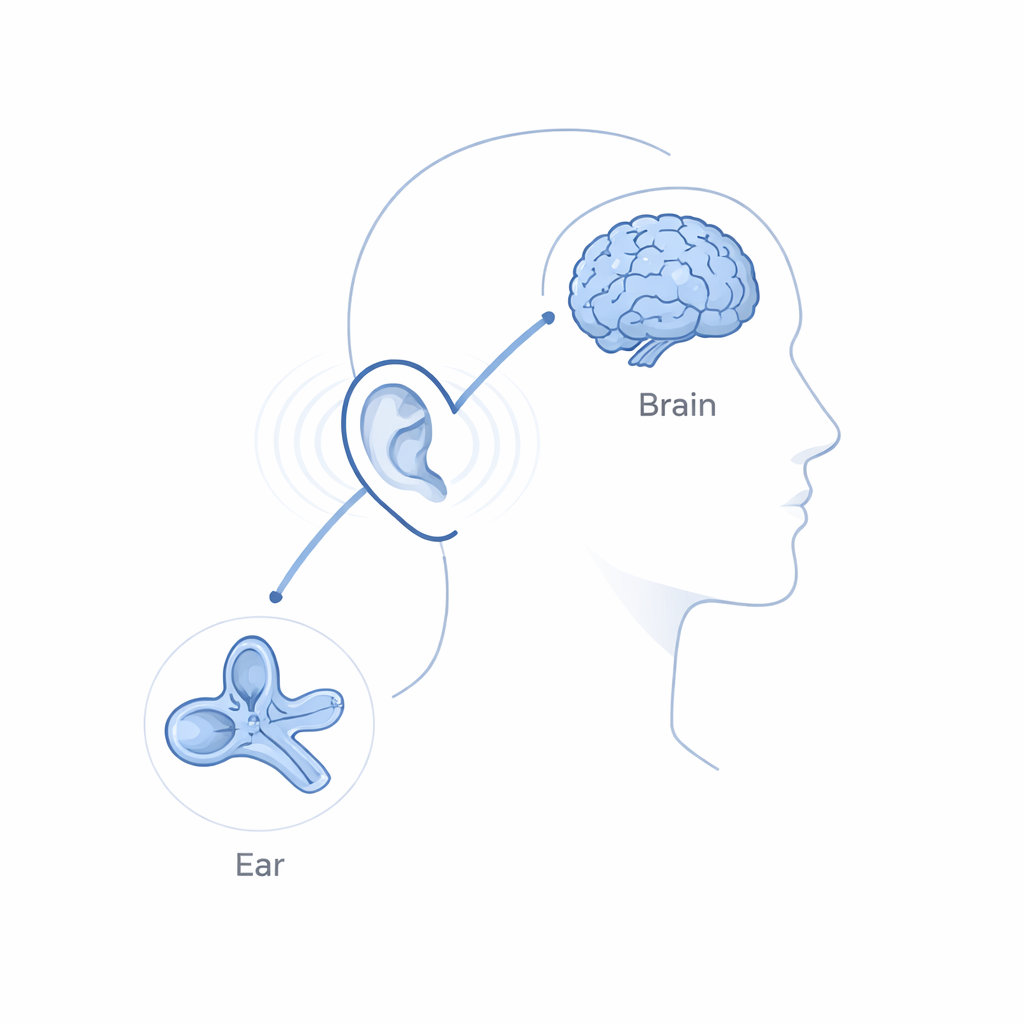
Ringing Without a Clear Cause
Tinnitus is commonly linked to hearing loss, yet 10–15% of cases occur in people whose hearing appears clinically normal on standard audiograms, which measure tones from 250 Hz to 8 kHz. This mismatch hints that traditional tests may miss subtle damage. Two leading ideas are that the very highest pitches—above those routinely tested—may be impaired, and that the wiring between the inner ear and the hearing nerve may be frayed even when the ear still detects soft sounds. Together, these could disturb both the “front end” of hearing in the ear and the “back end” in the brain.
Looking Deeper Into the Ear and the Brain
To probe these hidden problems, the researchers tested 28 adults with chronic tinnitus and 28 similar adults without tinnitus. Everyone had normal results on standard hearing tests. The team then added three more sensitive checks. First, ultra-high frequency audiometry pushed the hearing test out to 9–20 kHz—pitches higher than a typical clinic measures. Second, a “temporal fine structure” task asked how well listeners could detect tiny timing shifts between the ears, a sign of how precisely the hearing nerve fires. Third, an “amplitude modulation detection” task measured how well listeners sensed slow ripples in sound level, reflecting how cleanly the brain tracks changes in a tone over time.
Hidden Damage Shows Up at Very High Pitches
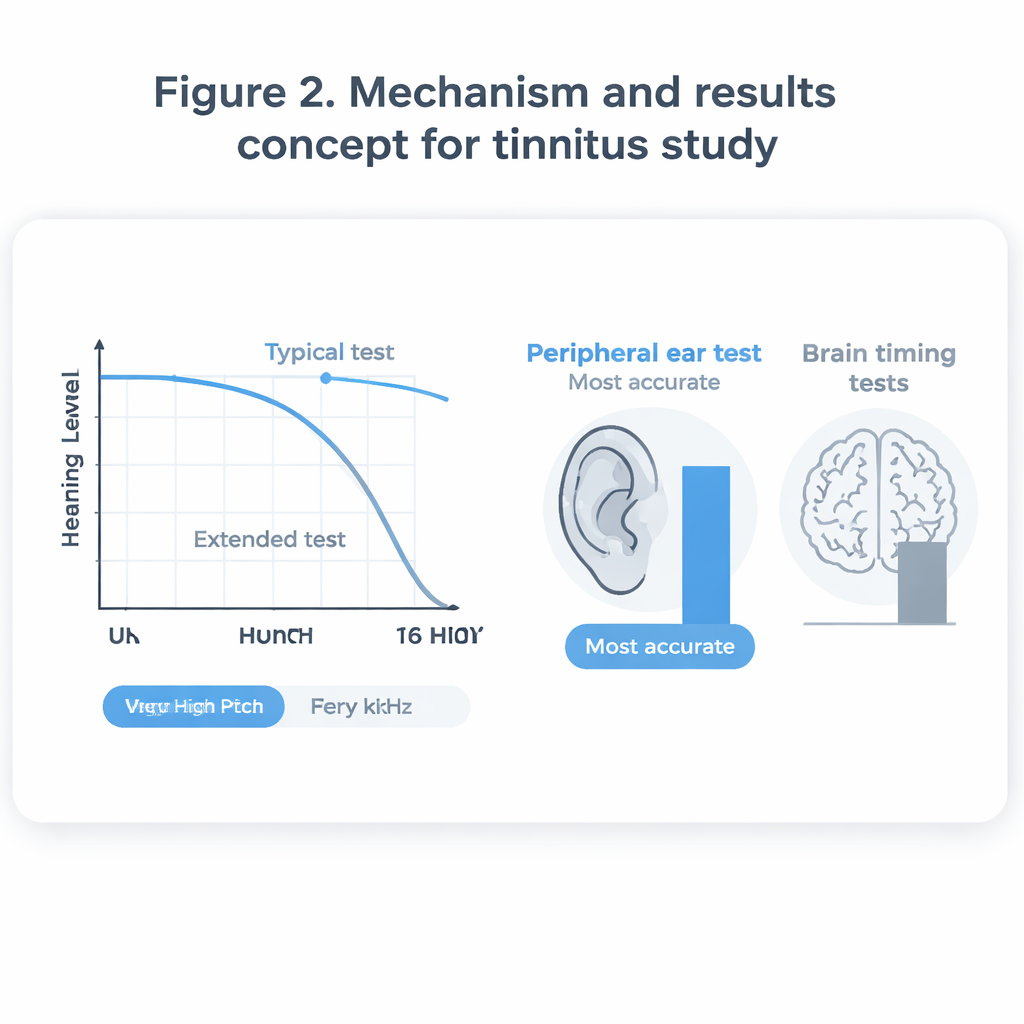
The results revealed clear differences. People with tinnitus needed louder sounds than controls at the very highest pitches, even though their standard audiograms were normal. This suggests early damage to the base of the cochlea—the part tuned to the highest frequencies—and supports the idea of “hidden” hearing loss that standard tests miss. When the authors used statistical models that controlled for ordinary hearing thresholds, this high-pitch deficit remained, indicating it was not simply a side effect of small variations in the usual hearing range.
Timing and Detail Problems in the Brain
Differences also emerged in how tinnitus patients processed timing and sound detail. They performed worse on the fine-timing task, meaning they struggled more to detect subtle shifts in when sounds reached each ear. They also needed stronger amplitude “ripples” to notice changes in loudness over time. These difficulties suggest that the brain’s handling of sound timing and detail is disrupted, possibly because some of the nerve connections carrying sound information from the inner ear have been lost. Interestingly, these timing and modulation measures did not strongly correlate with the ultra-high frequency thresholds, implying that ear damage and brain-based processing problems may represent partly independent pathways to tinnitus.
Which Tests Best Spot Tinnitus?
When the authors asked which measure best distinguished tinnitus cases from controls, the extended high-frequency test came out on top. Using a statistical tool called a ROC curve, they found that ultra-high frequency audiometry correctly classified people with tinnitus with about 96% accuracy, outperforming the timing and modulation tasks. Certain single frequencies—like 10, 16, 18, and 20 kHz—were especially powerful in flagging tinnitus. The brain-based tasks still added useful information but were less accurate on their own, reinforcing the idea that a combined ear-and-brain approach may be most informative.
What This Means for People With Ringing Ears
For patients who hear ringing yet are told their hearing is normal, this study offers an explanation: standard tests may simply not look in the right places. By extending hearing checks into very high pitches and adding simple timing-based listening tasks, clinicians can uncover both subtle ear damage and changes in how the brain processes sound. In plain terms, tinnitus in people with normal audiograms is real, often reflects hidden problems in the high-frequency regions of the ear, and may also involve separate timing glitches in the brain. Wider use of these more sensitive tests could lead to earlier detection, better counseling, and, ultimately, more targeted treatments for those living with constant noise no one else can hear.
Citation: Suresh, S., Gundmi, A., Madhukesh, S. et al. Peripheral and central auditory dysfunction in tinnitus with clinically normal hearing. Sci Rep 16, 6085 (2026). https://doi.org/10.1038/s41598-026-36096-y
Keywords: tinnitus, hidden hearing loss, high frequency hearing, auditory processing, ultra high frequency audiometry