Clear Sky Science · en
Air-fed cold atmospheric plasma device as a safe and effective anti-SARS-CoV-2 air filter
Cleaning the Air We Share
Even after vaccines and treatments, many people still worry about breathing in viruses like the one that causes COVID‑19, especially in crowded indoor spaces. This study explores a new kind of air-cleaning device that uses a gentle, room‑temperature "plasma"—a faint electrical glow in moving air—to disable the SARS‑CoV‑2 virus as it drifts by. The researchers not only test how well this device breaks apart the virus, but also whether long‑term exposure appears safe in animals, pointing toward future air filters that quietly kill viruses in the background of everyday life.
A New Kind of Air Filter
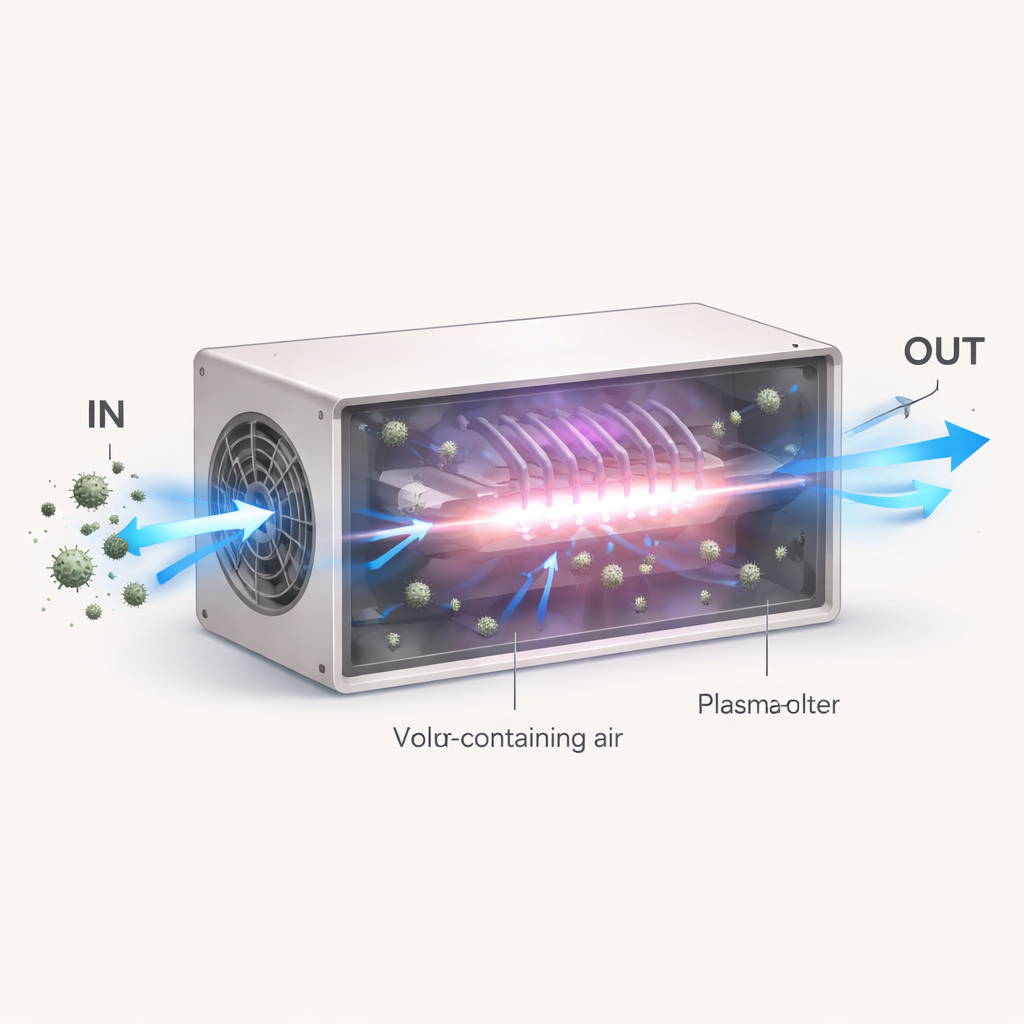
The team built a compact air-fed cold atmospheric plasma device that looks, at first glance, like a simple fan with a power plug, control panel, air inlet and outlet. Hidden inside is a comb-shaped set of metal electrodes on a circuit board. When air flows through this region and a rapidly alternating high voltage is applied, the gas becomes a cold plasma filled with charged particles and reactive molecules, but the overall gas temperature stays close to room temperature. Measurements showed a strong but controlled discharge with plenty of reactive oxygen and nitrogen species, which are known to damage microbes. Thermal imaging confirmed that the airflow leaving the device was warm but not hot, suggesting it would be comfortable and safe for everyday use.
How the Plasma Attacks the Virus
To see what actually happens during operation, the researchers combined electrical and optical measurements with computer simulations. By tracking how electrons and ions moved between the two electrodes over billionths of a second, they mapped where the strongest electric fields formed and where reactive particles such as nitrogen and oxygen ions built up. These simulations showed a bright, active region of plasma forming between the electrodes, rich in the kinds of chemical species that can damage proteins and genetic material on viruses. Importantly, the discharge stayed in a stable, controlled mode rather than turning into hot sparks, which supports its use as a continuous air treatment tool.
Watching the Virus Fall Apart
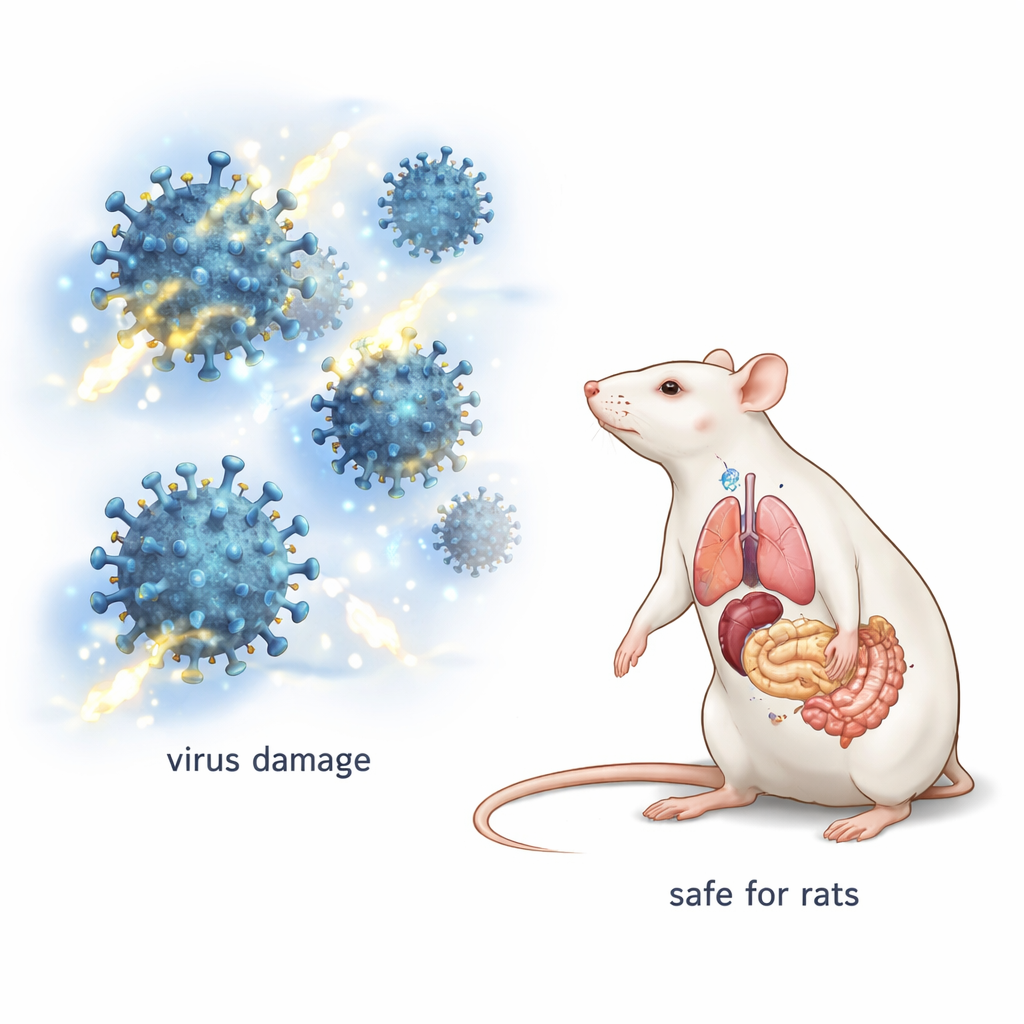
The group then put dishes containing SARS‑CoV‑2 under the device, at a distance similar to what might be used in real rooms, and exposed them to plasma for 30 minutes. Using transmission electron microscopy—an imaging method that can reveal nanometer‑sized details—they compared untreated particles to those exposed to the plasma. Intact virus particles showed the familiar crown of spike proteins and a clearly defined body. After treatment, those typical spikes had disappeared, the protein shell looked denatured and clumped, and in many images the virus bodies were almost indistinguishable from the background. These structural changes indicate that the plasma had irreversibly damaged not just the spikes but other viral proteins as well, effectively inactivating the virus.
Testing Safety in Living Creatures
Disabling viruses is only half the story; the device must also be safe to breathe around. To test this, the researchers housed rats in cages where the plasma device ran for up to four weeks and compared them with rats kept in normal air. They tracked body weight, food intake, behavior, skin appearance, organ structure and a wide set of blood chemistry markers. The rats exposed to plasma behaved normally, gained weight at the same rate as controls and showed no obvious skin or organ damage under the microscope. Some blood indicators, such as creatinine and certain liver- and cholesterol‑related markers, dipped slightly but stayed within normal ranges and may have been influenced by fasting and stress. Measurements of the air and nearby water suggested that virus‑killing reactive molecules like nitrite and hydrogen peroxide were generated, while ozone—a gas of more concern for lung irritation—stayed below the detection limit of the instrument used, though the authors note that more sensitive testing in tighter spaces will be needed.
What This Could Mean for Everyday Life
Taken together, the work shows that an air‑fed cold plasma device can physically dismantle the SARS‑CoV‑2 virus while, under the tested conditions, causing no clear short‑term harm to rats breathing the treated air. To a non‑specialist, this means that future air purifiers might not just trap viruses on filters but actively destroy them as they pass through, reducing the chance of airborne spread in homes, schools, hospitals and public transport. The authors emphasize that longer and broader safety studies, and stricter measurements of by‑products like ozone, are still needed before such systems are widely adopted. But their findings offer an encouraging step toward smarter air cleaning technologies that quietly make shared indoor air less hospitable to dangerous viruses.
Citation: Cao, F., Yan, A., Xu, Q. et al. Air-fed cold atmospheric plasma device as a safe and effective anti-SARS-CoV-2 air filter. Sci Rep 16, 5038 (2026). https://doi.org/10.1038/s41598-026-36088-y
Keywords: air disinfection, cold plasma, COVID-19, indoor air quality, virus inactivation