Clear Sky Science · en
Assessment of low dietary inclusion of nutraceuticals derived from microalgae to enhance intestinal function in gilthead seabream (Sparus aurata) juveniles
Why Fish Farmers and Consumers Should Care
As aquaculture races to supply more seafood to a growing population, fish farmers are under pressure to use feeds that are both sustainable and healthy for the animals. This study looks at whether tiny algae-based supplements, added at very low levels to standard feeds, can improve how young gilthead seabream digest their food and keep their intestines in top shape. Better gut function can mean less feed needed per kilogram of fish produced, lower costs, and a smaller environmental footprint—all while helping deliver a nutritious product to consumers.
Small Algae, Big Promise
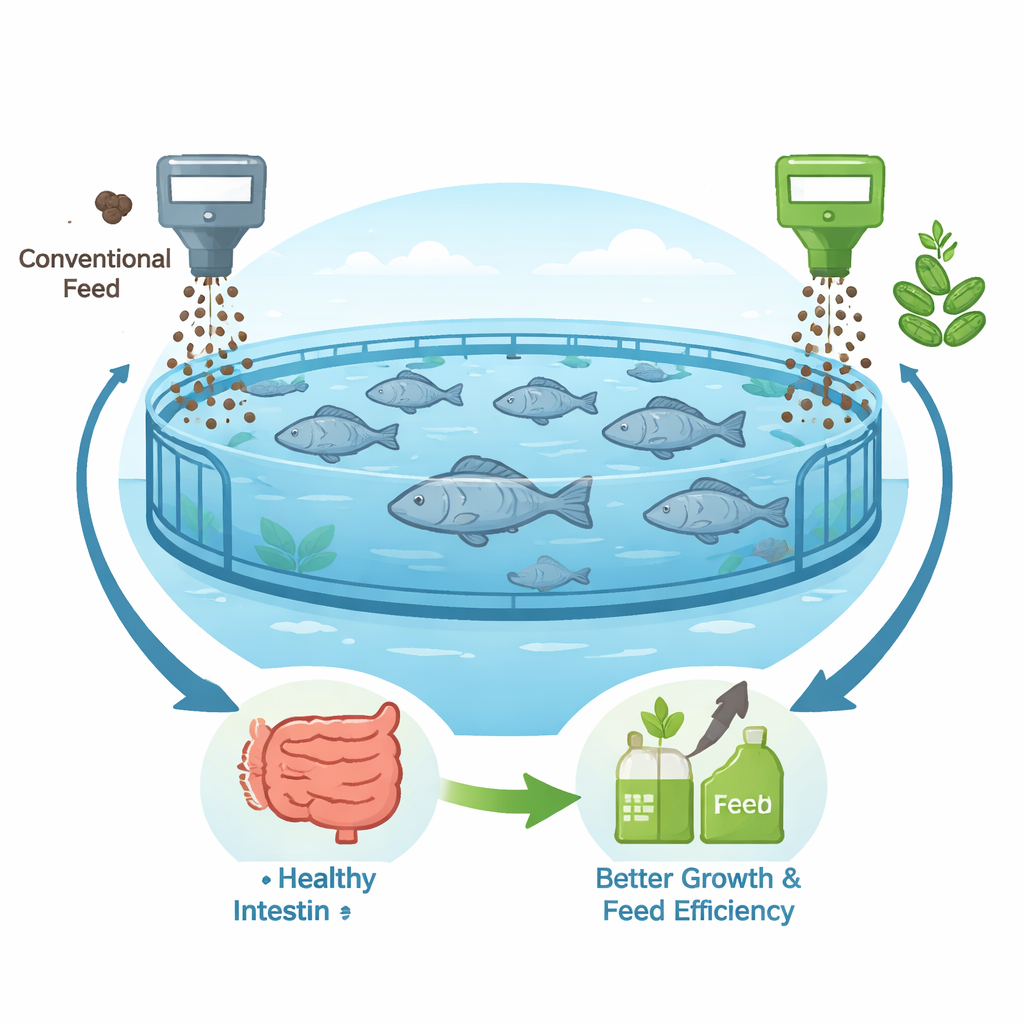
Modern fish farming often relies on fishmeal and fish oil made from wild-caught fish, a strategy that is becoming harder to sustain. Microalgae have emerged as an attractive alternative because they can provide high-quality protein and a range of natural bioactive compounds. In this work, researchers tested two commercial microalgae-based nutraceuticals, called LB-GREENboost and LB-GUThealth. These products are concentrates made largely from hydrolysed microalgae (Arthrospira and Microchloropsis), and were incorporated at only 0.5% or 1% of the diet of juvenile gilthead seabream. Over 91 days, the team compared these fish with a control group fed the same basic diet but without microalgae supplements.
Tracking Growth and Digestion
All groups of fish grew steadily during the three-month trial, but those receiving the microalgae-based ingredients used their feed more efficiently. Their feed conversion ratio—the amount of feed needed to gain a unit of weight—dropped from about 1.23 in the control group to as low as 1.09 with the supplements. The intestines of supplemented fish were also longer in a dose-dependent way, hinting at a larger area for digestion and absorption. When scientists measured key digestive enzymes, they found that most of them, including total alkaline proteases, chymotrypsin, and brush-border enzymes such as leucine aminopeptidase and alkaline phosphatase, were more active in fish that ate the microalgae products. This pattern suggests that the fish were better equipped to break down proteins and absorb nutrients from their feed.
Microscopic Changes in the Gut Lining
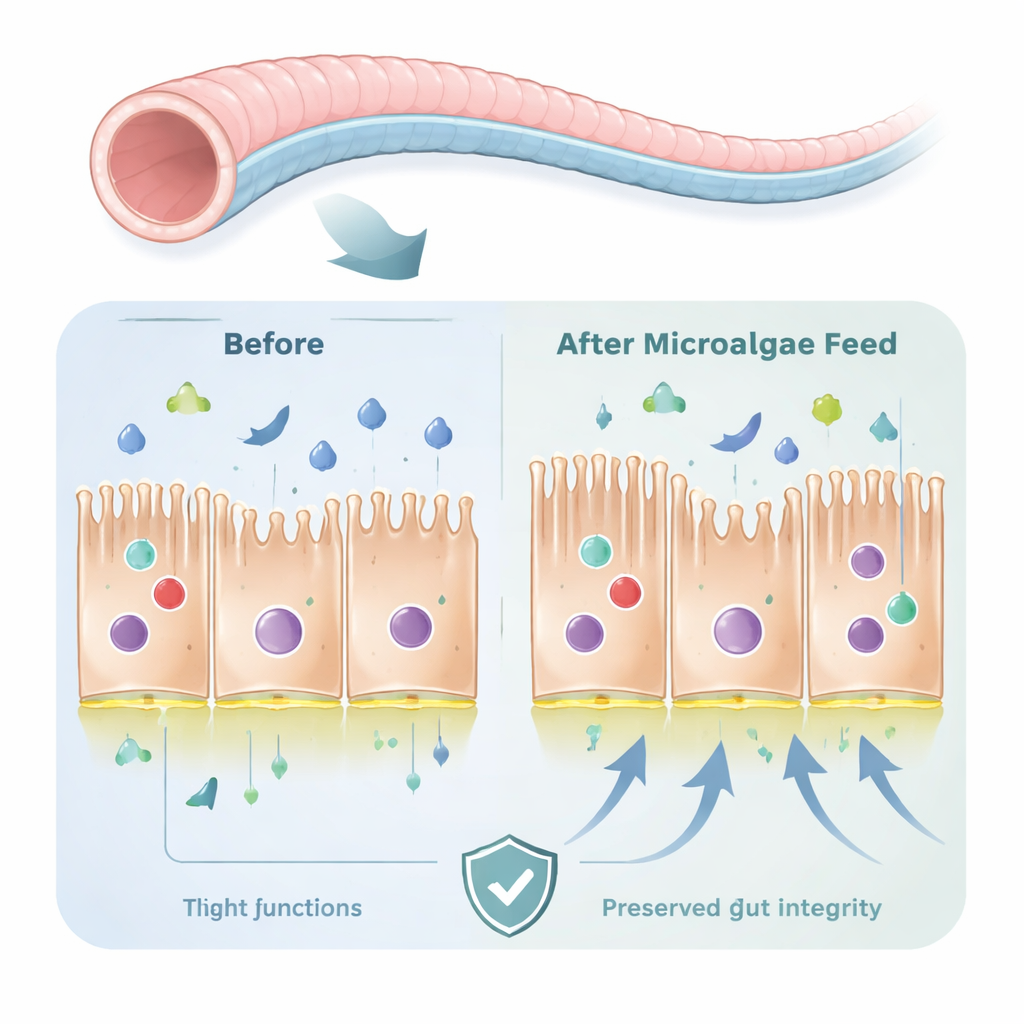
To see what was happening on the surface of the intestine, the researchers used powerful electron microscopes. They examined the finger-like microvilli that line intestinal cells and form the first contact point with digested food. Fish that received the supplements, especially at the higher dose, showed longer microvilli and a larger apical surface area of the intestinal cells. When these measurements were combined, the total absorptive surface per cell was substantially higher in most supplemented groups than in controls. Importantly, the overall architecture of the intestinal lining looked healthy and regular in all treatments—there were no signs of erosion or damage—indicating that the structural changes represented an enhancement rather than a stress response.
Gut Barrier: Stronger, Not Leakier
The intestine must not only absorb nutrients efficiently but also act as a barrier that keeps harmful substances out of the body. To test this, the team mounted pieces of the front intestine in special chambers that measure electrical properties and permeability. All fish showed normal, predominantly absorptive electrical currents, consistent with a healthy, functioning gut. However, intestinal tissues from fish fed the highest supplement levels had markedly higher electrical resistance, a sign of a tighter, more selective barrier. A fluorescent tracer used to probe leakiness moved across the tissue only modestly, and changes in this parameter were not accompanied by any drop in resistance or visible tissue damage. At the molecular level, genes linked to tight junctions—the protein structures that seal spaces between cells—and immune defense did not show harmful shifts in their baseline activity.
What This Means for Sustainable Aquaculture
Put together, the findings show that very low dietary inclusion of microalgae-derived nutraceuticals can sharpen the digestive machinery of juvenile gilthead seabream, expand their intestinal absorptive surface, and even improve the selectivity of the gut barrier, all without disturbing normal gene activity or triggering intestinal inflammation. For fish farmers, this translates into better feed utilization and the potential to rely more on alternative ingredients while keeping fish healthy. For consumers and the environment, it points toward aquaculture systems that can produce high-quality seafood with fewer resources and a lighter ecological impact.
Citation: Galafat, A., Sáez, M.I., Vizcaíno, A.J. et al. Assessment of low dietary inclusion of nutraceuticals derived from microalgae to enhance intestinal function in gilthead seabream (Sparus aurata) juveniles. Sci Rep 16, 5276 (2026). https://doi.org/10.1038/s41598-026-36087-z
Keywords: aquaculture, microalgae, fish nutrition, gut health, sustainable feed