Clear Sky Science · en
Molecular characteristics and prognostic insights into BRCA-associated breast cancer in Kazakhstan
Why breast cancer genes matter for Kazakh women
Breast cancer is the most common cancer in women worldwide, and Kazakhstan is no exception. Some women inherit changes in two key genes, BRCA1 and BRCA2, which can sharply raise their risk of developing the disease and influence how it behaves and responds to treatment. This study is the first large, detailed look at BRCA-related breast cancer in Kazakhstani women, aiming to understand how common these gene changes are, what kinds of tumors they cause, and how they affect survival. Its insights can help doctors offer more precise screening and treatment, and help families better understand their inherited risk.
Taking a closer look at patients in Kazakhstan
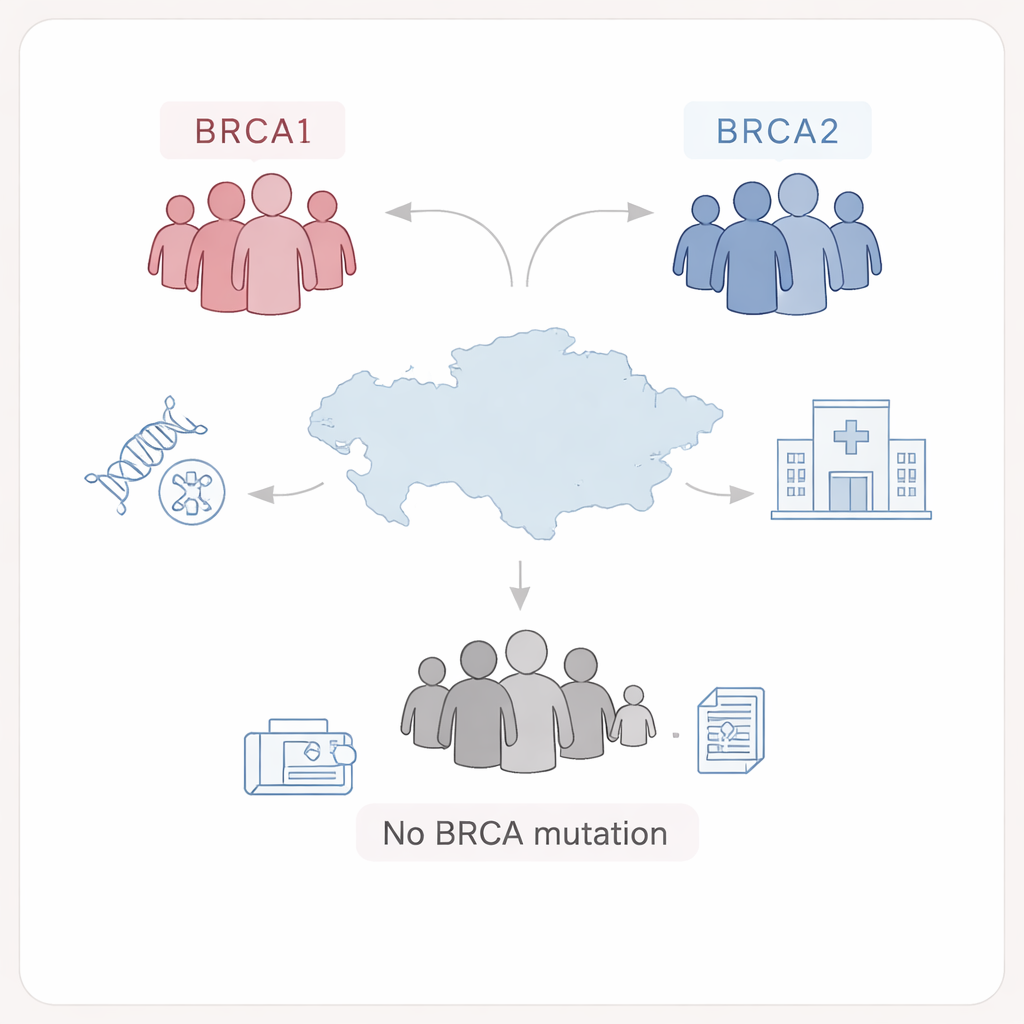
Researchers examined 186 women with breast cancer who were treated at a major medical center in Astana between late 2023 and mid‑2024. All met international “high‑risk” criteria for genetic testing, such as young age at diagnosis, triple‑negative tumors, or a strong family history of breast or ovarian cancer. Blood samples were analyzed using modern DNA sequencing technology to find harmful changes in BRCA1 and BRCA2. The team then combined genetic results with detailed medical charts, including tumor type, stage at diagnosis, treatments received, and how long patients lived without their disease getting worse.
Who carries BRCA mutations and what their tumors look like
The study found that 22% of women carried harmful BRCA1 mutations and 9% carried BRCA2 mutations, while the rest had no serious changes in these genes. Women with BRCA mutations were diagnosed at younger ages: around 44 years for BRCA1 and 48 years for BRCA2, compared with 51 years for women without mutations. They were also more likely to have advanced disease, with stages III and IV much more common in BRCA carriers, especially in BRCA2, where no woman was diagnosed at the earliest stage. Under the microscope, most tumors linked to either BRCA1 or BRCA2 were poorly differentiated, meaning the cancer cells looked very abnormal and tended to grow aggressively.
Different gene, different breast cancer type
Although both genes are involved in repairing broken DNA, they were linked to distinct forms of breast cancer. BRCA1 tumors were overwhelmingly “triple‑negative,” lacking the hormone and growth‑factor switches that many common drugs target. These cancers had very high cell‑division rates, signaling fast‑growing disease, but they may respond well to chemotherapy and drugs that exploit defects in DNA repair. By contrast, most BRCA2 tumors carried hormone receptors and looked more like typical “luminal” breast cancers that usually respond to hormone‑blocking drugs. Yet in this Kazakhstani group, BRCA2‑related cancers often appeared at later stages and behaved more aggressively than expected, frequently spreading to multiple organs.
Survival and response to modern treatments
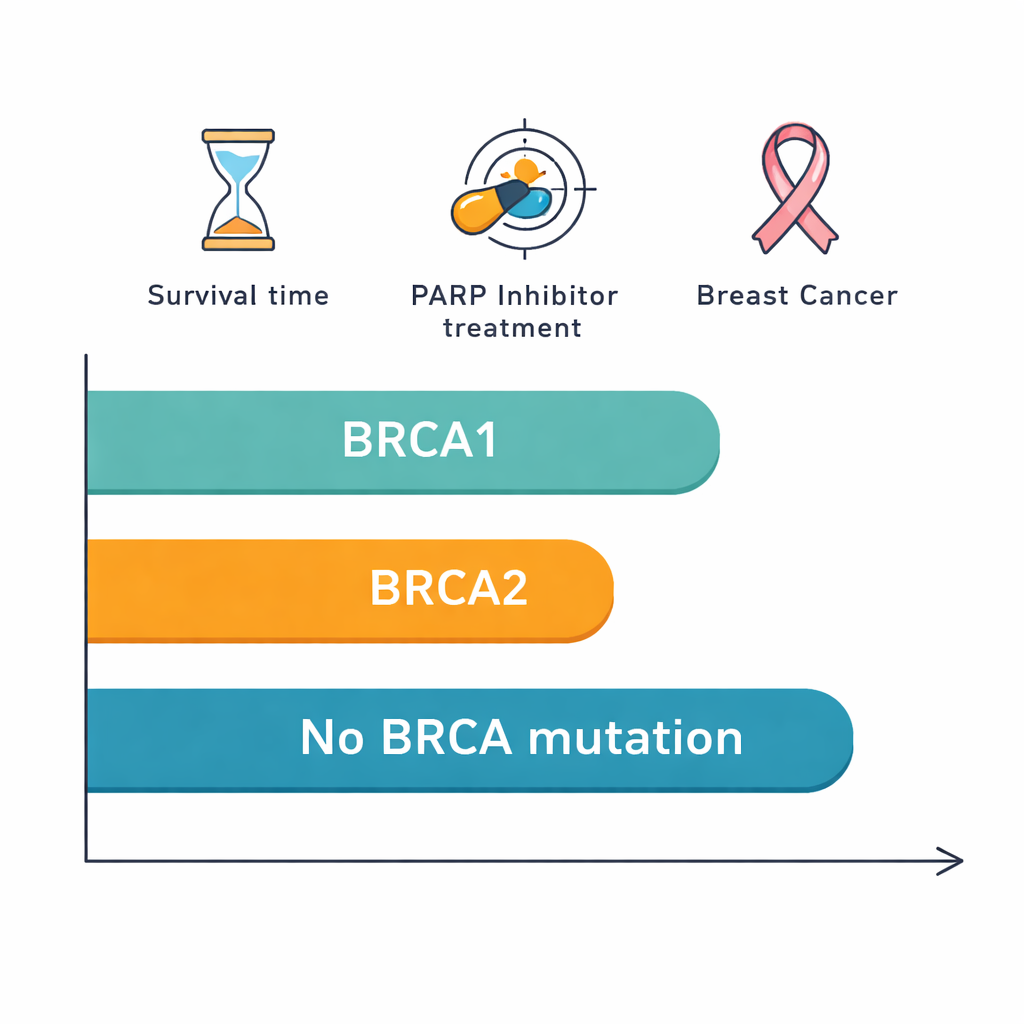
When the researchers focused on women whose cancer had already spread, clear survival gaps emerged. Those without BRCA mutations had a median of about 34 months before their disease worsened, compared with only 12 months for BRCA1 carriers and 8 months for BRCA2 carriers. Deaths were far more frequent among BRCA2‑positive patients. Even within key subgroups, such as triple‑negative or hormone‑positive disease treated with modern CDK4/6 inhibitor drugs, BRCA carriers—especially BRCA2—tended to relapse sooner than non‑carriers. At the same time, women with BRCA mutations were more likely to receive newer targeted medicines called PARP inhibitors and chemo‑immunotherapy, reflecting a shift toward tailoring treatment based on genetics.
What this means for patients and families
For a lay reader, the take‑home message is that inherited BRCA1 and BRCA2 changes are common among high‑risk breast cancer patients in Kazakhstan and are tied to younger age at diagnosis and more aggressive disease. BRCA1 cancers are usually fast‑growing, hard‑to‑treat triple‑negative tumors, while BRCA2 cancers, though often hormone‑sensitive on paper, still show worse survival in this population. These results argue for wider access to genetic testing, earlier and closer screening of women at risk, and broader use of treatments that specifically target DNA‑repair weaknesses. By integrating gene testing into routine cancer care and building national programs for genetic counseling, Kazakhstan can move toward truly personalized breast cancer treatment that improves outcomes for women and their families.
Citation: Samigatova, A., Altaeva, N., Suleimenov, Y. et al. Molecular characteristics and prognostic insights into BRCA-associated breast cancer in Kazakhstan. Sci Rep 16, 5652 (2026). https://doi.org/10.1038/s41598-026-36086-0
Keywords: breast cancer, BRCA1, BRCA2, genetic testing, Kazakhstan