Clear Sky Science · en
Aesculetin (6,7-dihydroxycoumarin) enhances the differentiation of human bone marrow-derived mesenchymal stem cells into functional hepatocyte-like cells
Why Growing New Liver Cells Matters
Severe liver disease can turn an ordinary life-threateningly fragile, and for many patients the only lasting solution is a liver transplant. Yet donor organs are scarce, surgery is risky, and lifelong drugs are needed to stop the body from attacking the new liver. This study explores a different path: using a natural plant compound called aesculetin to coax easily obtainable human stem cells from bone marrow into working, liver-like cells that might one day help repair damaged livers without full transplantation. 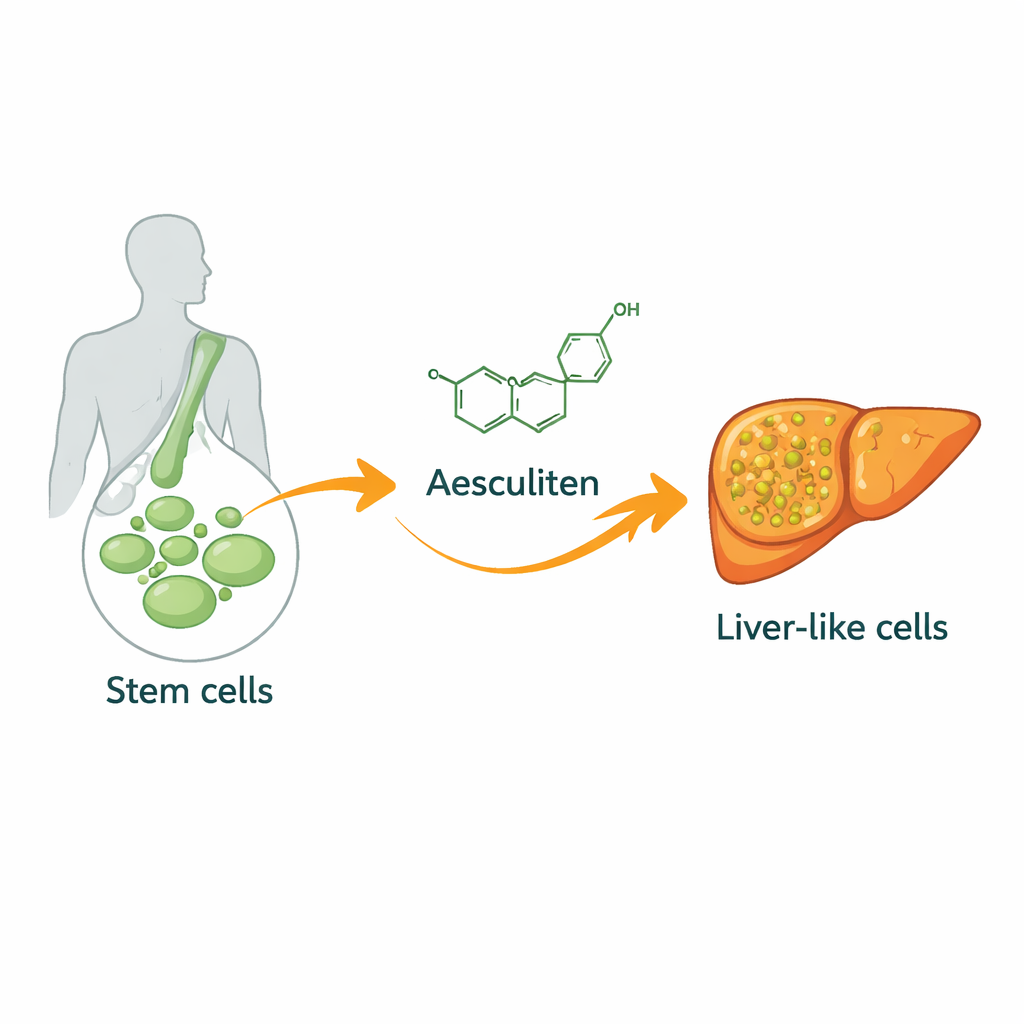
A Natural Helper from Medicinal Plants
Aesculetin is a small molecule found in several traditional medicinal plants. It is already known for its antioxidant, anti-inflammatory and anticancer properties, and for protecting the liver from certain types of chemical damage. The researchers asked whether this same compound could do something more ambitious: steer human bone marrow-derived mesenchymal stem cells—versatile cells that can normally become bone, cartilage, or fat—toward becoming liver cells instead. If successful, such an approach could tap a renewable cell source from patients themselves, reducing the need for donor organs and the risks tied to immune rejection.
Turning Stem Cells Toward Liver Identity
To test this idea, human bone marrow stem cells were first carefully checked to confirm their identity using standard marker tests. The team then placed these cells into a stepwise culture system designed to mimic the cues that guide liver development. Throughout this 21-day process, they added different doses of aesculetin. Over time, the treated cells began to switch on genes and proteins normally seen in liver cells, including albumin (a key blood protein), structural proteins found in liver tissue, and drug-processing enzymes of the cytochrome P450 family. These changes grew stronger with higher aesculetin levels up to an optimal concentration, and were most pronounced by the end of the three-week period, signaling a clear shift toward a liver-like identity.
From Look-Alikes to Working Liver Cells
However, appearance and markers alone do not guarantee that cells actually behave like liver cells. The researchers therefore examined two hallmark functions. First, they measured the ability of the cells to store glycogen, a form of carbohydrate that the liver holds in reserve; cells treated with aesculetin showed strong staining for glycogen, comparable to that seen in a standard liver-derived cell line. Second, they tested uptake of a medical dye, indocyanine green, which healthy liver cells normally absorb. Again, the aesculetin-treated cells took up the dye efficiently, while untreated stem cells did not. Together, these experiments demonstrated that the compound did more than alter labels on the cells—it helped them acquire real liver-like functions. 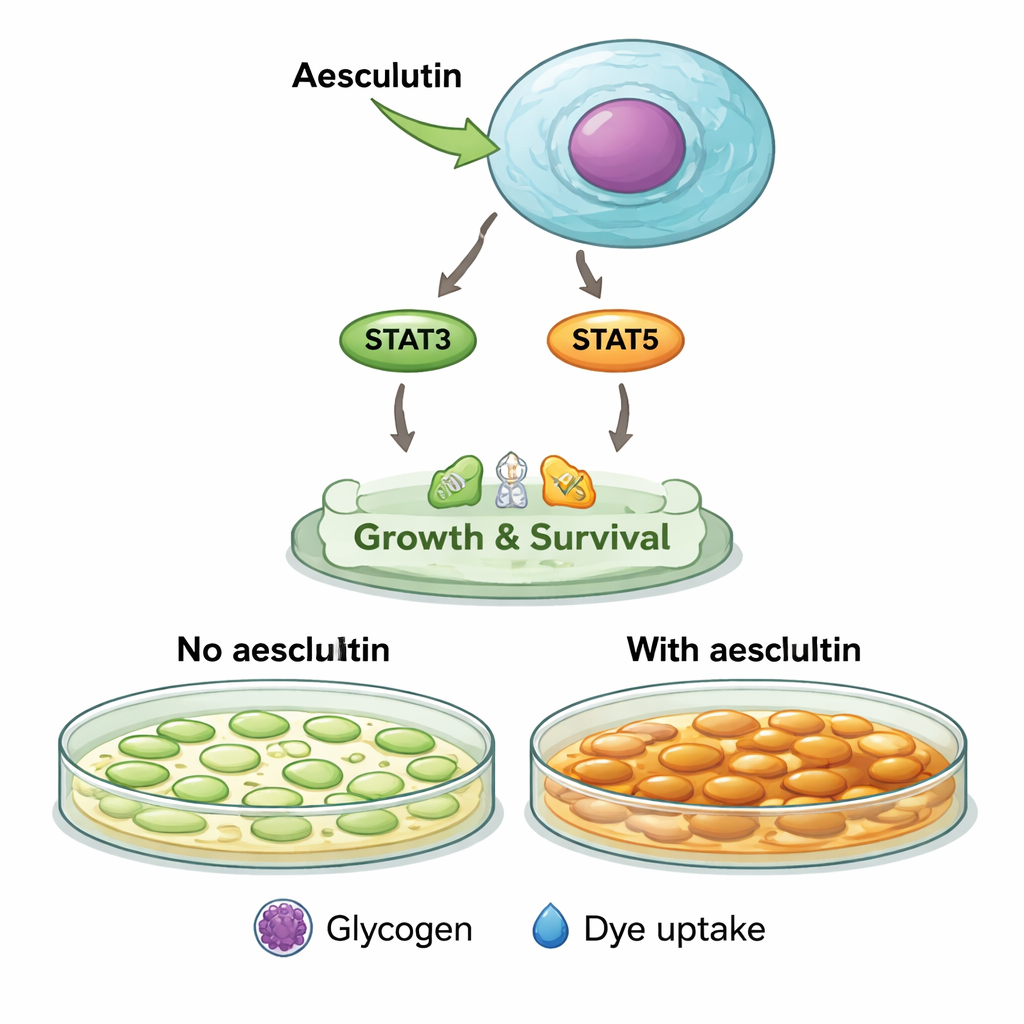
Signaling Switches Behind the Change
To understand how aesculetin drives this transformation, the team looked at key molecular switches inside the cells. They focused on STAT3 and STAT5, two signaling proteins known to support liver cell growth, survival and maturation. After aesculetin treatment, both STAT3 and STAT5 became activated, and several of their downstream partners associated with cell growth and resistance to cell death were turned on as well. Another survival pathway, involving the protein AKT, was also stimulated. These findings suggest that aesculetin nudges stem cells toward the liver fate by engaging natural signaling routes that the body already uses during liver development and regeneration.
What This Could Mean for Patients
In plain terms, this study shows that aesculetin can help bone marrow stem cells not only look more like liver cells, but also carry out key liver jobs in the lab, driven in part by well-known growth and survival pathways. While these results are still at the experimental stage and much work remains to test safety, durability and effectiveness in animals and eventually humans, they point toward a future in which a plant-derived compound might help grow personalized liver-like cells. Such cells could one day support failing livers, reduce the need for full organ transplants, and offer new options to patients who currently have few.
Citation: Heo, SK., Shin, Y., Kim, S.A. et al. Aesculetin (6,7-dihydroxycoumarin) enhances the differentiation of human bone marrow-derived mesenchymal stem cells into functional hepatocyte-like cells. Sci Rep 16, 5604 (2026). https://doi.org/10.1038/s41598-026-36084-2
Keywords: liver regeneration, mesenchymal stem cells, aesculetin, hepatocyte-like cells, regenerative medicine