Clear Sky Science · en
Silver nanoparticles combine with Nigella sativa oil to potentiate apoptosis in cervical cancer
Why this research matters
Cervical cancer is one of the leading causes of cancer deaths in women worldwide, especially where access to advanced treatments is limited. Doctors need therapies that can selectively kill cancer cells while leaving healthy tissue largely unharmed. This study explores a surprising partnership between tiny silver particles and oil from the black seed plant, Nigella sativa, to see whether they can work together to push cervical cancer cells into a controlled form of self-destruction called programmed cell death.
A plant remedy meets nanotechnology
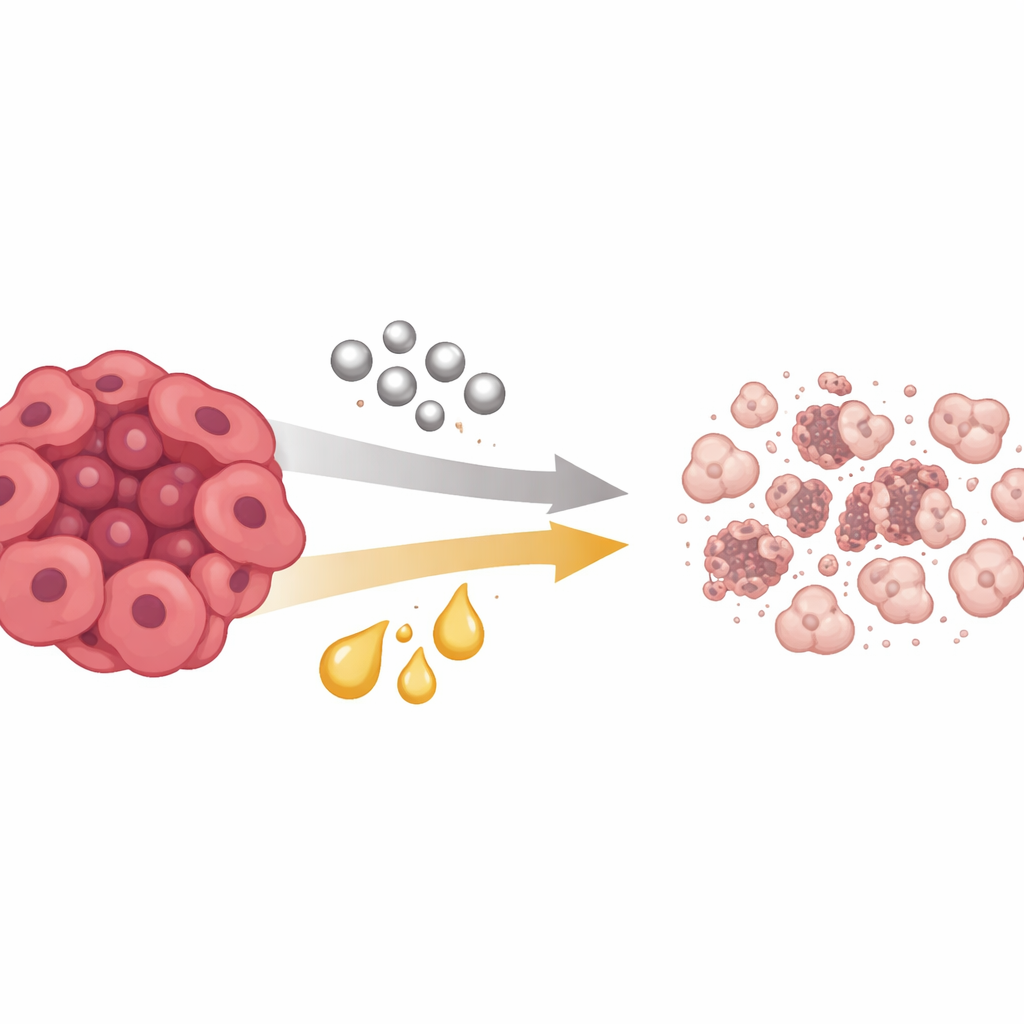
Nigella sativa, often known as black seed, has been used for centuries in traditional medicine. Its oil contains natural compounds, including one called thymoquinone, that earlier research has linked to anti-inflammatory and anti-cancer effects. In parallel, modern nanotechnology has produced silver nanoparticles—ultra-small particles of silver—that can damage cancer cells by creating internal stress and injuring their DNA. Each approach has limits on its own: silver nanoparticles can also harm healthy cells, and plant extracts alone may not be strong enough. The authors wondered whether combining these two agents might create a more powerful yet more targeted way to kill cervical cancer cells.
How the experiments were carried out
The researchers worked with HeLa cells, a widely used laboratory model of human cervical cancer. They first grew the cells under controlled conditions, then exposed them either to different doses of silver nanoparticles alone or to a fixed dose of silver nanoparticles paired with increasing amounts of Nigella sativa oil. They carefully prepared and checked both components: the oil’s mix of active molecules was mapped using chemical analysis, and the size and structure of the silver particles were confirmed with imaging and infrared spectroscopy. To measure how the cells responded, the team used several complementary tests that quantify living cells, identify cells in early and late stages of programmed death, and track changes in key genes that control survival or self-destruction.
Finding the sweet spot for killing cancer cells
The results showed that both silver nanoparticles alone and the combined treatments could push cervical cancer cells into programmed death, but not all doses worked equally well. A moderate dose of silver nanoparticles was the most effective on its own, causing many cells to enter early, controlled death while limiting the more damaging stages and outright cell rupture. When this same silver dose was paired with Nigella sativa oil, one particular combination stood out: the mix with a mid-range oil concentration produced the highest level of early programmed death and the lowest levels of late-stage breakdown and messy cell death. Higher oil doses did kill more cells overall but at the cost of more disordered damage, which is less desirable for a precise therapy.
Peering inside the cell’s decision to die
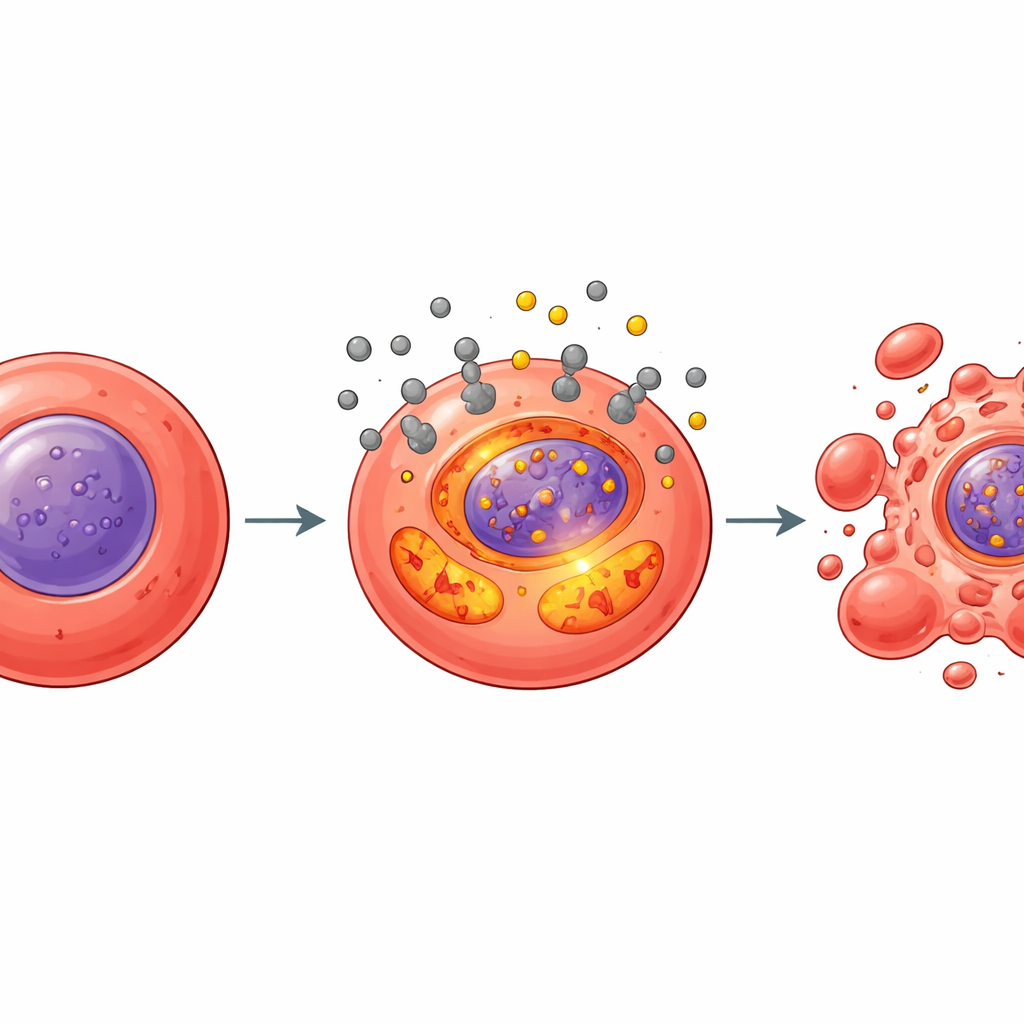
To understand why this partnership worked so well, the researchers examined the activity of genes that act as internal switches for life and death. In the treated cells, several genes that promote programmed death were turned up, including those that help punch holes in energy-producing structures and those that activate molecular “executioners.” At the same time, a key gene that normally protects cells from dying was turned down. These shifts were strongest in the combinations that were most effective at driving early, orderly death. The pattern suggests a one-two punch: silver nanoparticles physically stress and injure the cancer cells, while compounds from Nigella sativa oil tilt the internal wiring toward self-destruction instead of survival.
What this could mean for future treatments
This work was done entirely in cultured cells, not in patients, so it is an early step rather than a ready-made therapy. Still, it points to a promising idea: pairing plant-derived oils with engineered nanoparticles to nudge cancer cells into quietly dismantling themselves. By fine-tuning the doses, such combinations might one day allow doctors to maximize cancer cell death while keeping harm to healthy tissues as low as possible. The authors suggest that future studies in animals, and eventually in people, could explore whether carefully formulated gels or creams containing silver nanoparticles and Nigella sativa oil might complement existing treatments for cervical cancer.
Citation: Hosseini, K., Alizadeh, M., Jalilian, A. et al. Silver nanoparticles combine with Nigella sativa oil to potentiate apoptosis in cervical cancer. Sci Rep 16, 11446 (2026). https://doi.org/10.1038/s41598-026-36082-4
Keywords: cervical cancer, silver nanoparticles, Nigella sativa, apoptosis, nanomedicine