Clear Sky Science · en
Teacher activities and student participation in university classrooms: a cross-sectional study in the technological era
Why this matters for today’s students and teachers
University classrooms are changing fast, with laptops, learning apps, and online platforms now woven into everyday lessons. But technology alone does not guarantee that students speak up, ask questions, or feel confident sharing ideas. This study, conducted in Bangladeshi universities, looks at how teaching style, feedback, relationships, and digital tools work together to shape student participation – insights that are relevant to anyone who cares about making classes more engaging and inclusive.
From one-way lectures to active learning
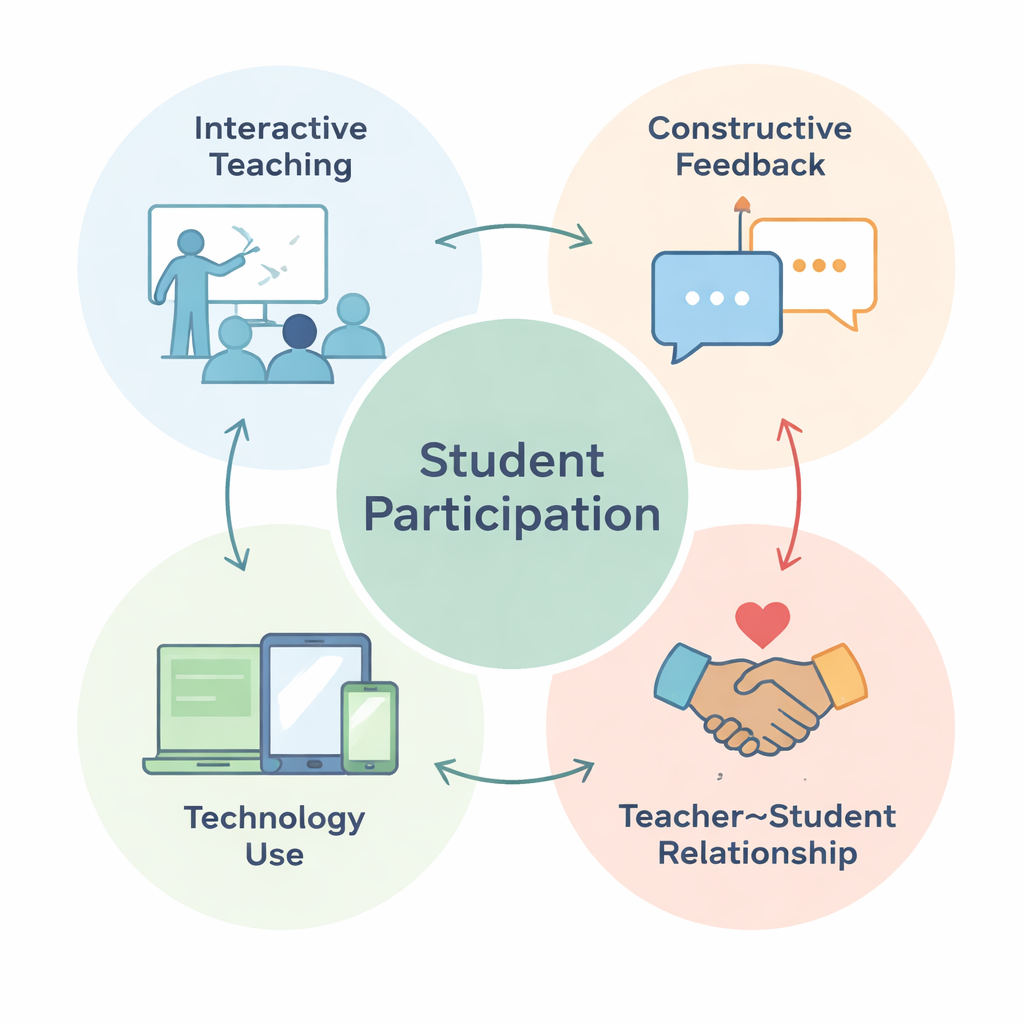
The researchers start from a simple idea: students learn more deeply when they are active rather than silent note-takers. Instead of relying only on long lectures, interactive teaching invites questions, small-group discussions, and problem-solving tasks. Surveying 417 students from public and private universities, the study shows that such interactive approaches are strongly linked to higher participation. When teachers ask students to discuss, debate, and collaborate, students report speaking more in class, contributing to group work, and using digital tools to join in.
Feedback that keeps students motivated
Another key ingredient is feedback – not just grades at the end of the term, but regular comments that arrive quickly and explain clearly what students did well and where they can improve. The study finds that timely, constructive feedback is closely tied to students’ motivation to participate. When feedback helps students see progress and feel capable, they are more willing to answer questions, share opinions, and take part in activities, both in face-to-face and online settings. Feedback here functions as an ongoing conversation, giving students the confidence that their efforts are noticed and that mistakes are part of learning.
Technology as a helper, not the star of the show
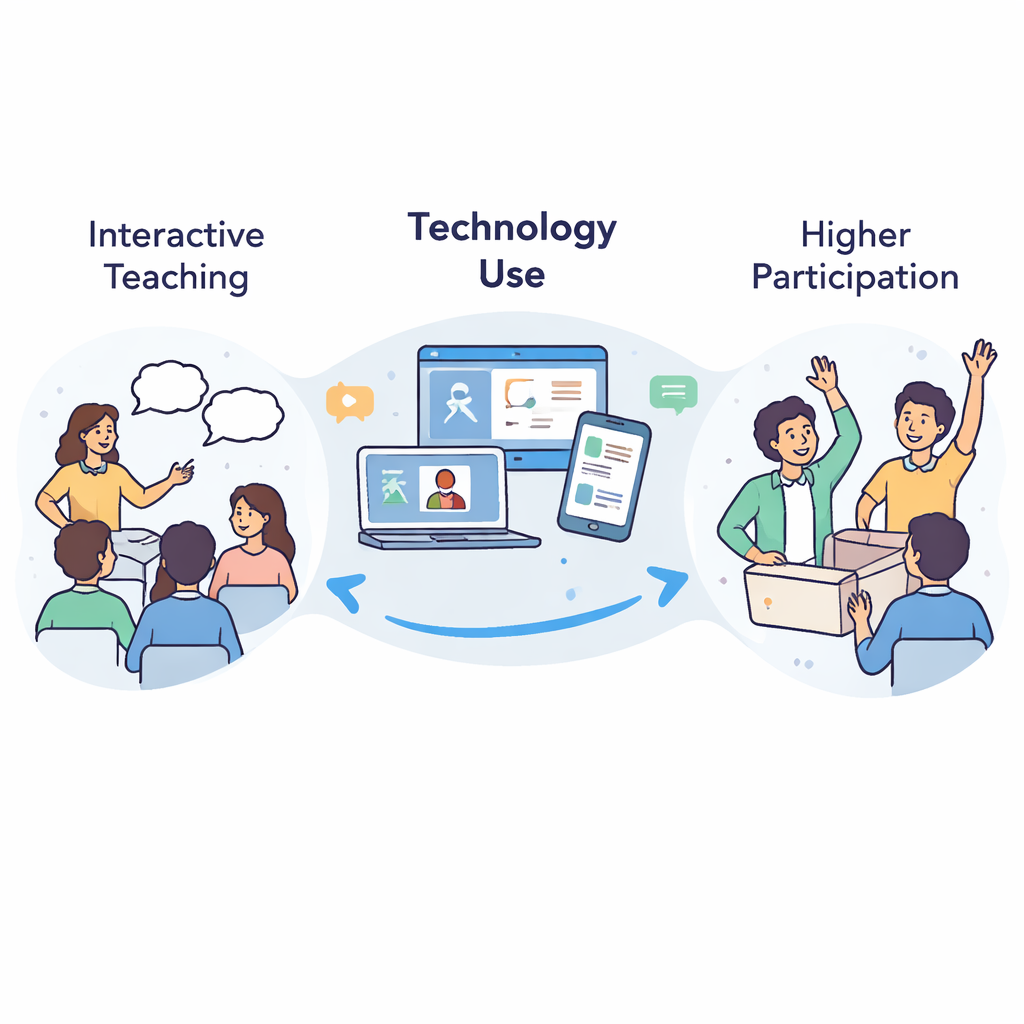
Digital tools are now everywhere in higher education: slides, videos, online quizzes, learning management systems, and messaging groups. This study shows that these tools can boost participation, but only when they support good teaching rather than replace it. Technology use partly explains why interactive teaching works so well: when teachers combine discussions and group tasks with multimedia, simulations, or online forums, students feel more involved and more willing to speak up. However, the study also finds that simply adding platforms or apps does not automatically strengthen the link between interactive teaching and engagement. In other words, technology helps most when it is thoughtfully woven into lessons, not when it is used as a stand-alone solution.
The power of respect and feeling valued
Beyond tools and techniques, the emotional climate of the classroom matters a great deal. Students who describe their teachers as respectful and supportive are more comfortable expressing opinions, even if they fear being wrong. Feeling appreciated by both teachers and classmates is one of the strongest predictors of participation: when students believe their ideas are taken seriously, they are more likely to ask questions, offer comments, and stay mentally present. Interestingly, the study does not find major differences in participation between men and women, or between academic fields, suggesting that these relational factors and teaching practices matter across the board.
What this means for real classrooms
To a layperson, the study’s message is straightforward: technology can enrich learning, but people and pedagogy come first. University students are more likely to participate when teachers make room for dialogue, provide helpful feedback, use digital tools to clarify and enliven content, and treat students with respect. Fancy platforms alone do not guarantee engagement; it is how teachers use them that counts. For parents, students, and policymakers, the takeaway is hopeful: with relatively simple shifts in teaching style and classroom relationships – supported, not led, by technology – universities can create environments where more students find their voice and feel that their contributions matter.
Citation: Yasmin, F., Akter, S., Touhiduzzaman, M. et al. Teacher activities and student participation in university classrooms: a cross-sectional study in the technological era. Sci Rep 16, 5325 (2026). https://doi.org/10.1038/s41598-026-36080-6
Keywords: student participation, interactive teaching, educational technology, teacher feedback, higher education