Clear Sky Science · en
Assessing ethnic inequalities in diagnostic intervals of breast cancer among patients presenting symptoms to general practitioners in England
Why this research matters to everyday lives
Breast cancer is one of the most common cancers affecting women, and catching it early can make the difference between straightforward treatment and life‑threatening illness. But not everyone gets diagnosed equally quickly. This study looks at how long women in England wait from first going to their family doctor with possible breast cancer symptoms to receiving a final diagnosis, and whether those waiting times differ between ethnic groups. Understanding where delays occur can help make care fairer and save lives.
The journey from first worry to final diagnosis
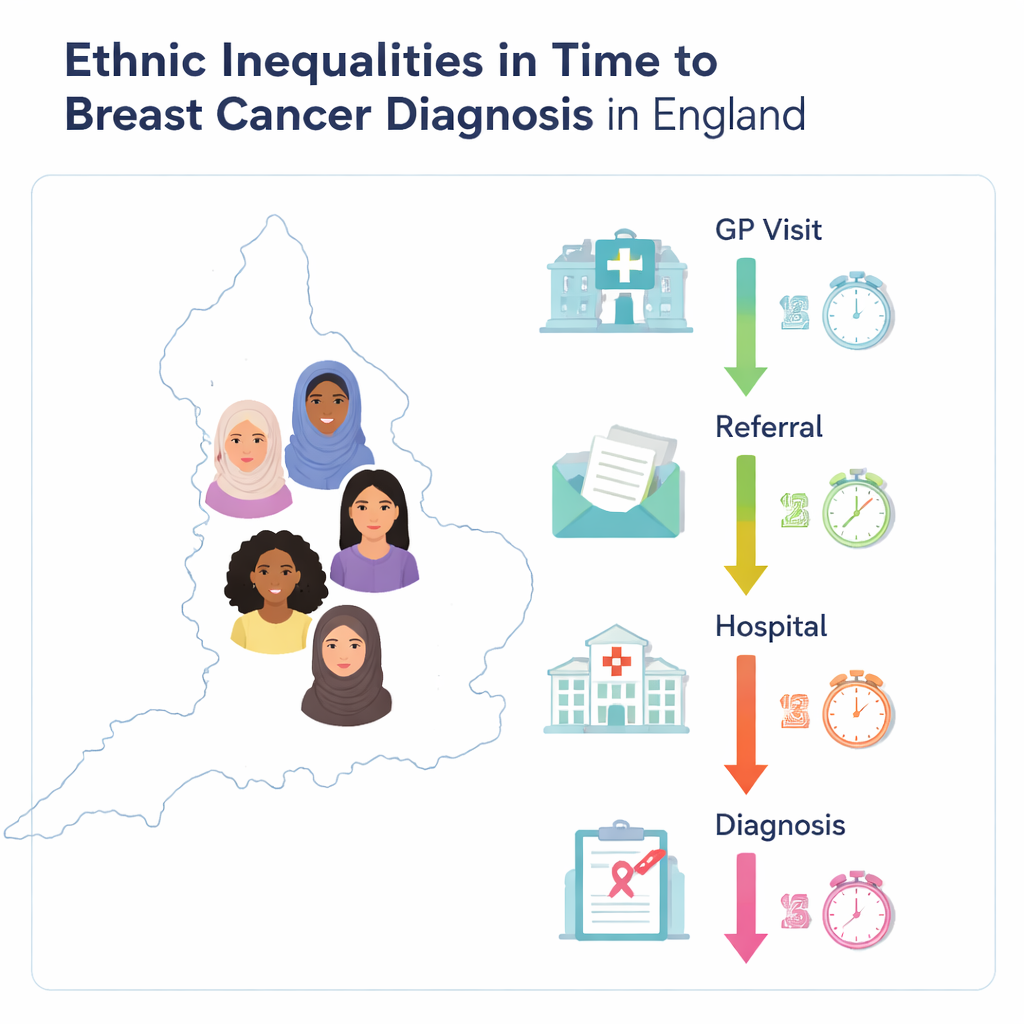
When a woman notices a change in her breast and visits her general practitioner (GP), this is only the first step in a series of stages. The researchers broke this journey into three main parts: the time in primary care (from first GP visit to referral), the referral stage (from referral to first hospital appointment), and the time in secondary care (from first hospital appointment to confirmed diagnosis). Using linked GP and hospital records for more than 8,600 women aged 40 and over diagnosed with breast cancer between 2017 and 2021, they measured how long each of these stages lasted and compared them across ethnic groups.
Lump versus other warning signs
Most women in the study first came to their GP with a breast lump, but some reported other warning signs such as breast pain, nipple changes or skin changes. These non‑lump symptoms turned out to matter a great deal. Women with non‑lump symptoms had a noticeably longer overall wait to diagnosis than those with a lump, even after accounting for age, other illnesses and deprivation. Their total diagnostic interval was about one and a half times longer. The extra delay mainly occurred after they had been referred to specialist care, not in the GP’s surgery. Because current fast‑track referral rules focus on breast lumps and treat breast pain as low risk, women with less obvious symptoms may not be moved through the system as quickly.
Unequal waits between ethnic groups
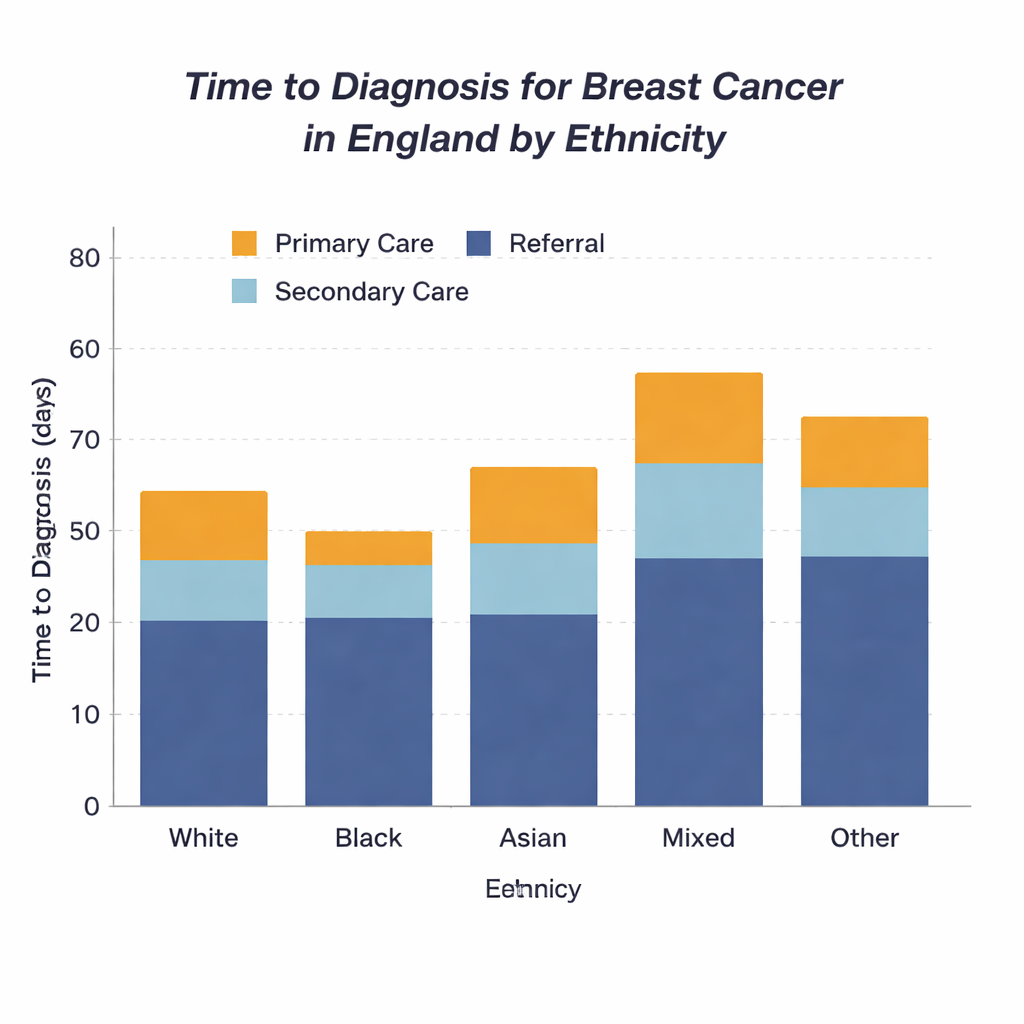
When the team looked at ethnicity, they found clear inequalities. On average, Black women waited the longest for a diagnosis, with their overall diagnostic time around 40% longer than that of White women. This was true regardless of whether they first reported a lump or another symptom, and it remained after adjusting for age, deprivation, other health problems and the impact of the COVID‑19 pandemic. In contrast, Asian women tended to move slightly faster through the GP stage than White women when they presented with a lump, though there were no major differences at later stages. Women from Mixed and Other ethnic backgrounds had diagnostic timings broadly similar to White women.
Where in the system the delays occur
A striking finding was where the extra time accumulated. The median wait in primary care was very short—often just one day from first GP visit to referral—for women of all ethnicities. The referral interval, from referral to first hospital appointment, was also similar across groups. The biggest differences appeared after women reached hospital. For Black women, the period between first specialist appointment and confirmed diagnosis was around one and a half times longer than for White women, and among those with a breast lump it was roughly two‑thirds longer. For women with non‑lump symptoms of any ethnicity, this secondary‑care stage could stretch for weeks or even months in some cases, far beyond national targets, raising concerns about more advanced disease and greater psychological distress.
What these findings mean for patients and policy
To a lay reader, the message is simple but important: in England, not all women get from first breast symptom to cancer diagnosis equally quickly, and the main bottlenecks are not in the GP’s office but in hospital‑based care. Black women in particular face substantially longer waits after they have already reached specialists, and women with non‑lump symptoms can experience especially long delays. The authors argue that efforts to make breast cancer care fairer and faster should focus on the whole diagnostic pathway, with special attention to how hospitals investigate symptoms and communicate with patients. Improving data quality, re‑examining referral rules for non‑lump symptoms, and designing services that work well for minority ethnic groups could help reduce these gaps and improve outcomes for all women.
Citation: Martins, T., Lavu, D., Hamilton, W. et al. Assessing ethnic inequalities in diagnostic intervals of breast cancer among patients presenting symptoms to general practitioners in England. Sci Rep 16, 6514 (2026). https://doi.org/10.1038/s41598-026-36070-8
Keywords: breast cancer diagnosis, ethnic inequalities, diagnostic delays, primary and secondary care, England healthcare