Clear Sky Science · en
Sustainable cooling solutions in Dubai: the impact of incident radiation and panel angles on solar AC performance
Cooler Homes from the Desert Sun
In hot cities like Dubai, air conditioning can be a lifeline—but it also devours electricity and drives up climate-warming emissions. This study explores a different path: using the same intense desert sunshine that heats buildings to power the air conditioners that cool them. The researchers built and tested a solar-powered air-conditioning unit designed specifically for Dubai’s harsh climate, asking a simple question with big implications: can rooftop solar panels keep rooms comfortable while cutting strain on the electric grid?
Turning Sunshine into Indoor Comfort
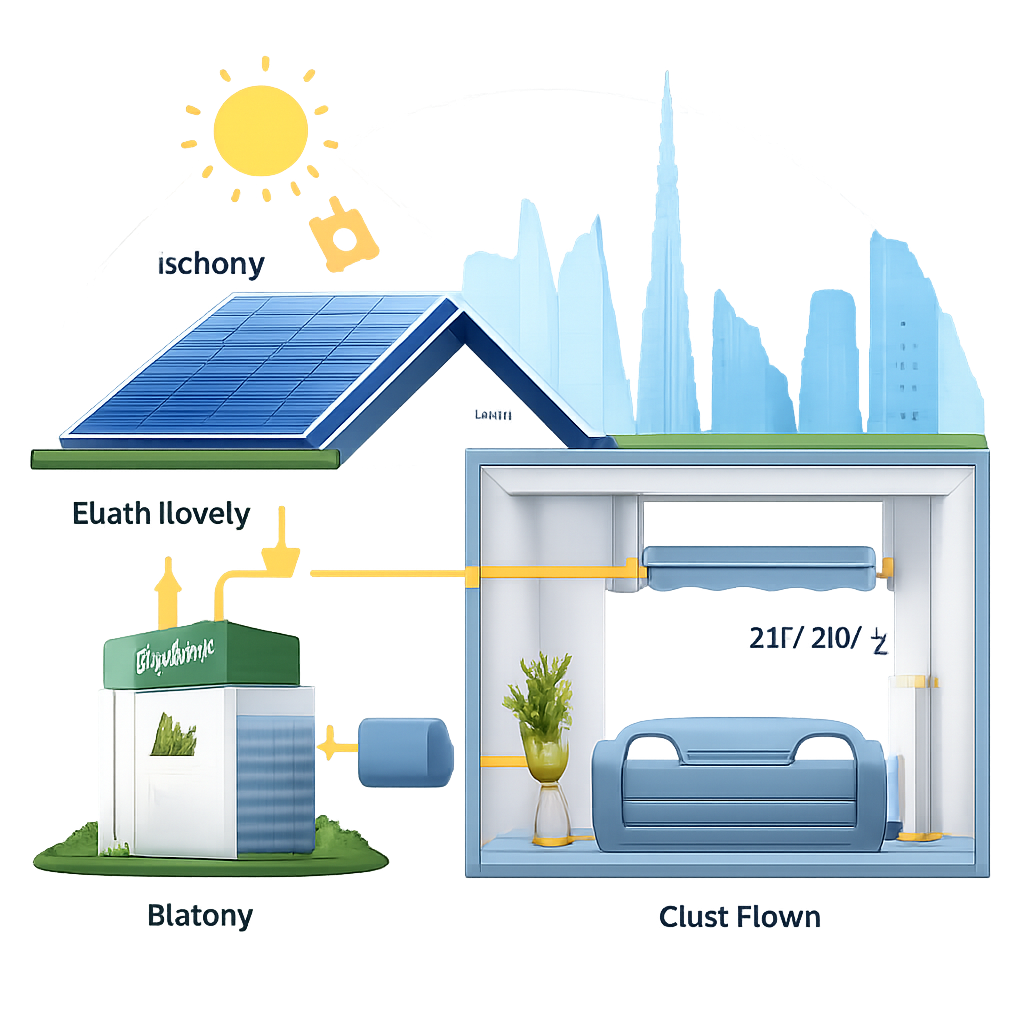
The team designed a compact cooling system that runs on electricity from rooftop solar panels. Sunlight hits the photovoltaic panels, which turn it into electricity that is stored in a battery. That battery drives an electric motor, which powers a conventional refrigeration cycle—very similar to the one in a household split-unit AC. Warm indoor air is blown over a cold evaporator coil, where its temperature and humidity are reduced before it is sent back into the room. By carefully matching the solar setup to Dubai’s conditions, the researchers aimed to keep a small test room cool using mostly solar power instead of electricity from the grid.
Why Panel Angle and Sun Intensity Matter
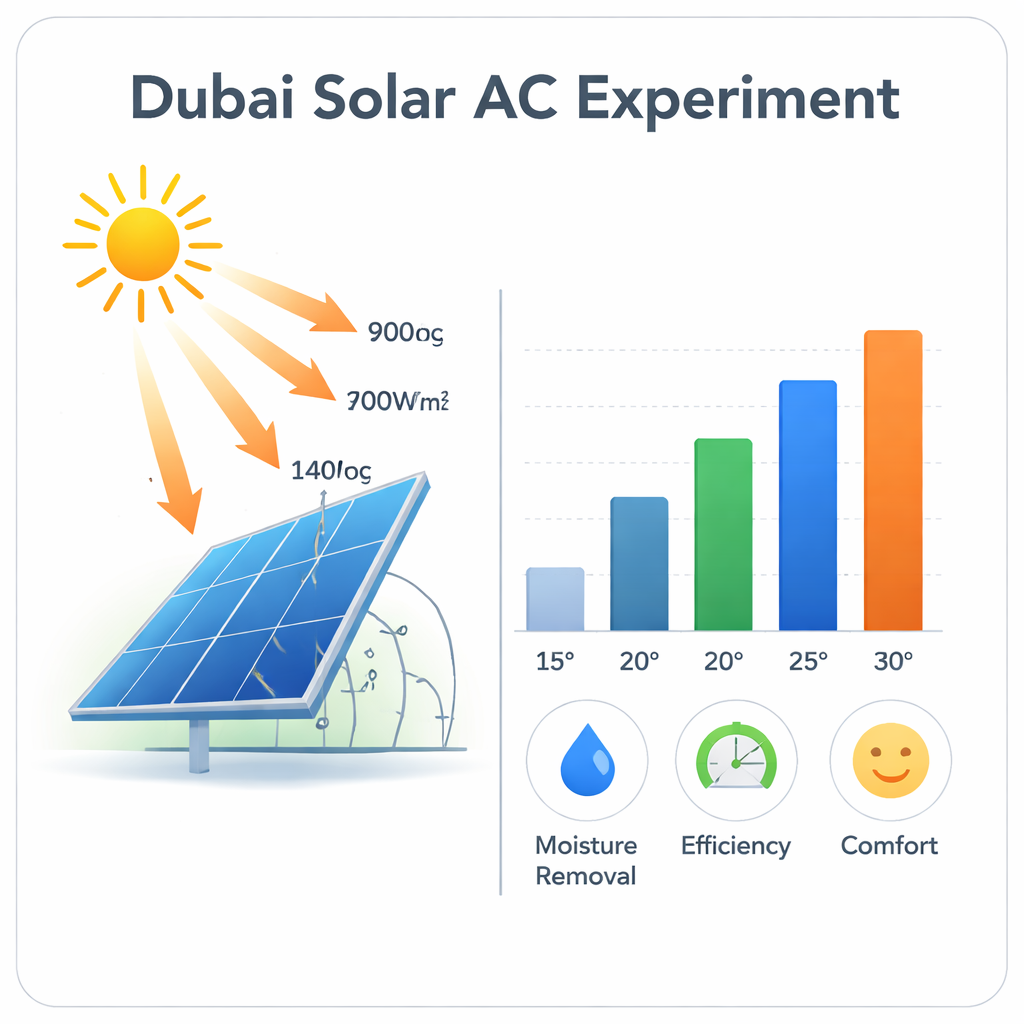
In Dubai, midday sunlight can be more than twice as strong as in many temperate cities, reaching up to 1400 watts per square meter. The researchers systematically varied both the strength of the incoming sunlight (from 700 to 1400 W/m²) and the tilt angle of the solar panels (from 15° to 30°) to see how these factors changed performance. Stronger sunlight gave the system more power to run the compressor and fans, which improved moisture removal and cooling. But it also increased heat losses, meaning that beyond a point, the extra sun did not translate into equally large gains in efficiency. At the same time, the angle of the panels turned out to be crucial: too flat or too steep, and the panels wasted much of the available sun.
The Sweet Spot for Efficient Cooling
Through dozens of experiments under real Dubai weather, the system consistently performed best when the panels were tilted at about 25 degrees. At this angle, the unit removed moisture from the air at up to about 0.78 grams per second—important in a humid, sticky room—and achieved a high thermal efficiency of around 95–96%. The solar-driven coefficient of performance, a measure of how much cooling you get per unit of solar energy, reached about 1.1. The researchers also tracked how much of the solar electricity was used directly in real time, rather than being drawn from the battery, and found that this “solar direct consumption” peaked at about 0.6 (or 60%) at the best tilt angle. In simple terms, that means a large share of the cooling power was coming straight from the Sun.
Measuring How Comfortable People Feel
Beyond technical efficiency, the team asked whether people would actually feel comfortable in the cooled space. They used two widely accepted comfort indicators: the Predicted Mean Vote (PMV), which describes how a group of people would rate the room on a scale from cold to hot, and the Predicted Percentage of Dissatisfied (PPD), which estimates how many people would feel unhappy with the conditions. Under the best settings—strong sunlight and the 25-degree panel tilt—the PMV was close to neutral and the PPD was about 12–13%, both within accepted comfort ranges for offices and homes. The system could maintain a room of about 28 cubic meters at a pleasant temperature, even in Dubai’s punishing midday heat.
What This Means for Future Cities
For a lay reader, the core message is straightforward: with the right design, solar-powered air conditioning can keep indoor spaces comfortable in one of the world’s hottest cities while relying largely on clean energy. Carefully choosing how solar panels are angled—around 25 degrees in Dubai’s case—helps squeeze more useful cooling out of the same sunlight. The prototype matched or beat the performance of many similar systems reported in the scientific literature and did so while reducing dependence on fossil-fueled electricity. As more cities face rising temperatures and growing demand for cooling, solutions like this offer a way to stay comfortable without overheating the planet.
Citation: Salins, S.S., Kumar, S. & Prasad, K. Sustainable cooling solutions in Dubai: the impact of incident radiation and panel angles on solar AC performance. Sci Rep 16, 5999 (2026). https://doi.org/10.1038/s41598-026-36069-1
Keywords: solar air conditioning, photovoltaic cooling, thermal comfort, Dubai climate, panel tilt angle