Clear Sky Science · en
Elevated body roundness index and epilepsy prevalence: a cross-sectional study
Why belly fat and brain health matter
Most of us think of extra weight as a concern for our heart or joints, not our brain. But a growing body of research suggests that where we carry fat on our bodies may also shape our risk for brain disorders such as epilepsy, a condition marked by repeated seizures. This study asks a simple but important question: does having a rounder, more waist-centered body shape go hand in hand with a higher chance of living with epilepsy?
A new way to look at body shape
Doctors usually rely on body mass index (BMI) to judge whether someone has obesity, but BMI only compares weight with height. It cannot tell muscle from fat, or say whether fat is mostly around the belly or spread elsewhere. To get a better picture of body shape, researchers have developed the Body Roundness Index, or BRI, which uses both height and waist size to estimate how much fat is packed around the abdomen. This kind of central fat is already known to be tied to heart disease and diabetes. The authors of this paper wondered whether BRI might also be linked to epilepsy, and whether it would capture risks that BMI might miss. 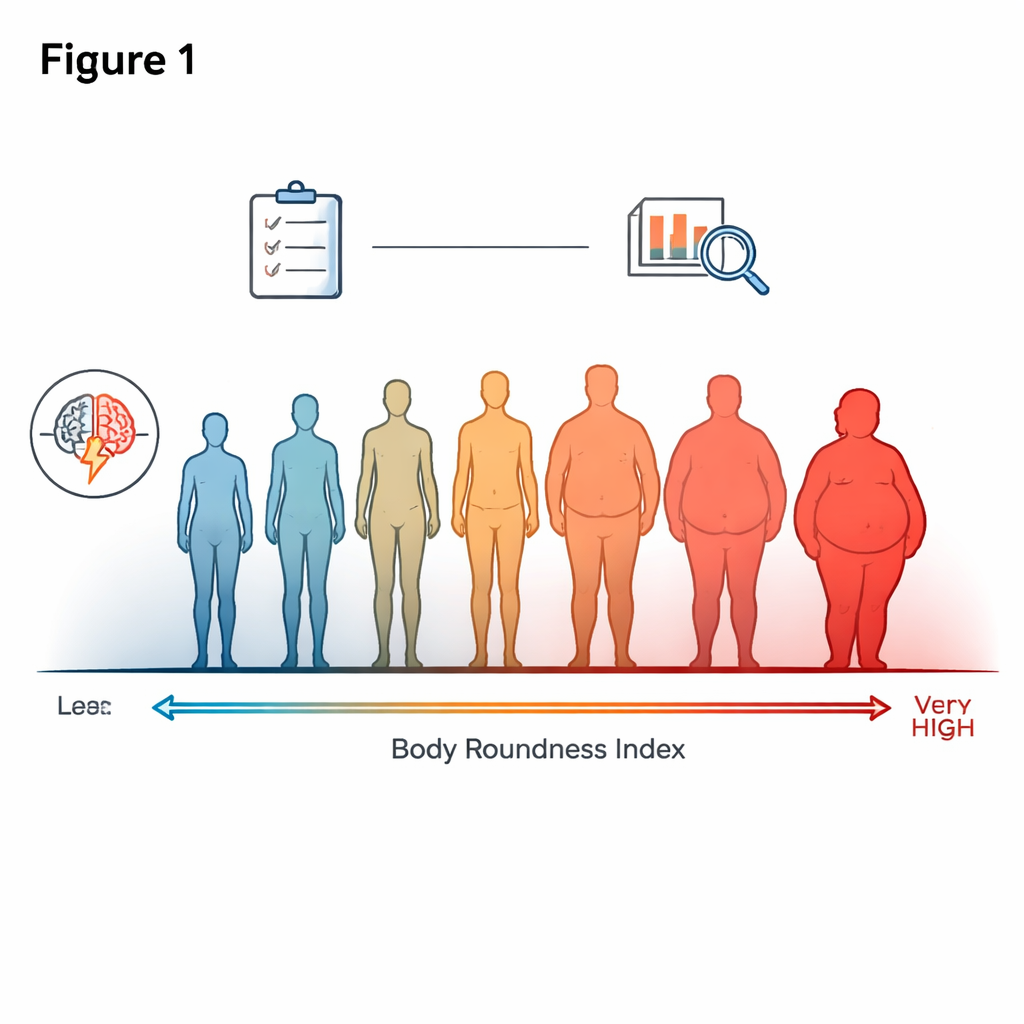
What the researchers did
The team drew on data from nearly 18,000 adults who took part in the U.S. National Health and Nutrition Examination Survey between 2013 and early 2020. Trained staff measured each person’s height and waist to calculate BRI, and interviewers recorded prescription drugs people had taken in the past month. Participants using medicines prescribed for “epilepsy and recurrent seizures” were classified as having epilepsy. The researchers also collected information on age, sex, race, income, education, smoking, drinking, diabetes, and high blood pressure, so they could factor these influences into their analysis.
Higher roundness, higher epilepsy odds
When the scientists compared people across different levels of BRI, a clear pattern emerged: those with rounder, more waist-centered bodies were more likely to have epilepsy. On average, each step up in BRI was linked to a modest but meaningful increase in the odds of having epilepsy, even after adjusting for many other health and lifestyle factors. People in the highest third of BRI scores had about three-quarters higher odds of epilepsy than those in the lowest third. The relationship looked steady rather than U-shaped—unlike some BMI studies, which have suggested increased seizure risk at both very low and very high body weights.
Possible links between the belly and the brain
This study cannot prove that abdominal fat causes epilepsy, but it adds to a picture in which excess belly fat may help nudge the brain toward seizures. Fat tissue deep in the abdomen is biologically active: it can drive chronic, low-grade inflammation, disturb blood sugar control, and strain the heart and blood vessels. Earlier work has shown that these same processes can injure delicate brain regions involved in memory and emotion, and may make brain cells more excitable. The authors suggest that by capturing central fat more accurately than BMI, BRI may be a better marker of these harmful pathways and their potential impact on seizure risk. 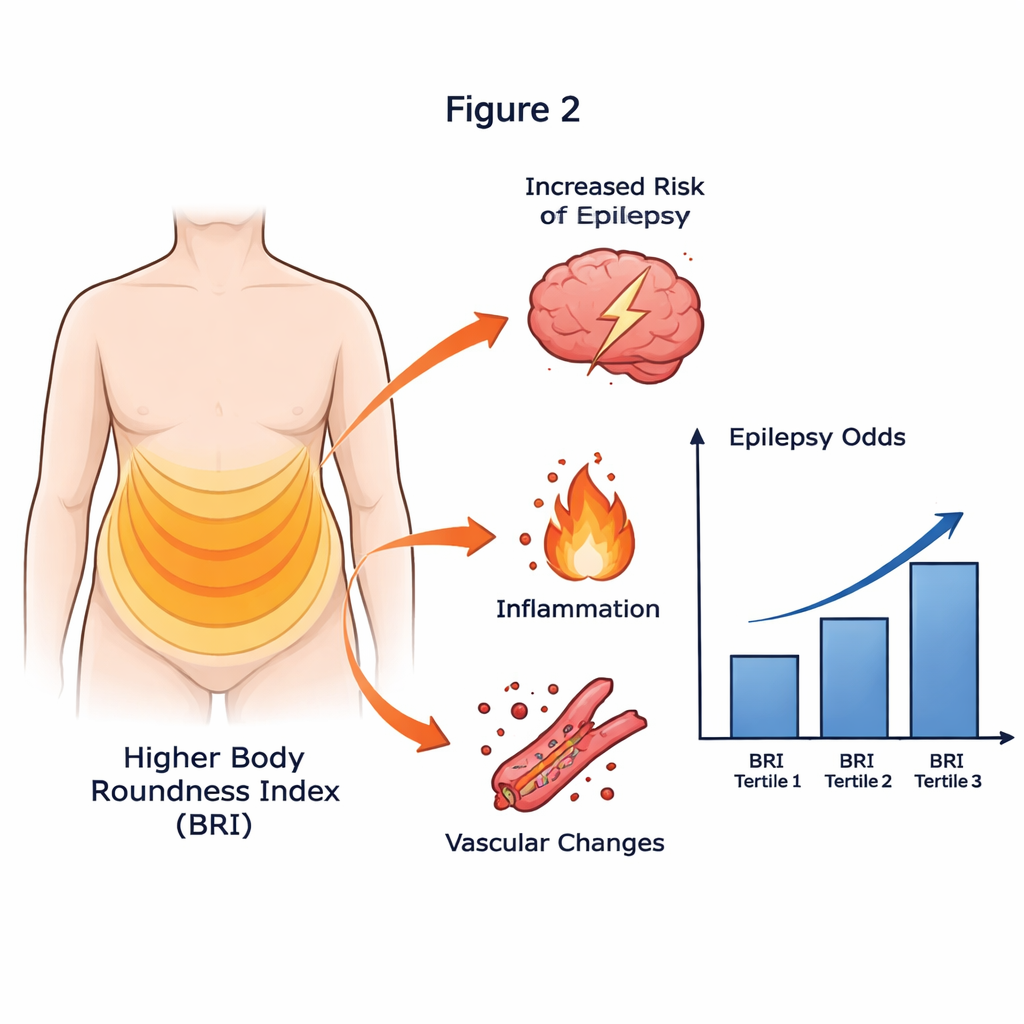
What this means for everyday health
For people living with epilepsy—and those who care for them—these findings hint that waist size may matter for more than looks or blood pressure readings. Paying attention to abdominal fat, through everyday habits like diet, physical activity, and sleep, could become part of a broader strategy to protect brain health. At the same time, the authors stress that their work is based on a snapshot in time, so it cannot tell whether belly fat came before epilepsy or the other way around. Larger, long-term studies are needed to confirm whether trimming the waistline can truly lower seizure risk. Still, this research offers a simple takeaway: a rounder midsection is not just a cosmetic issue—it may be a window into the brain’s vulnerability as well.
Citation: Zhu, T., Long, Z., Zhu, S. et al. Elevated body roundness index and epilepsy prevalence: a cross-sectional study. Sci Rep 16, 5685 (2026). https://doi.org/10.1038/s41598-026-36062-8
Keywords: epilepsy, abdominal fat, body roundness index, central obesity, seizure risk