Clear Sky Science · en
Performance enhancement of electrochemical discharge micromachining of borosilicate glass using nitrogen gas assistance
Why tiny glass parts matter
From lab-on-a-chip devices that analyze a droplet of blood to miniature pumps in medical implants, many modern technologies rely on tiny parts made of glass. Borosilicate glass is especially popular because it is clear, tough, and resistant to chemicals and heat. But carving precise microscopic shapes into such brittle glass without cracking it is surprisingly hard. This study explores a new way to “sculpt” micro-features in borosilicate glass using controlled electrical sparks in a nitrogen gas environment, aiming to make the process cleaner, more efficient, and kinder to both tools and the planet.
Turning sparks into a glass-carving tool
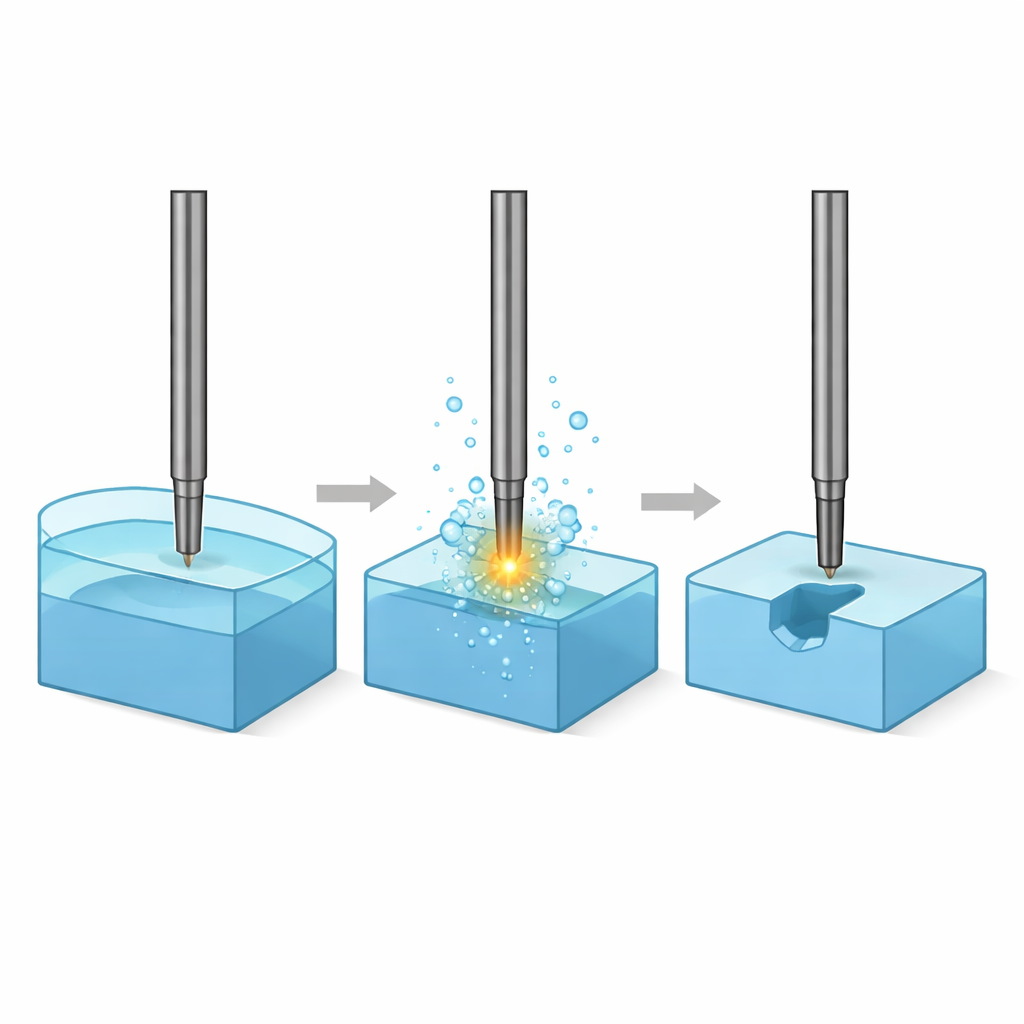
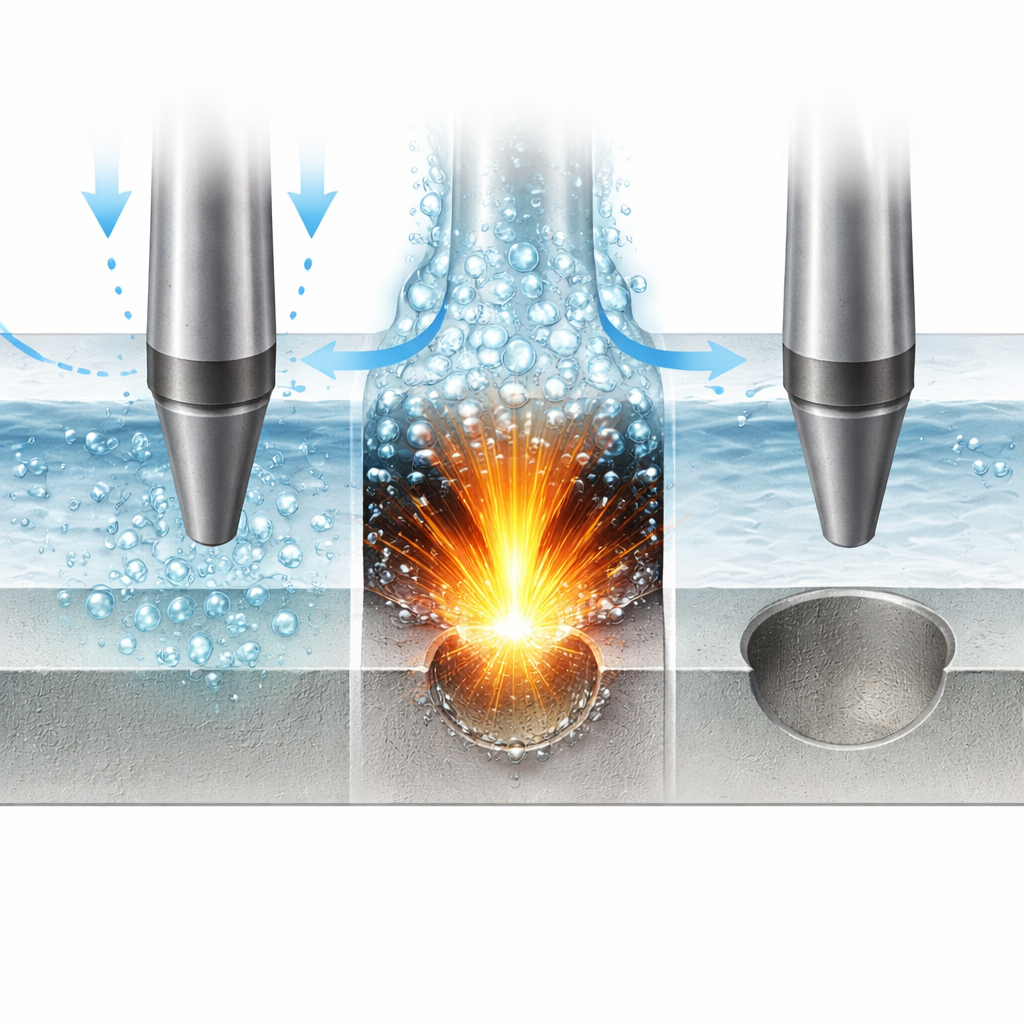
The researchers focus on a specialized technique called electrochemical discharge micromachining. In simple terms, a thin metal tool is dipped into a liquid that conducts ions and brought close to the glass surface. When a voltage is applied, tiny gas bubbles form around the tool and, at the right conditions, electrical discharges leap through this gas layer and chip away at the glass. Traditionally, these discharges can be unstable, creating random cracks, slow material removal, and rapid wear of the tool. The team’s key idea is to flood the machining zone with a gentle flow of nitrogen gas, which helps form a more stable gas film between the tool and the glass. That stable film channels the spark energy more evenly, turning a wild, noisy process into a more predictable one.
Finding the sweet spot for cleaner cutting
To understand how to run this process smoothly, the team systematically varied three main knobs: the applied voltage, the strength of the sodium hydroxide solution that serves as the liquid environment, and the flow of nitrogen gas. For each setting, they measured how much glass was removed and how much metal the tool lost. Rather than optimizing these two outcomes separately, they treated them as linked goals: remove as much glass as possible while wearing the tool as little as possible. Using statistical tools and a decision-making method that balances multiple targets, they mapped out the combinations of voltage, chemical strength, and gas flow that gave the best trade-offs. They found that keeping the gas flow in a moderate range and avoiding overly strong solutions led to stable, crack-free machining with good removal rates.
How nitrogen gas improves the process
Nitrogen plays several roles at once. It helps maintain a consistent gas layer around the tool tip, which is essential for steady, controlled discharges instead of damaging bursts. Its physical properties also help carry heat away from the tiny impact zone, reducing the risk of thermal shock and surface cracking in the brittle glass. Experiments showed that when nitrogen flow was increased from a low to a moderate level, the amount of glass removed could stay the same while the tool lost much less material. Under the best conditions—around 134 volts, a moderate sodium hydroxide concentration, and a nitrogen flow of 4 liters per minute—the process not only removed a healthy amount of glass but even showed a slight net gain in tool weight, likely from thin deposits formed during machining. This means the tool effectively “lasted longer” instead of burning away.
Smart models to guide greener machining
To move beyond trial-and-error, the authors built mathematical and machine-learning models that can predict how changes in settings will affect glass removal and tool wear. Statistical response surfaces captured how voltage, liquid strength, and gas flow interact in non-obvious ways, while a random forest model—a type of ensemble decision-tree system—learned from the data to forecast near-optimal conditions. The predictions were generally within about eight percent of actual experiments, close enough to serve as a practical guide. Importantly, the best-performing region they identified used about one-third less chemical than some conventional setups, reduced tool wear, and still produced smooth, well-shaped micro-cavities with very small dimensional error.
What this means for future tiny devices
In everyday terms, this work shows that blowing the “right amount” of nitrogen gas into a spark-based glass-cutting process can turn it from a temperamental method into a reliable micro-machining tool. By stabilizing the electrical discharges and keeping heat under control, nitrogen-assisted machining removes more glass, damages the tool less, and uses less aggressive chemistry. That combination makes it attractive for producing the delicate channels, holes, and cavities needed in micro-sensors, micro-pumps, and other miniaturized systems, while also reducing waste and environmental impact. As researchers extend this approach to other glass types and refine the models with more data, such nitrogen-assisted micromachining could become a standard, cleaner way to manufacture the invisible glass components that underpin much of modern technology.
Citation: Tamilperuvalathan, S., Varadharaju, V., Rajamohan, S. et al. Performance enhancement of electrochemical discharge micromachining of borosilicate glass using nitrogen gas assistance. Sci Rep 16, 8553 (2026). https://doi.org/10.1038/s41598-026-36060-w
Keywords: borosilicate glass micromachining, nitrogen gas dielectric, electrochemical discharge machining, tool wear reduction, sustainable manufacturing