Clear Sky Science · en
Evaluation of SHAPE cognitive therapy coaching for PTSD and depression symptoms in healthcare workers repeatedly exposed to trauma
Why this matters to everyday health workers and patients
Hospitals and ambulances run on the dedication of doctors, nurses, and paramedics, but the job can leave deep psychological scars. Many healthcare workers live with ongoing flashbacks, sleepless nights, and low mood after repeated exposure to trauma. This study tested a brief, phone-based coaching program called SHAPE that aims to ease posttraumatic stress and depression using practical thinking and coping skills, without demanding long therapy sessions. The findings suggest that even busy staff, supported at a distance, can make substantial, lasting gains in their mental health.
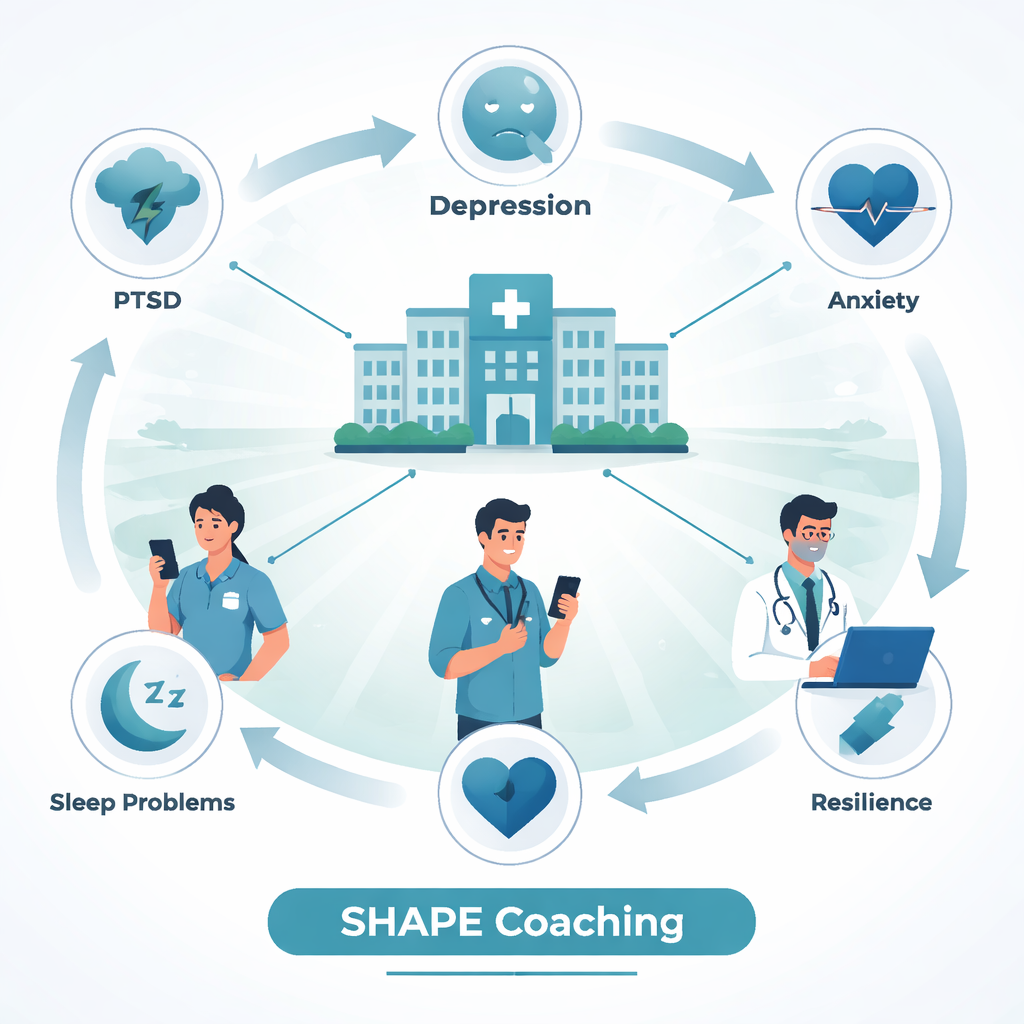
The hidden toll of caring through crisis
Healthcare staff regularly witness death, severe injury, and human suffering, and many also carry earlier life traumas such as childhood abuse. Research shows that, compared to the general population, they have much higher rates of posttraumatic stress disorder (PTSD), depression, anxiety, and insomnia. Yet many avoid traditional mental health services because of stigma, time pressure, or feeling that their problems are “part of the job.” Earlier digital tools and wellness apps for this group produced mixed results: some improved stress or rumination, others showed little benefit beyond simple self-help materials. There is a pressing need for support that is both firmly grounded in evidence and realistic for people working shifts on crowded wards.
A coaching approach built for busy clinicians
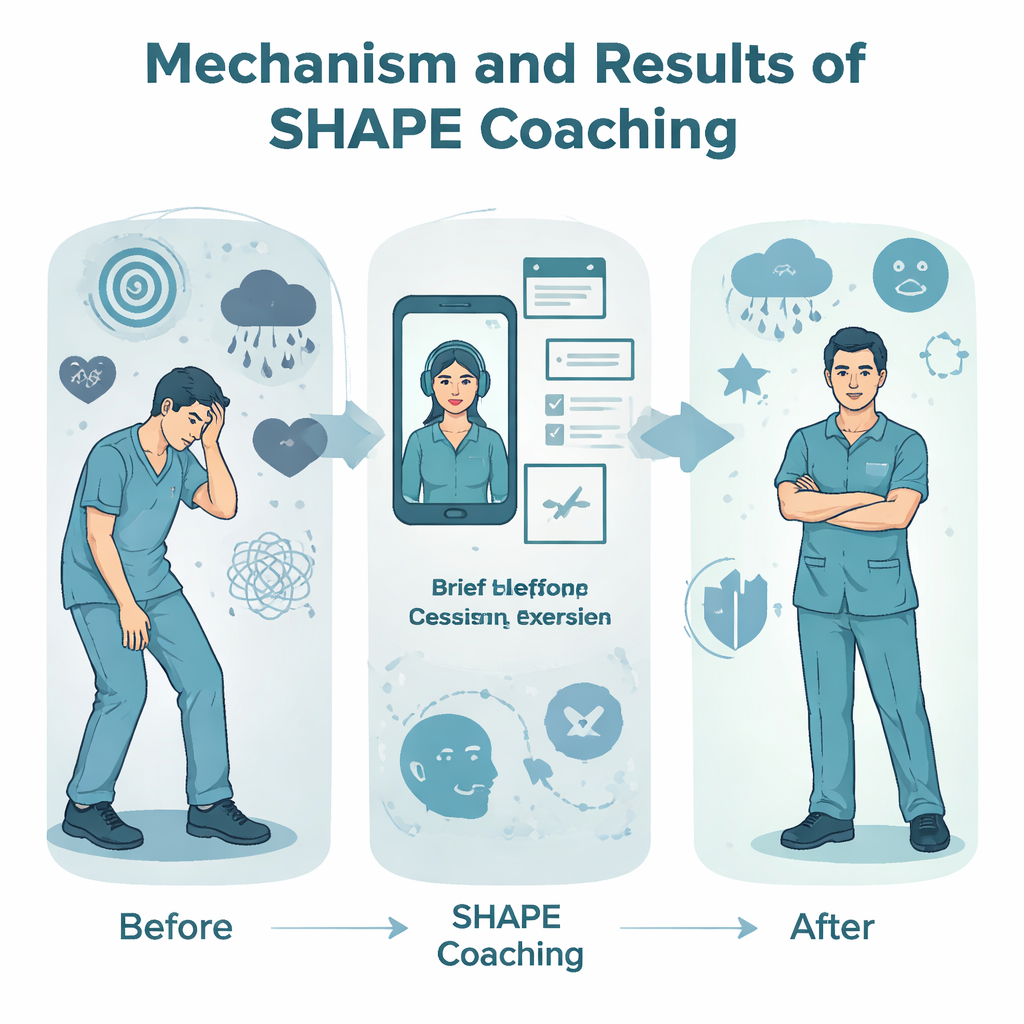
The SHAPE program (Supporting Healthcare and Paramedic Employees) was designed during the COVID-19 pandemic specifically for healthcare workers struggling with PTSD and depression symptoms. Instead of full-length psychotherapy, SHAPE offers six brief telephone sessions of 20–40 minutes over 6–8 weeks, paired with six self-guided online modules of similar length. Coaches—who may be psychology graduates rather than fully trained therapists—teach skills drawn from well-established cognitive therapies. These include learning to tell the difference between harmless reminders in the present and past traumatic events (“then versus now”), gently questioning harsh self-judgments, breaking cycles of dwelling on distressing thoughts, and building small, sustainable moments of meaningful activity into everyday life.
How the study was carried out
The researchers enrolled 103 healthcare workers from hospitals and ambulance services across England and Scotland between 2020 and 2022. Participants had been involved in COVID-19 care but often named other experiences—such as sudden deaths, assaults, or childhood abuse—as their most troubling events. About two thirds met criteria for probable PTSD or depression, while the rest had milder yet still distressing symptoms. Everyone completed mental health questionnaires at four points: when they signed up, after a three-week period of weekly symptom monitoring, immediately after the six-week SHAPE coaching phase, and three months later. This design allowed the team to compare what changed simply with time and attention to symptoms versus what changed while SHAPE was in progress.
What changed for PTSD, depression, sleep and coping
Symptoms did ease slightly during the three weeks of monitoring, but improvements were much larger once SHAPE began. Average PTSD, depression, and anxiety scores all dropped below standard clinical cutoffs by the end of coaching, and stayed below those levels three months later. Among those who started above the PTSD threshold, about three quarters reached a state of reliable recovery during the intervention; for depression, roughly two thirds did so. Most maintained these gains at follow-up. Sleep problems improved, resilience scores rose, and participants reported better overall wellbeing, changes that only emerged during the coaching phase and persisted afterward. Statistical analyses suggested that people who reduced habits like trying to push away intrusive memories, and who softened extremely negative beliefs about themselves and the world, tended to show the greatest relief from PTSD and depression.
What this means for care and next steps
For healthcare workers, the study offers encouraging news: meaningful relief from trauma-related distress may be possible through a structured program of short phone calls and online exercises that fit around demanding schedules. SHAPE does not require long sessions or intensive reliving of traumatic events, yet still produced improvements comparable to more time-consuming therapies in other studies. Because the research did not include a separate control group, the authors stress that a full randomized trial is needed to confirm that SHAPE itself—not just time or repeated questionnaires—drives the benefits. Even so, the results point toward an accessible, scalable way to support the mental health of the people we rely on most when crises strike.
Citation: Wild, J., McKinnon, A., Wilkins, A. et al. Evaluation of SHAPE cognitive therapy coaching for PTSD and depression symptoms in healthcare workers repeatedly exposed to trauma. Sci Rep 16, 5593 (2026). https://doi.org/10.1038/s41598-026-36057-5
Keywords: healthcare worker mental health, PTSD, depression, cognitive therapy coaching, COVID-19