Clear Sky Science · en
Monitoring insecticide resistance in cotton leafhopper in relation to enzymatic activity in major cotton growing areas of central India
Why this tiny pest matters to cotton and to us
Cotton is often called India’s “white gold,” supporting millions of farmers and a vast textile industry. But this valuable crop is under constant attack from a tiny sap-sucking insect called the cotton leafhopper. Farmers have long relied on chemical sprays to keep this pest in check. The study summarized here explains how, across five key cotton districts of Maharashtra, these leafhoppers are steadily becoming harder to kill with common insecticides—and why understanding their internal chemistry is crucial for protecting both harvests and the environment.
A growing problem in cotton fields
The researchers tracked leafhopper populations in five major cotton-growing districts—Chandrapur, Wardha, Yavatmal, Nagpur, and Amravati—over five seasons from 2015–16 to 2019–20. They tested how much of each insecticide was needed to kill half the insects in a sample, a standard measure called LC50. For nearly every chemical tested, these LC50 values climbed year after year. That means farmers would need increasingly higher doses to get the same level of control. The trend was especially stark in districts such as Yavatmal and Amravati, where cotton is intensively grown and insecticide use is heavy. 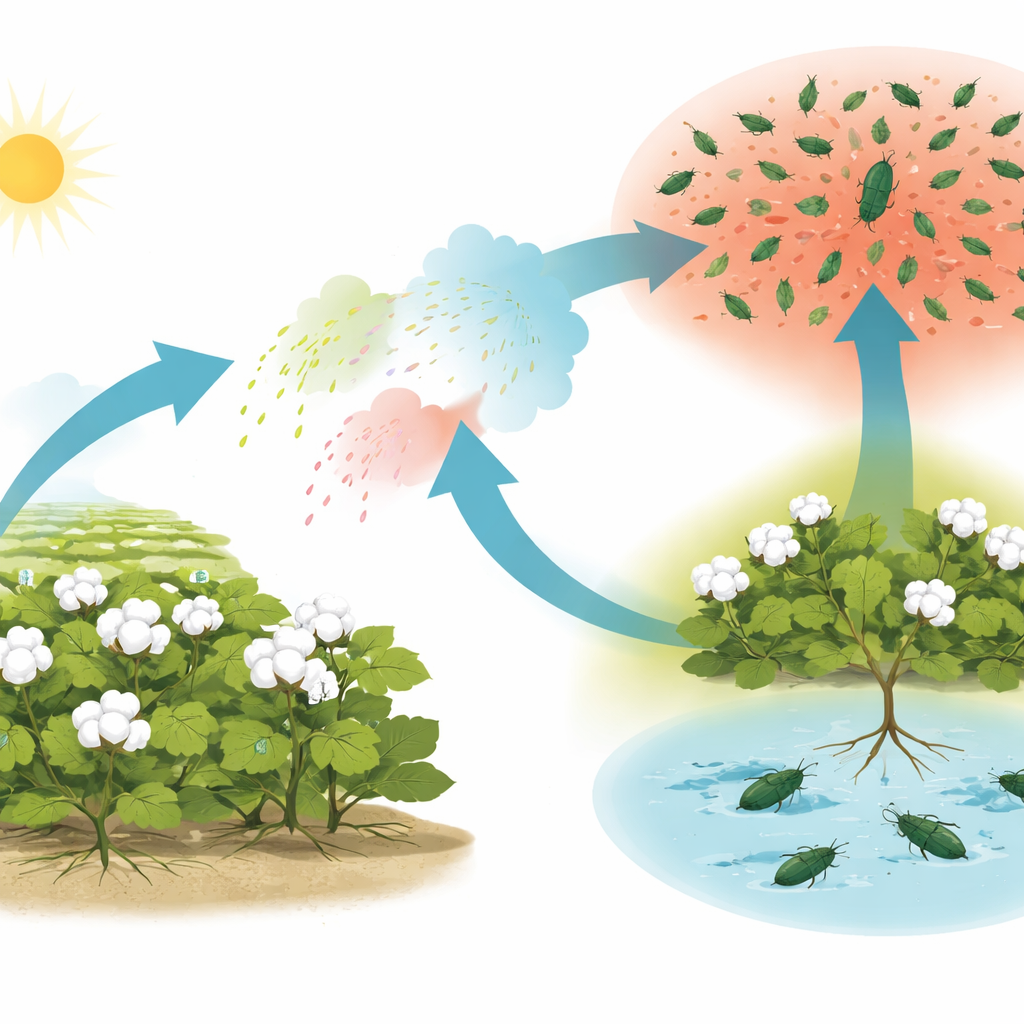
Old sprays losing their punch
The team focused on eight widely used insecticides from different chemical families, including modern “neonicotinoids” and older organophosphate compounds. For several neonicotinoids—such as imidacloprid, thiamethoxam, acetamiprid, and clothianidin—resistance rose sharply. In places like Yavatmal and Chandrapur, the amount of insecticide needed to kill leafhoppers increased several-fold over just a few years, signalling that these once dependable products are losing effectiveness. Organophosphate insecticides like monocrotophos and acephate, long used as workhorses in cotton, showed some of the highest resistance levels of all, particularly in Yavatmal, Wardha, and Amravati. Newer options such as flonicamid and spiromesifen also began showing early warning signs: their killing power declined noticeably in districts with intensive use, hinting that overreliance on any one “new” product quickly erodes its usefulness.
What makes the leafhopper so tough
To understand how the insects were surviving, the scientists went inside the leafhoppers—biochemically speaking. They measured the activity of key “detoxifying” enzymes that insects use to break down harmful compounds. Across the study period, four major enzyme systems—two types of esterases, mixed-function oxidases (often linked to cytochrome P450), and glutathione S-transferases—became more active in most leafhopper populations. Amravati stood out with the highest levels for many of these enzymes, closely mirroring its strong resistance to multiple insecticides. Even districts that started with relatively low enzyme activity, such as Chandrapur, showed a steady rise. This tight link between enzyme activity and survival suggests that metabolic resistance—where the pest chemically disarms the insecticide before it can do harm—is now a main defence strategy of the cotton leafhopper. 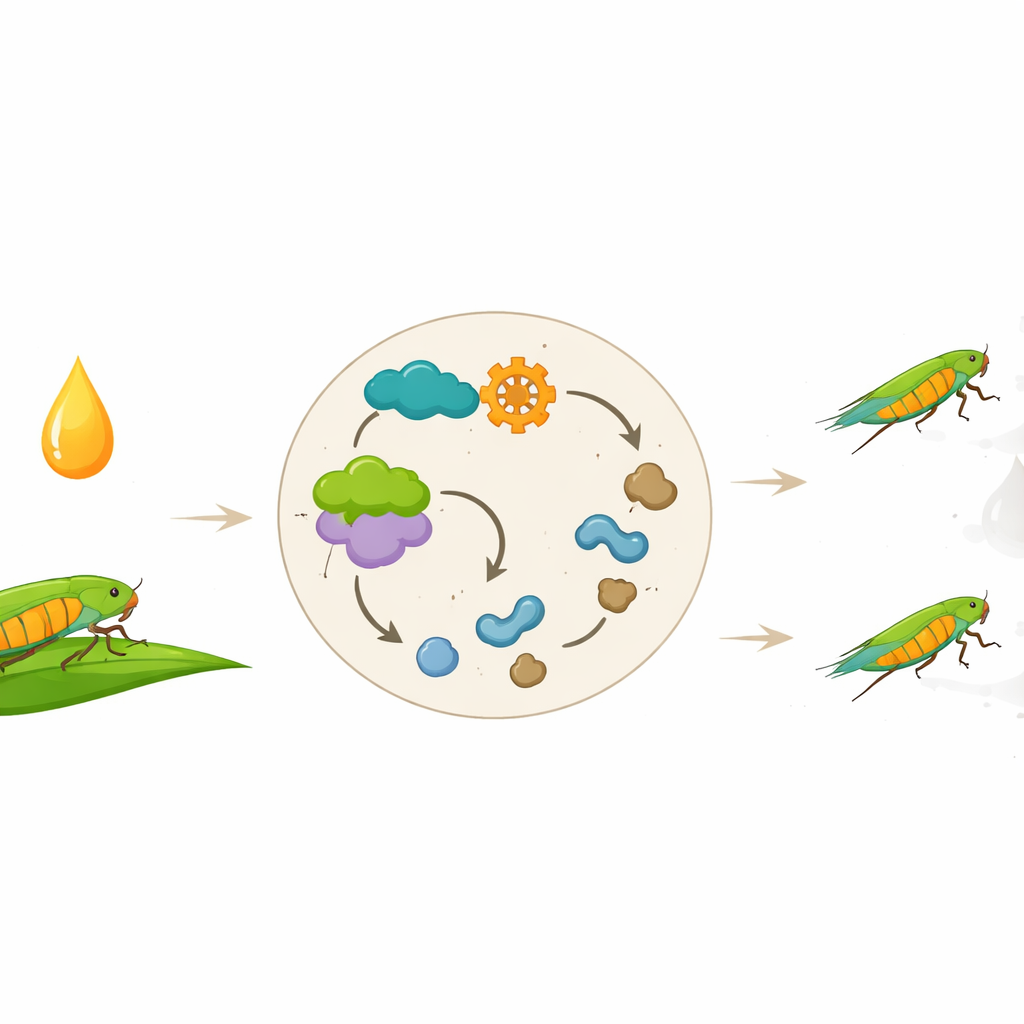
Local pressures, wider lessons
The pattern of resistance varied among districts, reflecting differences in cropping practices and spray habits. Areas with intensive cotton monoculture and frequent use of the same or related insecticides tended to show the steepest increases in resistance and enzyme activity. The study’s findings echo reports from other parts of India and neighbouring countries: once a chemical becomes popular and is used repeatedly, leafhopper populations respond by evolving stronger detox systems. Because these biochemical changes can be passed on to future generations, resistance can spread and become entrenched, making it harder and costlier to control pests over time.
Rethinking how we manage pests
For non-specialists, the core message is straightforward: the more we lean on the same insecticides, the better the leafhopper becomes at shrugging them off. The authors argue that simply increasing doses or switching among closely related chemicals is not a long-term solution. Instead, they advocate for integrated pest management—a mix of tactics that might include rotating insecticides with truly different modes of action, growing cotton varieties less attractive or less suitable to leafhoppers, conserving natural enemies, and adjusting farming practices to make fields less welcoming to pests. Regular resistance monitoring and enzyme profiling can act like an early warning system, telling agronomists and policymakers when a product is starting to fail. By using these biological insights, cotton-growing regions can safeguard yields while reducing chemical load on the environment and slowing the arms race between farmers and this small but formidable pest.
Citation: Chinna Babu Naik, V., Chowdary, L.R., Nagaharish, G. et al. Monitoring insecticide resistance in cotton leafhopper in relation to enzymatic activity in major cotton growing areas of central India. Sci Rep 16, 9251 (2026). https://doi.org/10.1038/s41598-026-36055-7
Keywords: cotton leafhopper, insecticide resistance, metabolic detoxification, integrated pest management, neonicotinoids