Clear Sky Science · en
The effect of an acceptance and commitment therapy-based self-compassion program on self-compassion and psychological flexibility in mothers
Why kindness to yourself matters for parents
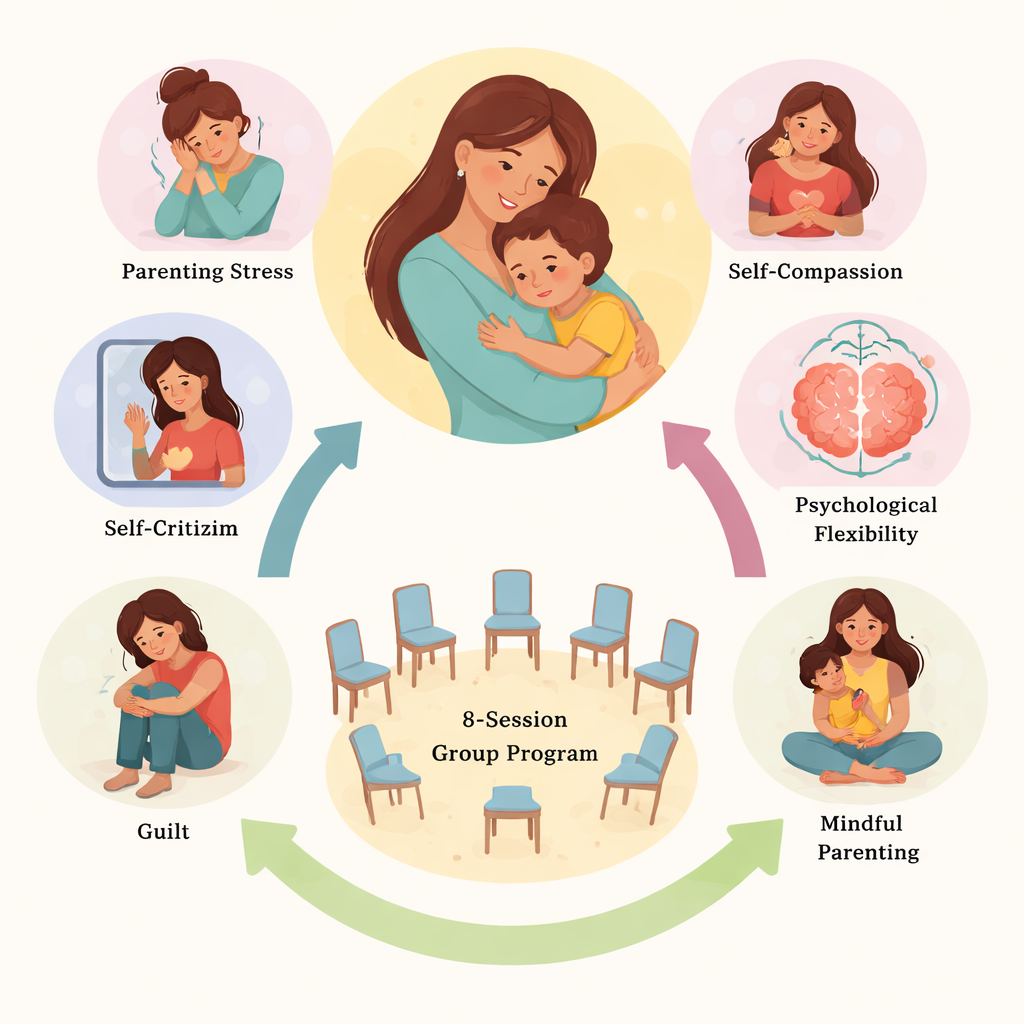
Many mothers of young children feel they must be endlessly patient, cheerful, and available. When real life brings tantrums, sleepless nights, and isolation, this ideal quickly turns into self-criticism and guilt. This study explores a hopeful idea: if mothers learn to treat themselves with the same understanding they try to show their children, they may feel emotionally stronger and parent more calmly. Using a structured group program built on Acceptance and Commitment Therapy (ACT), the researchers tested whether teaching self-compassion and flexible ways of handling emotions could ease the inner pressure many mothers carry.
The growing weight of modern motherhood
Raising a child between ages four and six can be especially demanding. Children are pushing for independence yet still struggle to control their feelings and behavior. For non-working mothers who spend nearly all day with their children, this can mean constant conflict, little adult support, and plenty of time to replay perceived mistakes. Earlier research has shown that two inner strengths help parents cope: self-compassion—being kind rather than harsh toward oneself in difficult moments—and psychological flexibility—being able to notice painful thoughts and feelings without getting stuck in them, and to act in line with one’s values anyway. Mothers who have more of these qualities tend to be less depressed and less punitive, and to feel more competent as parents.
A class in being kinder to yourself
To see whether these strengths can be deliberately built, the researchers developed an eight-session psychoeducation program for non-working mothers of preschoolers. Thirty volunteers in Istanbul were divided into two groups. One group attended the program; the other group continued life as usual. Over 90 minutes each week, a trained counselor led the participating mothers through brief lessons, guided exercises, and group discussions. Early sessions introduced the idea of self-compassion and simple mindfulness practices, such as paying attention to breathing or everyday sensations. Later sessions helped mothers clarify their values as parents, notice and gently step back from self-critical thoughts, accept difficult emotions without fighting them, and see themselves as more than their momentary mistakes.
Measuring change over time
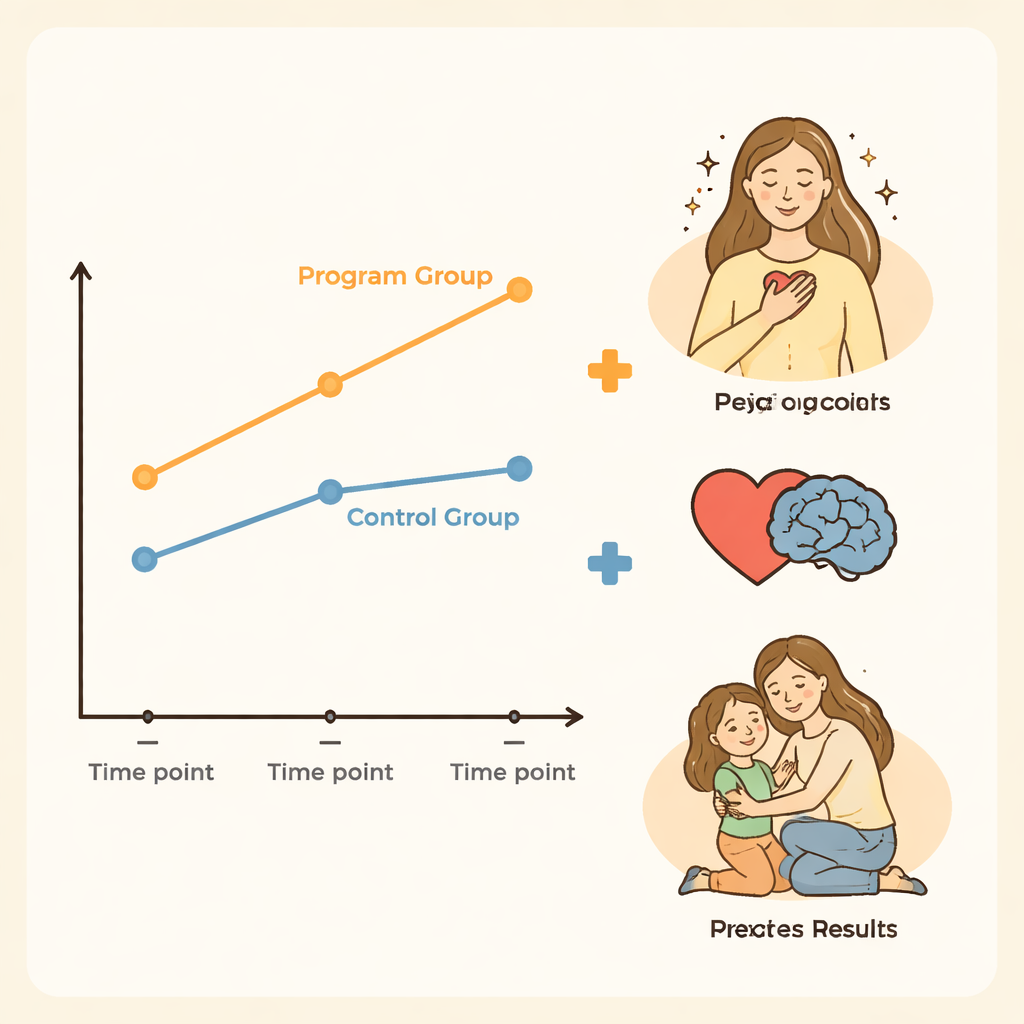
All mothers, both in the program and in the comparison group, filled out standardized questionnaires on self-compassion and psychological flexibility four times: before the program, halfway through, right after it ended, and about eight weeks later. The researchers then used statistical methods designed to track changes over time in small groups. They checked that the two groups were similar at the start and that the data met technical assumptions, so any later differences were unlikely to be due to chance alone. In addition, they interviewed the mothers who attended the program, asking how it affected their feelings, thoughts, and daily parenting.
What changed for participating mothers
Across the four measurements, mothers who attended the program showed a steady rise in self-compassion. They became less harsh toward themselves and more able to see their struggles as part of being human. This improvement was not only statistically reliable; it actually grew stronger by the follow-up, suggesting that mothers kept using what they had learned. Psychological flexibility also increased over time in the program group compared with the control group, meaning these mothers reported being better able to notice painful thoughts and feelings without being ruled by them. In interviews, many described no longer fighting their emotions, speaking to themselves more gently, and beginning to say “no” when they felt overwhelmed. Several noticed that as they treated themselves more kindly, they became more patient and understanding with their children.
What this means for families
For lay readers, the core message is simple: teaching mothers to be kinder and more accepting toward themselves can measurably improve their inner lives in just a few weeks, even without one-on-one therapy. This small study suggests that structured group programs grounded in ACT and self-compassion can help non-working mothers feel less trapped by guilt and self-criticism and more able to respond to their children in ways that match their deepest values. While larger and more diverse studies are still needed—and the research did not yet measure direct effects on children—the findings point to a practical, low-cost way for schools, clinics, and community centers to support the emotional well-being of parents and, indirectly, the children who depend on them.
Citation: Çapulacı, R., Söner, O. The effect of an acceptance and commitment therapy-based self-compassion program on self-compassion and psychological flexibility in mothers. Sci Rep 16, 5622 (2026). https://doi.org/10.1038/s41598-026-36049-5
Keywords: self-compassion, parenting, mothers, acceptance and commitment therapy, psychological flexibility