Clear Sky Science · en
Effect of exercise on hormonal responses in adolescents with obesity and leptin resistance: a randomized trial
Why Jumping Exercises Matter for Kids’ Health
Childhood obesity is rising around the world, and many young people struggle not only with extra weight but also with the way their bodies’ hormones control appetite, growth, and energy. This study looked at whether a specific kind of “jump training,” called plyometric exercise, could help adolescents with obesity whose bodies were no longer responding properly to leptin, a hormone that usually helps signal fullness. By following a group of teens through a 12‑week program, the researchers asked a simple but important question: can the right kind of exercise help growing kids become leaner, stronger, and hormonally healthier—without using any drugs?
How the Study Was Set Up
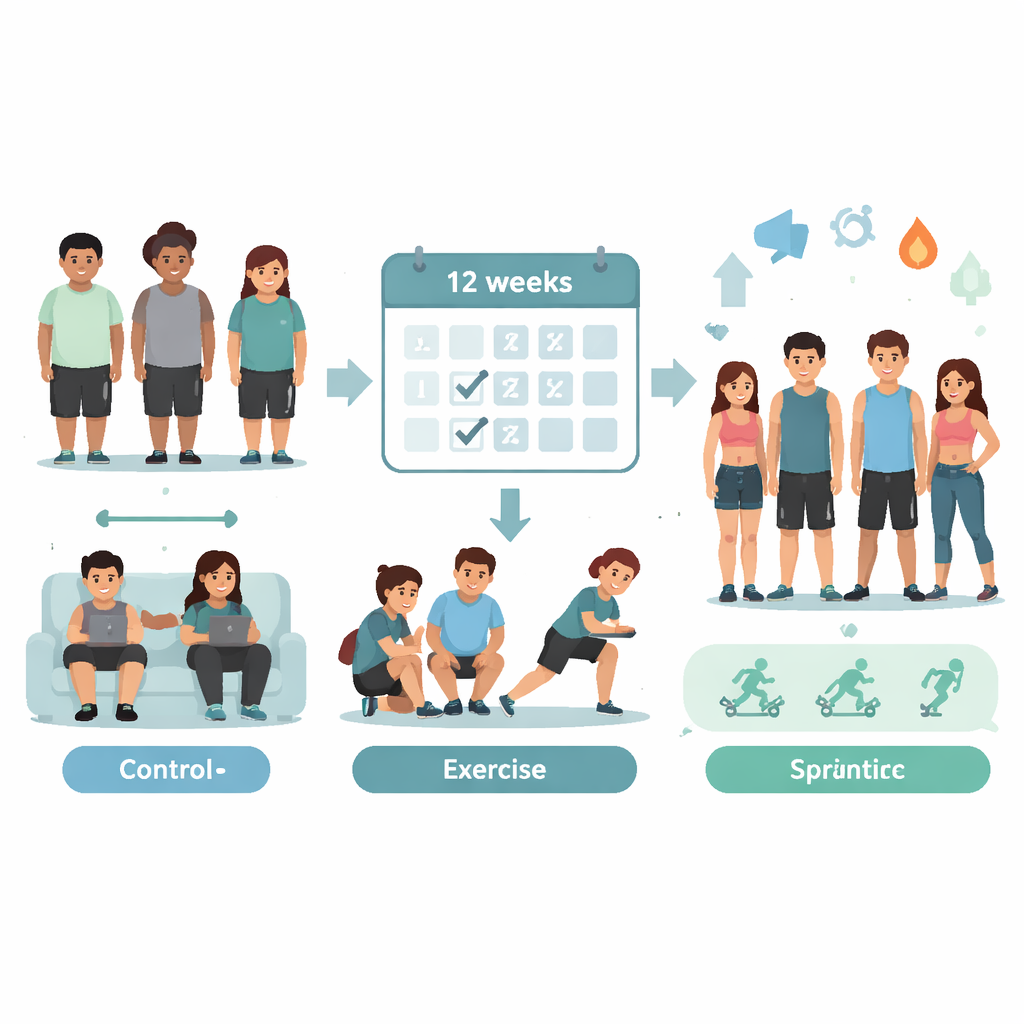
The research team recruited 60 boys and girls with obesity and high leptin levels, a sign of leptin resistance. All participants had at least 30% body fat and were in early puberty. They were randomly assigned to either a control group, which was told to keep its usual lifestyle, or an exercise group that completed a supervised plyometric program. The training took place three times a week for 12 weeks and included a warm‑up, 50 minutes of jump‑focused drills (such as squat jumps, tuck jumps, and box jumps, plus some short sprints and throws), and a cool‑down. Intensity gradually increased over time, and heart‑rate monitors were used to keep workouts challenging but safe.
Changes in Body Shape and Strength
After 12 weeks, the adolescents in the exercise group showed clear physical improvements compared with where they started. They grew slightly taller and gained muscle, while their total fat mass, body fat percentage, and body mass index (BMI) all went down. These changes were modest but meaningful, especially given the short time frame and the fact that all participants still met the clinical definition of obesity. Muscle fitness also improved: hand‑grip strength rose in both hands, and the legs became stronger and more powerful, as shown by tests of knee torque and muscle power. These gains suggest that jump‑based training can build functional strength that matters for daily activities, sports, and long‑term mobility.
What Happened to Growth and Appetite Hormones
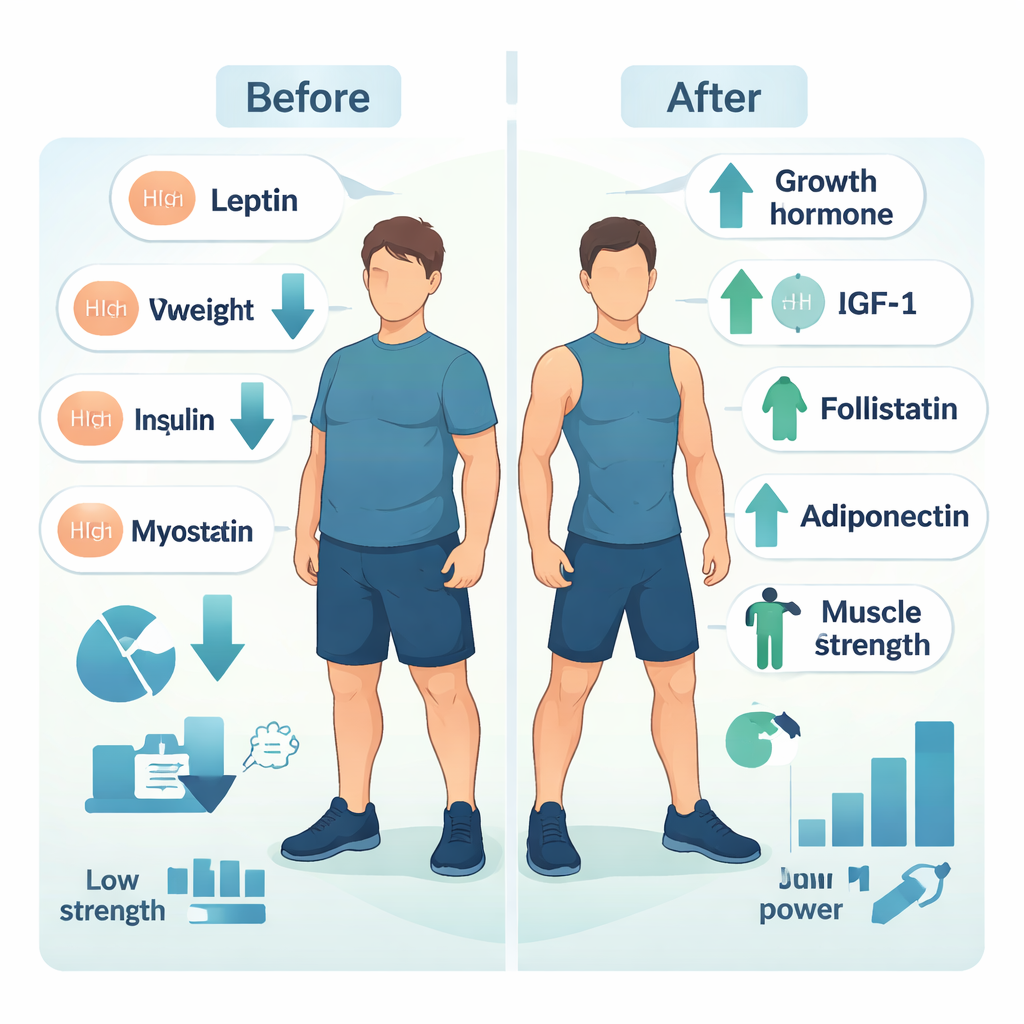
The most striking shifts occurred inside the body. The exercise program boosted key growth‑related hormones, including growth hormone (GH) and insulin‑like growth factor‑1 (IGF‑1), both crucial for height gain and healthy tissue building during adolescence. At the same time, hormones tied to appetite and blood sugar control moved in a healthier direction. Insulin levels dropped sharply, indicating better sensitivity to this hormone, and leptin levels fell by about a quarter in the exercise group, while they actually rose in girls who did not exercise. Because high leptin in this setting reflects the brain “ignoring” fullness signals, this drop likely signals improved leptin sensitivity, a step toward breaking the cycle in which excess fat drives more overeating and further weight gain.
Signals from Muscle and Fat Tissue
Muscles and fat are not just passive tissue; they release their own signaling proteins that talk to the rest of the body. The study found that plyometric exercise lowered myostatin, a muscle‑braking factor that normally slows growth, and increased follistatin, which counters myostatin and helps muscle fibers grow and repair. IGF‑1, which also supports muscle building, rose alongside these changes. From fat tissue, levels of adiponectin—a hormone that improves how the body uses sugar and fat and has anti‑inflammatory effects—increased notably. Taken together, these shifts suggest that jump training nudged the body’s internal chemistry toward burning fuel more efficiently, building muscle rather than storing fat, and calming harmful low‑grade inflammation, even though a marker of inflammation called TNF‑α did not change over this short period.
What This Means for Teens and Families
To a non‑specialist, the message is straightforward: a well‑designed, supervised jump‑based exercise program can do far more than just burn calories in adolescents with obesity. In only three months, it helped participants grow a bit taller, become stronger, and shift multiple hormones in a healthier direction—lowering those linked to overeating and poor blood sugar control while raising those tied to growth and muscle building. Although the teens remained in the obese range and diet was not strictly controlled, their bodies were clearly moving toward better balance. The authors conclude that plyometric exercise is a practical, drug‑free tool that schools, clinics, and families could use to support growth and metabolic health in adolescents with obesity and leptin resistance, especially if combined with long‑term lifestyle changes.
Citation: Jeong, D., Valentine, R.J., Park, K. et al. Effect of exercise on hormonal responses in adolescents with obesity and leptin resistance: a randomized trial. Sci Rep 16, 4099 (2026). https://doi.org/10.1038/s41598-026-36045-9
Keywords: childhood obesity, exercise training, hormones, leptin resistance, adolescent health