Clear Sky Science · en
Mealworm frass fed on expanded polystyrene helps retention of chrysanthemum flower
Turning Plastic Waste into Garden Gold
Plastic trash and fading flowers do not usually belong in the same story. Yet this research links the two in an unexpectedly hopeful way. Scientists tested whether the droppings of mealworms raised on Styrofoam-like plastic could be turned into a plant-friendly liquid that helps chrysanthemums bloom longer and hold onto their flowers, offering both a new recycling path for plastic and a boost for one of the world’s most popular cut flowers.
From Bugs and Foam to Plant Food
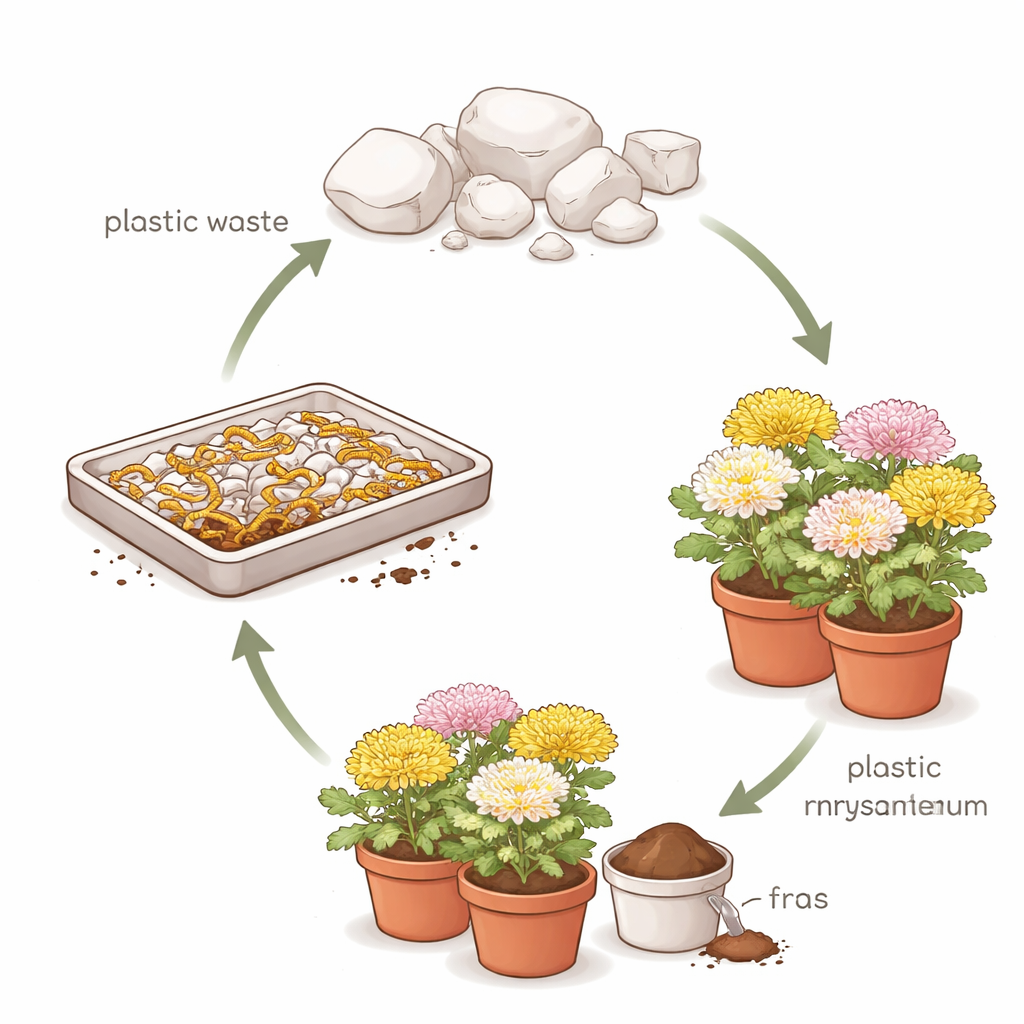
Mealworms, the larval stage of a common beetle, are already being explored as a sustainable source of animal feed and even human food. As the insect industry expands, so does the pile of insect droppings, known as frass. This waste is rich in nutrients such as nitrogen, phosphorus, potassium, and organic matter, making it a promising fertilizer. In this study, the team used a commercial liquid product called “Maha,” made by feeding mealworms expanded polystyrene (a form of plastic foam) and then extracting dark, carbon-rich substances called humic materials from their frass. The goal was to see whether this unusual fertilizer could improve the flowering performance of chrysanthemums, a key crop in the cut-flower market.
How the Flower Experiment Worked
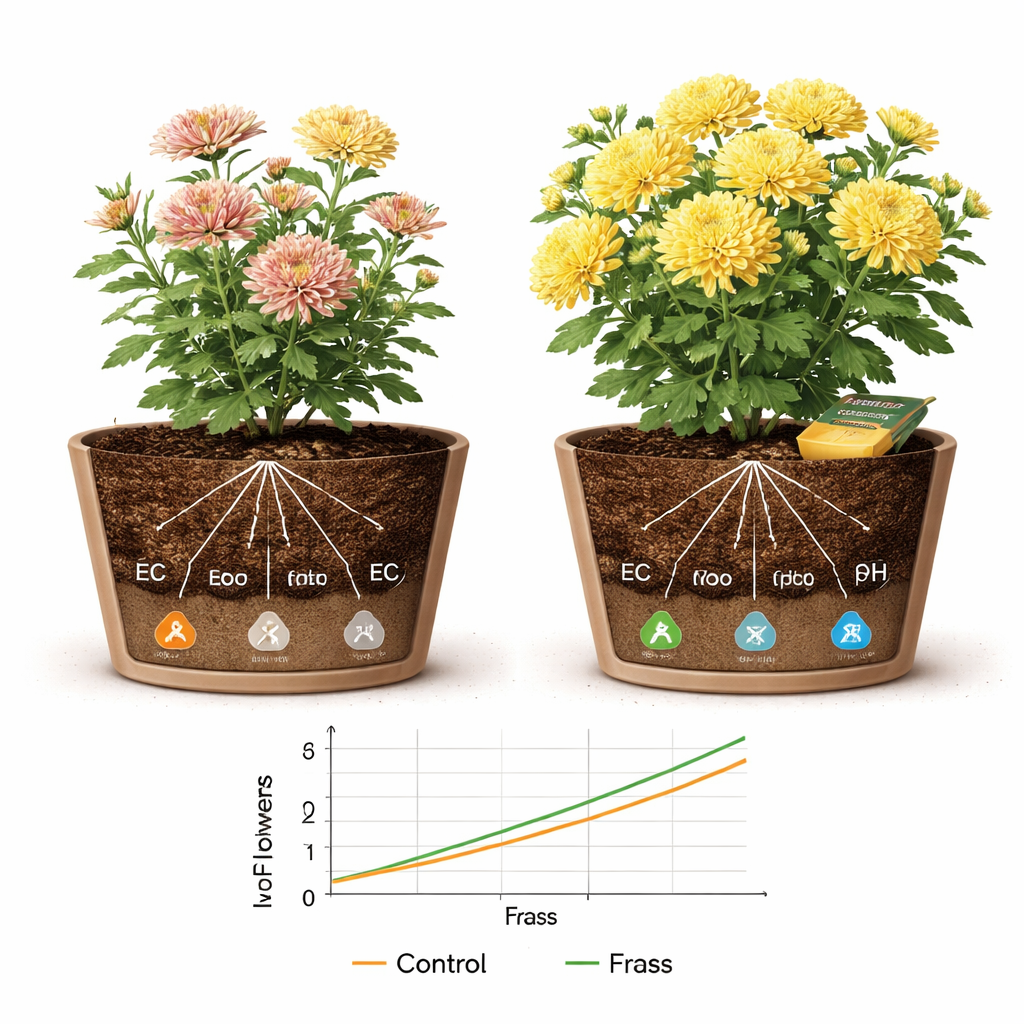
The researchers grew potted chrysanthemums indoors under controlled light and temperature. Sixteen pots were divided into four groups: plain water (no frass) and three strengths of the mealworm-based liquid (high, medium, and low). Every week for about two months, each pot received the same volume of solution. Cameras counted open flowers once a week, and soil sensors continuously tracked moisture, temperature, salt levels (measured as electrical conductivity, or EC), and acidity (pH). At the end, the plants were taken apart so the team could weigh the fresh and dried shoots, roots, and soil.
More Blooms and Longer-Lasting Flowers
The most striking difference showed up in flower numbers and how long blooms lasted. During the first four weeks, all plants behaved similarly. From week five onward, the two stronger frass solutions began to pull ahead. By the final measurement, plants treated with medium and high concentrations of Maha held about 40 percent more flowers than untreated plants. They also kept flowers in bloom for longer: the average “flower retention” score was highest in these two groups, while even the weakest frass solution still did better than plain water. Interestingly, total dry weight of the above-ground parts did not differ much between treatments, suggesting that the main benefit was in maintaining more, longer-lived blossoms rather than simply bulking up the plants.
Finding the Sweet Spot in the Soil
Below the surface, the soil’s condition turned out to be just as important. After each weekly dose, soil moisture, EC, and pH all rose and then slowly declined before the next application. The higher the frass concentration, the higher the EC spike, reflecting more dissolved salts. The medium-strength treatment gave the best root fresh and dry weights, whereas the strongest solution had the highest EC but slightly weaker roots. This supports earlier work showing that too much mealworm frass can stress plants, likely because overly salty conditions and rapid swings in soil chemistry make it harder for roots to function. In other words, the same product that helps flowers thrive at moderate levels can begin to hinder them if overused.
What This Means for Flowers and the Planet
For non-specialists, the message is straightforward: a carefully diluted liquid made from mealworm droppings—produced while the insects are chewing through plastic foam—can help chrysanthemums keep more flowers for longer, without hurting overall growth. At the same time, this approach turns a persistent waste (expanded polystyrene) into a useful agricultural input, cutting reliance on conventional chemical fertilizers. The study highlights that dose matters: a medium concentration of frass seems to offer the best balance between feeding the plant and keeping the soil comfortable for roots. If scaled up and fine-tuned for other crops, this kind of insect-based fertilizer could become part of a more circular, eco-friendly flower industry.
Citation: Yun, J.Y., Lee, S.M., Joung, Y.M. et al. Mealworm frass fed on expanded polystyrene helps retention of chrysanthemum flower. Sci Rep 16, 5172 (2026). https://doi.org/10.1038/s41598-026-36020-4
Keywords: mealworm frass fertilizer, plastic waste recycling, chrysanthemum flowers, humic acid, sustainable floriculture