Clear Sky Science · en
Prolonged exposure to polyvinylpyrrolidone heightens DNA breaks in human sperm
Why a lab additive matters for would‑be parents
When couples turn to in vitro fertilization (IVF), they trust that every step in the lab helps, not harms, their chances of having a healthy baby. One common helper chemical, polyvinylpyrrolidone (PVP), is routinely used during intracytoplasmic sperm injection (ICSI) to slow fast‑moving sperm so they can be captured with a fine needle. This study asks an uncomfortable but important question: does keeping sperm in PVP for too long quietly damage their DNA, with possible consequences for embryos and future children? 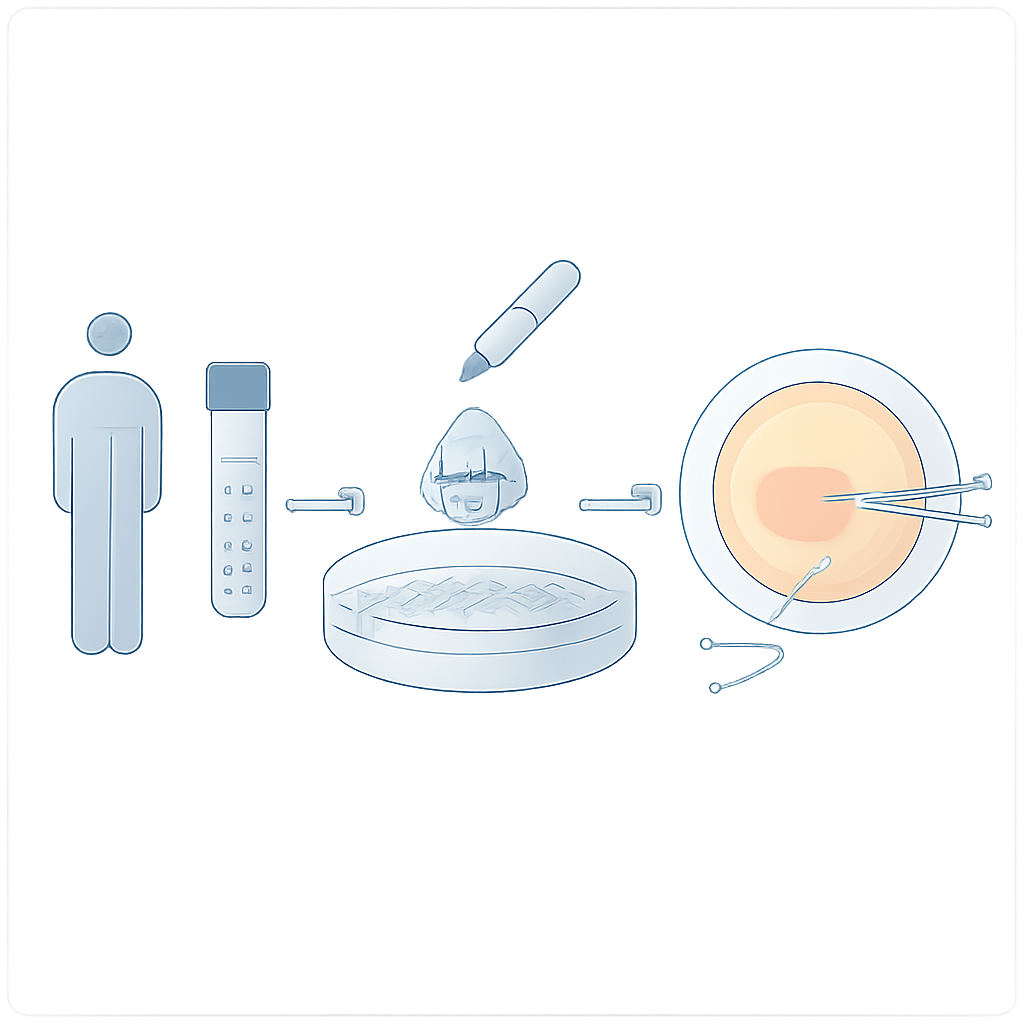
A closer look at a workhorse fertility chemical
PVP is a thick, syrup‑like polymer that makes sperm swim more slowly, making it easier for embryologists to choose one under the microscope and inject it into an egg. Earlier reports suggested that PVP might even protect sperm from certain stresses, and it is widely considered safe. At the same time, scattered studies hinted that long exposure could harm sperm membranes and chromosomes. The authors set out to settle this debate using a more precise way to measure DNA damage than has been available in routine fertility testing.
Counting DNA breaks sperm by sperm
Instead of just asking what fraction of sperm show some damage, the team used a probe system that actually counts the average number of DNA breaks in each sperm cell, a measure they call the mean number of DNA breakpoints (MDB). In simple terms, they tag the free ends created when DNA strands snap, then use a clever fluorescent signal to tally how many such breaks are present in a sample of around 12,000 sperm. This high‑throughput, number‑based approach lets them detect subtle increases in damage and compare men with normal sperm movement to those with poor motility, a condition known as asthenozoospermia. 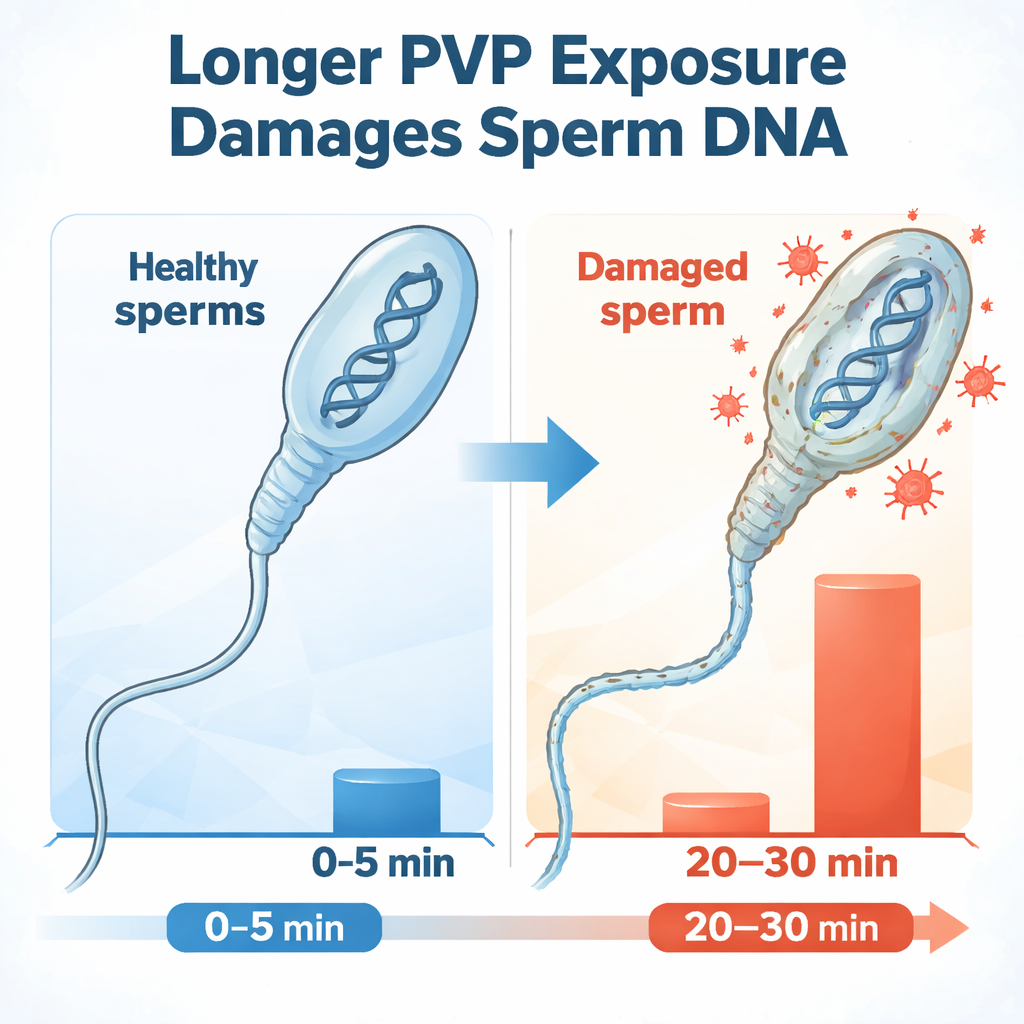
More time in PVP, more damage to sperm
The researchers mixed sperm with PVP and monitored them for up to 30 minutes—longer than ideal but realistic for difficult clinical cases where finding a usable sperm takes time. In control dishes without PVP, DNA damage stayed essentially unchanged over half an hour, showing that the lab conditions themselves were gentle. With PVP, however, DNA breaks climbed sharply after about 10 minutes and kept rising through 30 minutes in both healthy and low‑motility samples. Lowering the PVP concentration helped: at 5 percent, damage after 10 minutes was minimal, while the commonly used 10 percent solution produced a clear jump in DNA breaks, and higher concentrations were worse. Measurements of reactive oxygen species, chemically reactive forms of oxygen inside cells, also rose after 10 minutes in PVP, pointing to oxidative stress as a likely culprit.
What the microscope reveals inside the sperm
To see how this chemical stress plays out structurally, the team turned to powerful electron microscopes. Even after five minutes in PVP, the front “cap” of the sperm head, called the acrosome, began to swell. With longer exposure, the acrosomal membrane became distorted, the outer surface of the sperm head showed bulging and collapse, and the mitochondria—the tiny power plants in the midpiece—grew disorganized and swollen. These changes appeared in both normal and low‑motility samples but were more severe in the latter, suggesting that already fragile sperm are especially vulnerable to prolonged PVP contact.
What this means for fertility treatments
For patients, the key message is not that ICSI or PVP are unsafe, but that details matter. The study supports keeping PVP exposure as brief as possible—ideally five minutes or less at the standard 10 percent strength—or using a gentler 5 percent solution when feasible. Because eggs can repair only so much incoming DNA damage, minimizing breaks in sperm before injection may improve embryo development and reduce the risk of early pregnancy loss or chromosomal errors. The work also encourages labs to explore alternative ways to slow sperm that are kinder to their genetic material, helping align the technical success of assisted reproduction with the long‑term health of the children it aims to create.
Citation: Wang, M., Wang, H., Du, K. et al. Prolonged exposure to polyvinylpyrrolidone heightens DNA breaks in human sperm. Sci Rep 16, 5337 (2026). https://doi.org/10.1038/s41598-026-36018-y
Keywords: male infertility, ICSI, sperm DNA damage, polyvinylpyrrolidone, assisted reproduction