Clear Sky Science · en
Prevalence of suicidal behavior in nigeria: a systematic review and meta-analysis
Why this matters for everyday life
Suicide is often spoken about in hushed tones, yet it touches families and communities everywhere. Nigeria is one of the youngest countries in the world, and understanding how many people struggle with suicidal thoughts or actions is crucial for designing help that actually works. This study pulls together the best available research from across Nigeria to answer a simple but urgent question: how common is suicidal behavior, and who is most at risk?
Taking stock of the evidence
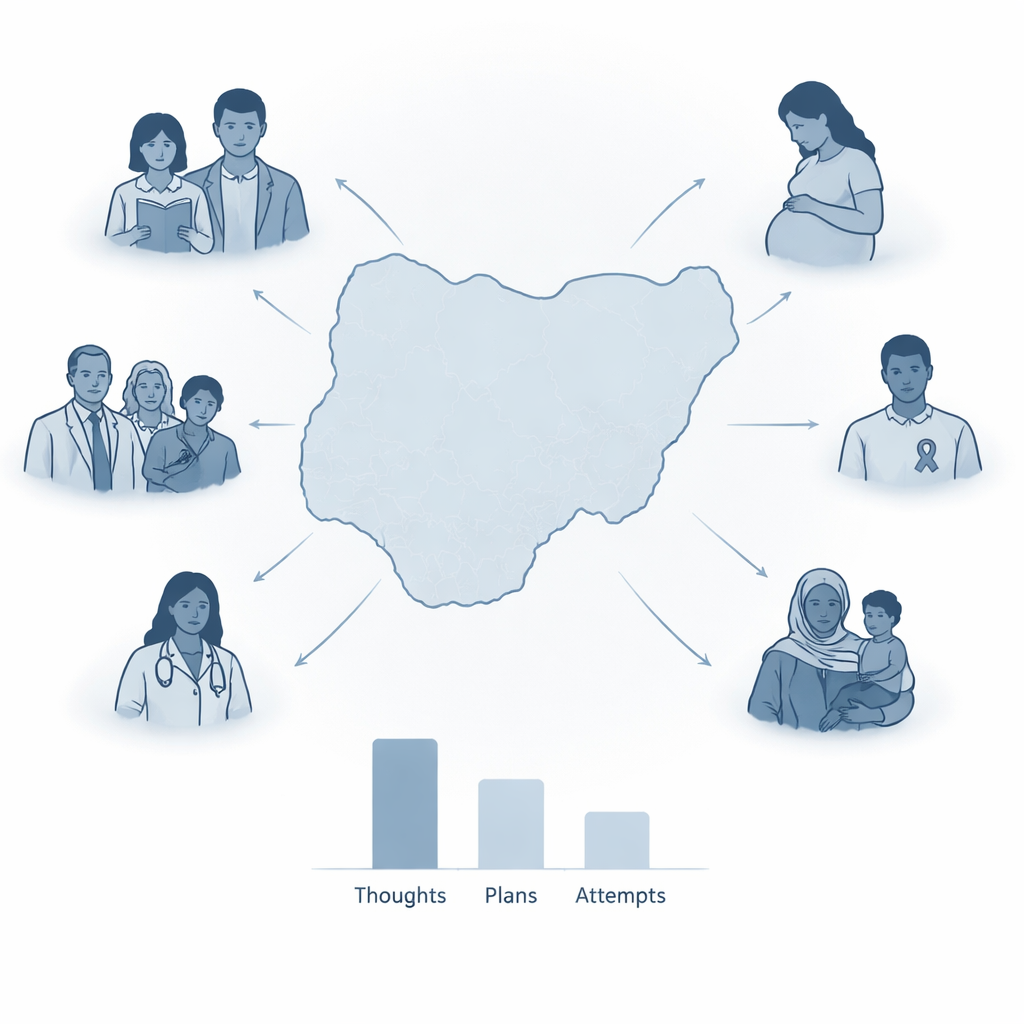
The authors did not run a new survey themselves. Instead, they systematically gathered and analyzed 53 existing studies that together included more than 130,000 people across Nigeria. These studies covered the general population and specific groups, such as secondary and university students, people living with HIV, pregnant women, refugees, and men who have sex with men. To make sense of the scattered data, the researchers used statistical techniques known as meta-analysis, which allow results from many smaller studies to be combined into a more reliable national picture.
How common are thoughts, plans, and attempts?
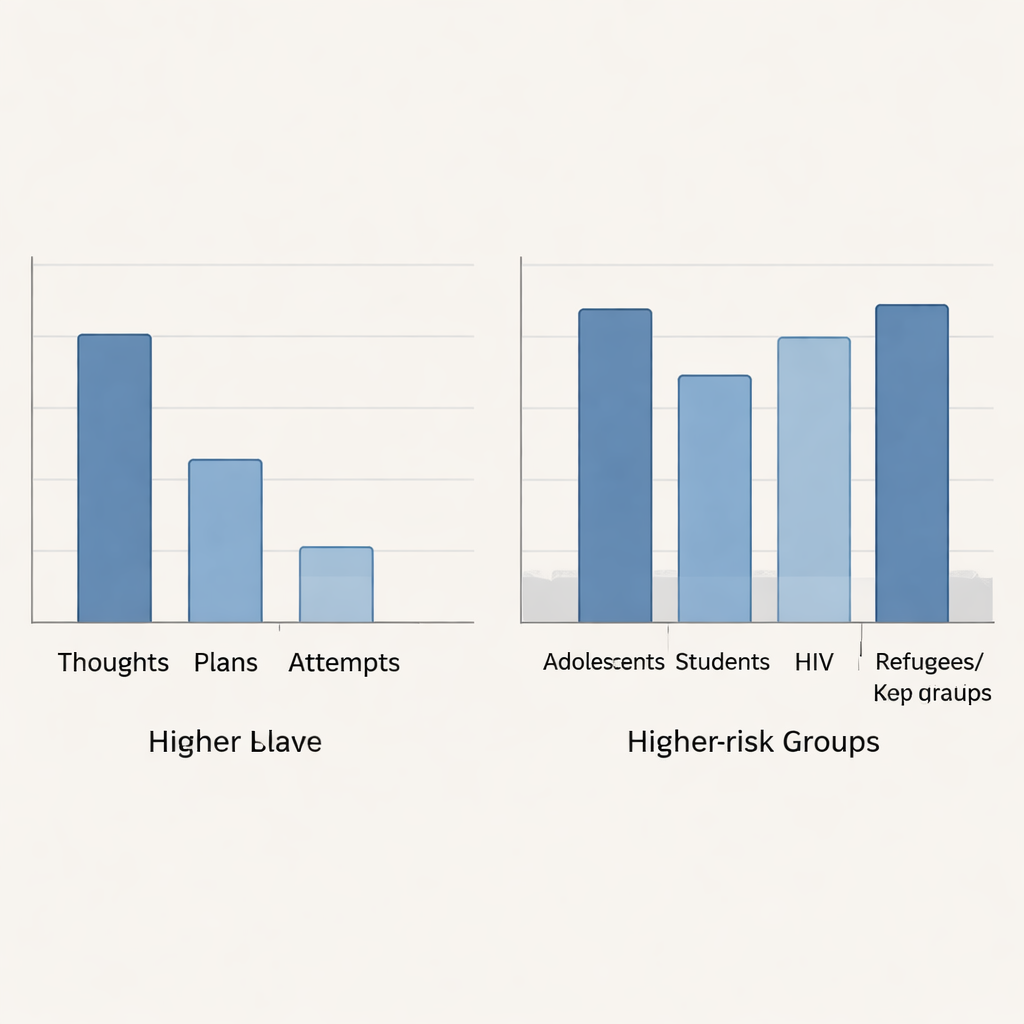
Suicidal behavior exists on a spectrum, from fleeting thoughts of self-harm to detailed plans and actual attempts. In the general Nigerian population, about 8 in every 100 people reported having suicidal thoughts over a 12-month period. Around 2 in 100 said they had made a plan, and about 1 in 100 had attempted suicide. These numbers may sound small, but in a country of more than 200 million people, they translate into millions of individuals wrestling with despair each year. The study also found signs that reports of suicidal thoughts and attempts have increased over time, suggesting that the problem is growing rather than shrinking.
Who is at higher risk?
The burden of suicidal behavior is not spread evenly. Young people stand out: secondary school students had higher rates of suicidal thoughts and attempts than the general population, and university students’ rates were even higher. People living with HIV also showed elevated levels of suicidal thoughts and actions, as did refugees, out-of-school youth, female sex workers, and men who have sex with men. Some small clinical groups, such as patients with heart failure or stroke, reported very high rates, although the evidence for these groups came from only one or two studies each and should be interpreted carefully. Overall, the pattern points to a concentration of risk among people facing social stigma, economic hardship, chronic illness, or displacement.
Where you live and how you live
Beyond who you are, where you live and your life circumstances also matter. The study found that suicidal thoughts were more common in Nigeria’s conflict-affected northern regions than in the south. Communities exposed to terrorism, banditry, and displacement carried especially high burdens, reflecting the psychological toll of violence, poverty, and instability. Unemployment emerged as another strong risk factor: people in studies with more unemployed participants reported higher levels of suicidal thoughts than those in better-employed samples. In contrast, differences by sex, age group, or schooling level were less clear once the data were combined, partly because many studies were small or limited to urban areas.
What this means for prevention and policy
For the average reader, the takeaway is stark but empowering: suicidal behavior is common in Nigeria, especially among adolescents, students, people living with HIV, and other marginalized groups, yet it is not random and can be addressed. The authors argue that suicide prevention should not focus only on crisis hotlines or hospitals, but also on everyday settings like schools, primary health centers, and refugee communities. They call for school-based mental health programs, routine screening for suicidal thoughts in frontline health services, better training for teachers and health workers to spot warning signs, and policies that reduce stigma and remove punishment for suicide attempts. While the existing data are imperfect, the message is clear: with targeted support, stronger social safety nets, and open conversation about mental health, many lives in Nigeria could be steered away from the path toward suicide.
Citation: Abubakar, A.K., Abioye, A.I., Yisa, M.N. et al. Prevalence of suicidal behavior in nigeria: a systematic review and meta-analysis. Sci Rep 16, 5799 (2026). https://doi.org/10.1038/s41598-026-36002-6
Keywords: suicidal behavior, Nigeria, mental health, youth suicide, public health policy