Clear Sky Science · en
Spirulina-coenzyme Q10 nanoemulsion regulating growth, antioxidant, immune capacity, histopathological alterations in Nile tilapia exposed to heat stress
Why Hot Water Matters for Farmed Fish
As the planet warms, many fish farms are already seeing higher pond and tank temperatures. For Nile tilapia—a key source of affordable protein worldwide—prolonged heat can stunt growth, weaken defenses, and make outbreaks of disease more likely. This study explores a novel feed supplement based on Spirulina (a nutrient-rich microalga) and coenzyme Q10 (a natural antioxidant), packaged together in tiny droplets called a nanoemulsion, to see whether it can help tilapia stay healthy and productive under heat stress.
Tiny Droplets with a Big Job
The researchers created a Spirulina–coenzyme Q10 nanoemulsion by breaking the mixture into extremely small, stable particles using ultrasound in an oil-and-water system. Advanced microscopes and laser-based measurements confirmed that these particles were uniform, smooth, and only a few hundred billionths of a meter across, with an electrical charge that helps keep them from clumping. This design is important because such small, well-dispersed droplets can move more easily through the fish gut, improving how much of the beneficial ingredients actually reach the bloodstream and organs.
Testing Fish Under Hot Conditions
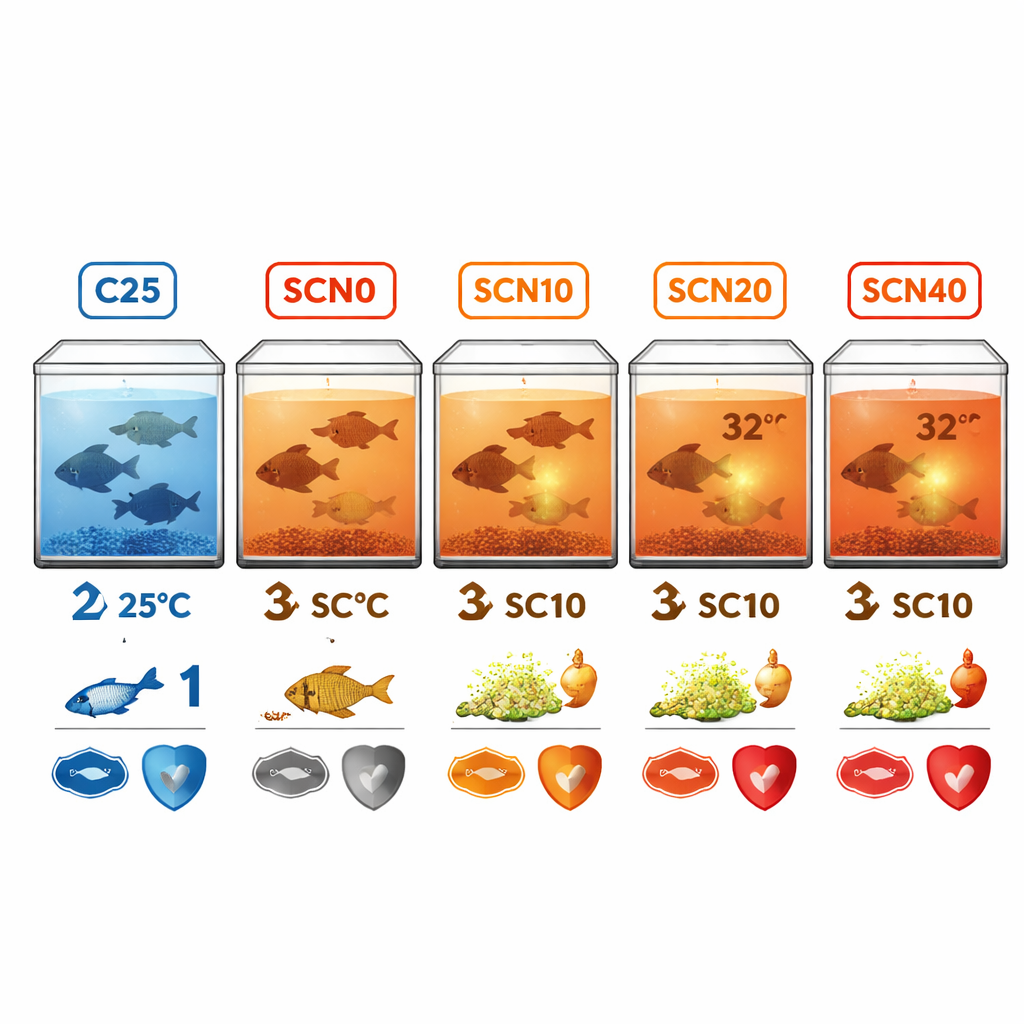
To mimic the kind of heat stress expected in many farms, the team reared 225 male Nile tilapia for 60 days, mostly at 32 °C—several degrees above their comfort zone of about 25–28 °C. One control group was kept at the normal temperature and fed a standard diet. All other groups were kept at 32 °C: one got the same base feed with no supplement, while three groups received the nanoemulsion in their diet at low, medium, or higher levels. The scientists tracked growth, feed use, survival, and a broad set of blood and tissue indicators that reflect how well the fish were coping with stress and fighting off infections.
Growth, Defenses, and Internal Damage
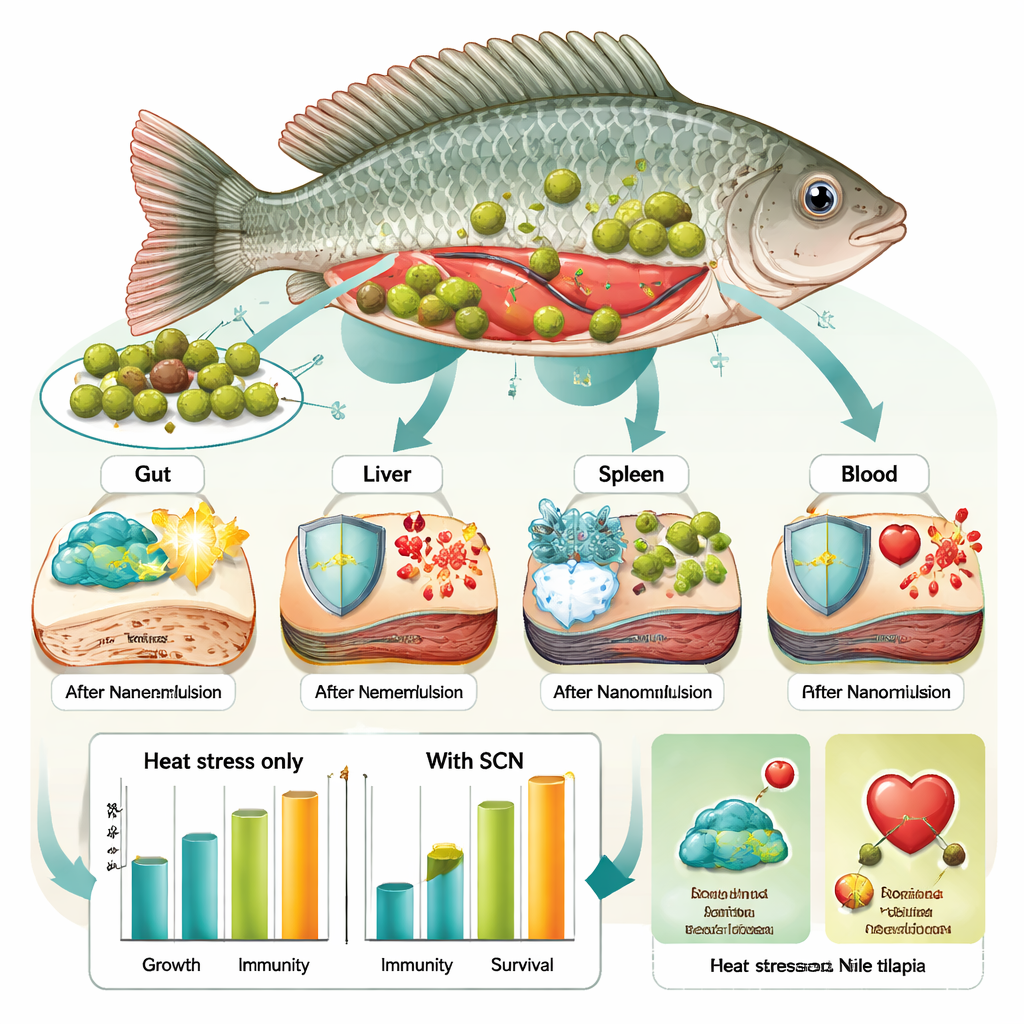
Heat alone took a clear toll. Fish kept at 32 °C without the supplement grew slowly, converted feed poorly, and had the lowest survival. Their livers showed chemical signs of oxidative damage—essentially wear and tear from excess reactive molecules—and their immune systems, including key defense proteins and cells that engulf microbes, were markedly weaker. In contrast, fish that received medium and higher doses of the nanoemulsion at the same hot temperature approached the growth and survival seen in the comfortably warm control group. Their antioxidant enzymes rebounded, damage markers dropped, and tissues from the liver, spleen, and intestine looked much closer to normal under the microscope, with healthier gut villi and fewer signs of inflammation.
Facing a Bacterial Challenge
To see whether these internal improvements translated into real-world resilience, the researchers injected the fish with a disease-causing strain of Streptococcus agalactiae, a bacterium that can devastate tilapia farms. The fish exposed to heat without the supplement suffered severe fin rot, skin ulcers, internal organ damage, and very high mortality. By comparison, fish that had eaten the Spirulina–coenzyme Q10 nanoemulsion showed milder symptoms and far fewer deaths. Survival reached about four out of five fish in the highest-dose group, a striking improvement over the unsupplemented, heat-stressed fish. Economic calculations suggested that, while supplemented feeds cost slightly more, the gains in growth and survival under hot conditions could still make them financially worthwhile.
What This Means for Future Fish Farming
For non-specialists, the take-home message is straightforward: long-term warm water can quietly erode the health and productivity of farmed tilapia, but targeted nutritional support can help offset some of that damage. By pairing a nutrient-rich microalga with a powerful antioxidant and delivering them as ultra-small droplets, this study shows that it is possible to boost growth, strengthen natural defenses, and protect vital organs even when temperatures are higher than ideal. While more work is needed in real farm settings, Spirulina–coenzyme Q10 nanoemulsion at moderate doses appears to be a promising tool to keep tilapia farming productive and resilient in a warming world.
Citation: Ahmed, S.A.A., EL-Houseiny, W., ElHady, M. et al. Spirulina-coenzyme Q10 nanoemulsion regulating growth, antioxidant, immune capacity, histopathological alterations in Nile tilapia exposed to heat stress. Sci Rep 16, 5431 (2026). https://doi.org/10.1038/s41598-026-36000-8
Keywords: heat stress, Nile tilapia, Spirulina, coenzyme Q10, aquaculture nutrition