Clear Sky Science · en
A systematic review and meta-analysis of the mechanism of action of Tai Chi on cardiovascular disease: evidence map of aerobic and mind-body exercise pathways
Gentle Moves, Stronger Hearts
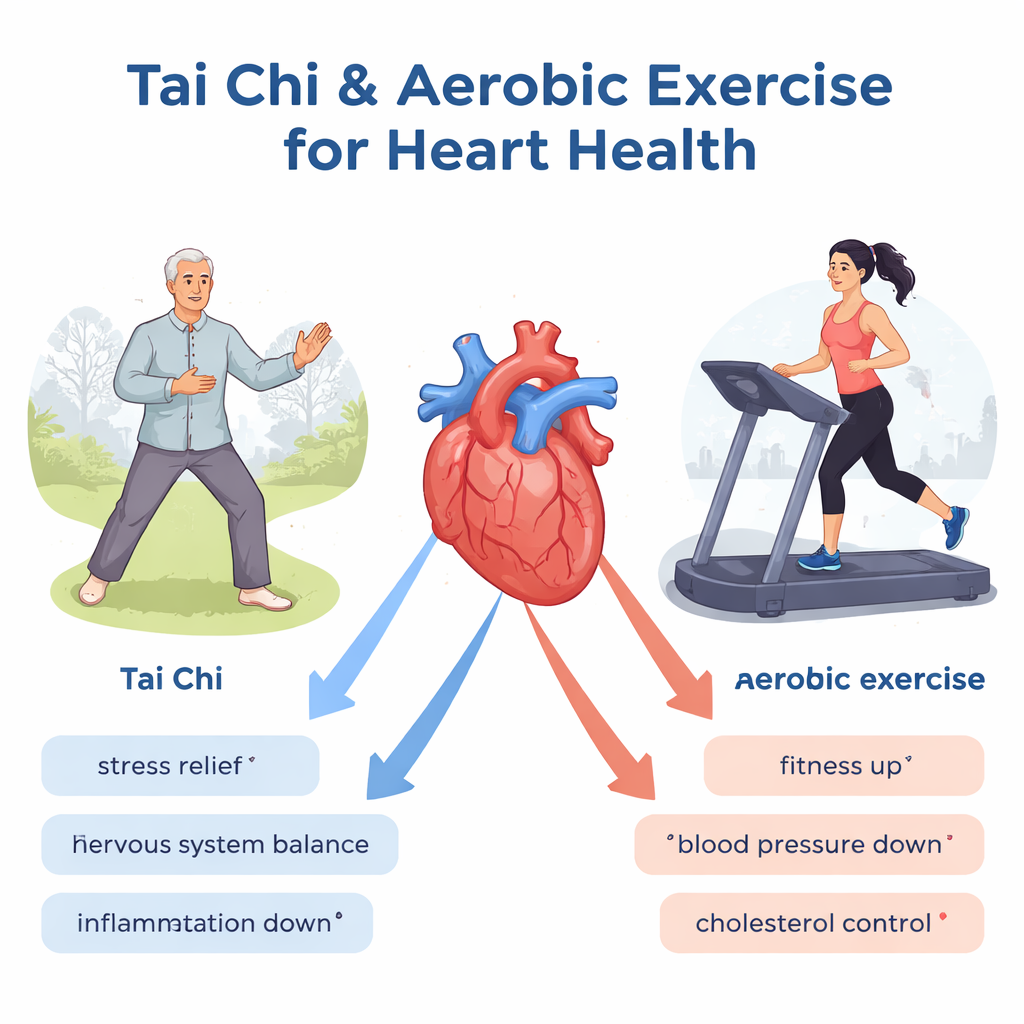
Many people think protecting the heart requires sweat-drenched workouts or expensive gym memberships. This paper suggests a different option: Tai Chi, the slow, flowing practice often seen in parks, may meaningfully improve blood pressure, walking ability, mood, and some cholesterol measures—especially for older adults and people who cannot tolerate intense exercise. By combing through dozens of clinical trials, the authors ask not only whether Tai Chi helps the heart, but how it does so, and how it stacks up against standard aerobic exercise like walking or cycling.
Why Heart Disease Needs New Options
Heart and blood vessel diseases remain the top cause of death worldwide, with an especially heavy toll in low- and middle-income countries where medical care and supervised exercise programs are harder to access. As people age, high blood pressure, unhealthy cholesterol levels, and diabetes become more common, steadily raising the odds of heart attacks and strokes. Traditional advice focuses on brisk aerobic exercise, which clearly improves fitness but can be daunting or unsafe for frail, sedentary, or chronically ill adults. The appeal of Tai Chi is that it is low-cost, low-impact, and can be practiced almost anywhere without machines—making it a promising tool for broad, scalable prevention.
What This Study Looked At
The authors performed a large systematic review and meta-analysis, following rigorous guidelines for pooling evidence. They examined 60 studies in total, including 39 randomized controlled trials and 21 prior reviews. Participants ranged from healthy older adults to people with high blood pressure, coronary artery disease, type 2 diabetes, heart failure, or stroke. The team compared Tai Chi with either usual care, no structured exercise, or standard aerobic programs. They focused on major heart risk factors—blood pressure, blood fats like LDL and HDL cholesterol, blood sugar, and measures of physical function such as the six-minute walk test—alongside mental health outcomes (fatigue, depression, stress) and biological markers tied to stress and inflammation.
What the Numbers Say
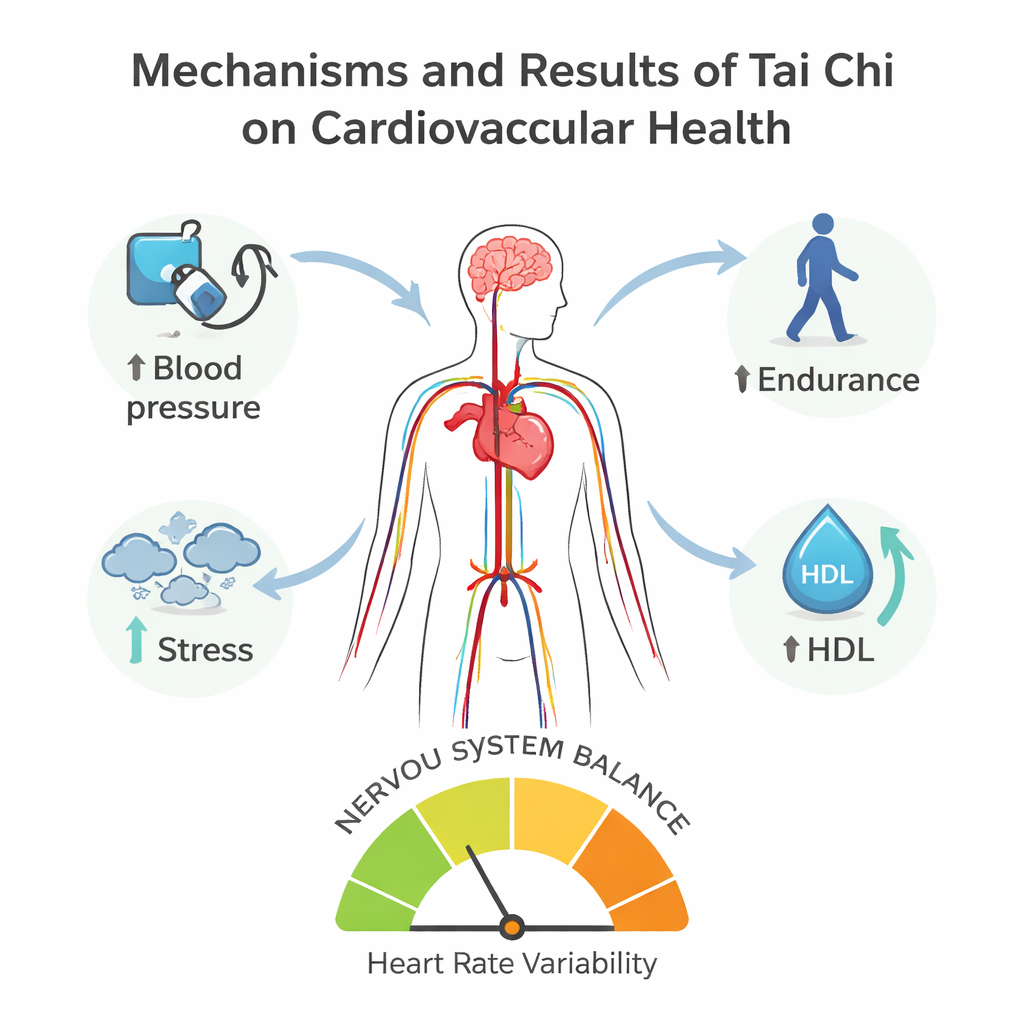
Across the pooled trials, Tai Chi lowered systolic blood pressure by roughly 6 mmHg and diastolic pressure by about 3–4 mmHg compared with control groups—changes large enough to matter at the population level, though results varied between studies. People practicing Tai Chi also walked farther in six minutes, reflecting better everyday endurance, and showed small but meaningful improvements in "good" HDL cholesterol and modest reductions in LDL cholesterol and fasting blood sugar. On the mental health side, Tai Chi was linked to less fatigue, less pain, and a small-to-moderate easing of depressive symptoms. However, Tai Chi did not consistently change body weight or overall body mass index, and effects on certain inflammation markers, such as the immune signal IL-6, were mixed.
Two Pathways: Exercise and Mind–Body Effects
To make sense of this patchwork of results, the authors mapped two main pathways through which Tai Chi appears to work. First, as a light-to-moderate physical activity, it behaves like mild aerobic exercise: regular practice improves circulation, helps blood vessels relax, and boosts functional capacity, as shown by better walking tests. Second, Tai Chi’s slow movements, focused breathing, and meditative attention seem to calm the body’s stress systems. Studies report improvements in heart rate variability—a marker of healthier balance between the "fight-or-flight" and "rest-and-digest" nerves—and hints of reduced levels of inflammation-related molecules and stress hormones. Together, these physical and mind–body effects may explain why Tai Chi improves both numbers on a lab report and how people feel day to day.
How Tai Chi Compares and Who Might Benefit
When directly compared with standard aerobic exercise, Tai Chi often achieved similar improvements in blood pressure and some risk factors, though traditional aerobic workouts generally remain superior for maximizing peak fitness (such as VO2max) and weight control. The evidence for Tai Chi’s effects on deeper biological markers is still limited and sometimes low in certainty, reflecting small sample sizes and varied practice styles. Even so, Tai Chi’s safety, adaptability, and high adherence make it especially attractive for older adults, people with joint pain, those recovering from heart problems, and individuals who find vigorous exercise intimidating.
What This Means in Everyday Terms
In plain language, this article concludes that regularly practicing Tai Chi—about 30 to 60 minutes, three to five times a week—can modestly lower blood pressure, improve walking stamina, raise beneficial cholesterol, and ease fatigue and low mood. It likely does this by gently training the heart and blood vessels while also dialing down the body’s stress response. Tai Chi is not a magic cure and should not replace medicines or all other forms of exercise, but it offers a realistic, low-cost way for many people, especially those with limited mobility, to take an active role in protecting their hearts.
Citation: Liu, J., Yu, H. & Jan, YK. A systematic review and meta-analysis of the mechanism of action of Tai Chi on cardiovascular disease: evidence map of aerobic and mind-body exercise pathways. Sci Rep 16, 6708 (2026). https://doi.org/10.1038/s41598-026-35996-3
Keywords: Tai Chi, cardiovascular disease, blood pressure, mind-body exercise, heart health