Clear Sky Science · en
Predictors for falling within six months after surgery in patients with hemiarthroplasty after an acute femoral neck fracture
Why this matters for everyday life
Many older adults break a hip after a simple trip or slip, and surgery to replace part of the joint can be lifesaving. But the danger does not end in the operating room. Another fall in the months after surgery can lead to new fractures, head injuries, loss of independence, or even death. This study followed people who received a partial hip replacement (hemiarthroplasty) after a femoral neck fracture and asked a simple question: who is most likely to fall again in the first six months, and can we spot them in time to protect them?
Who was studied and how
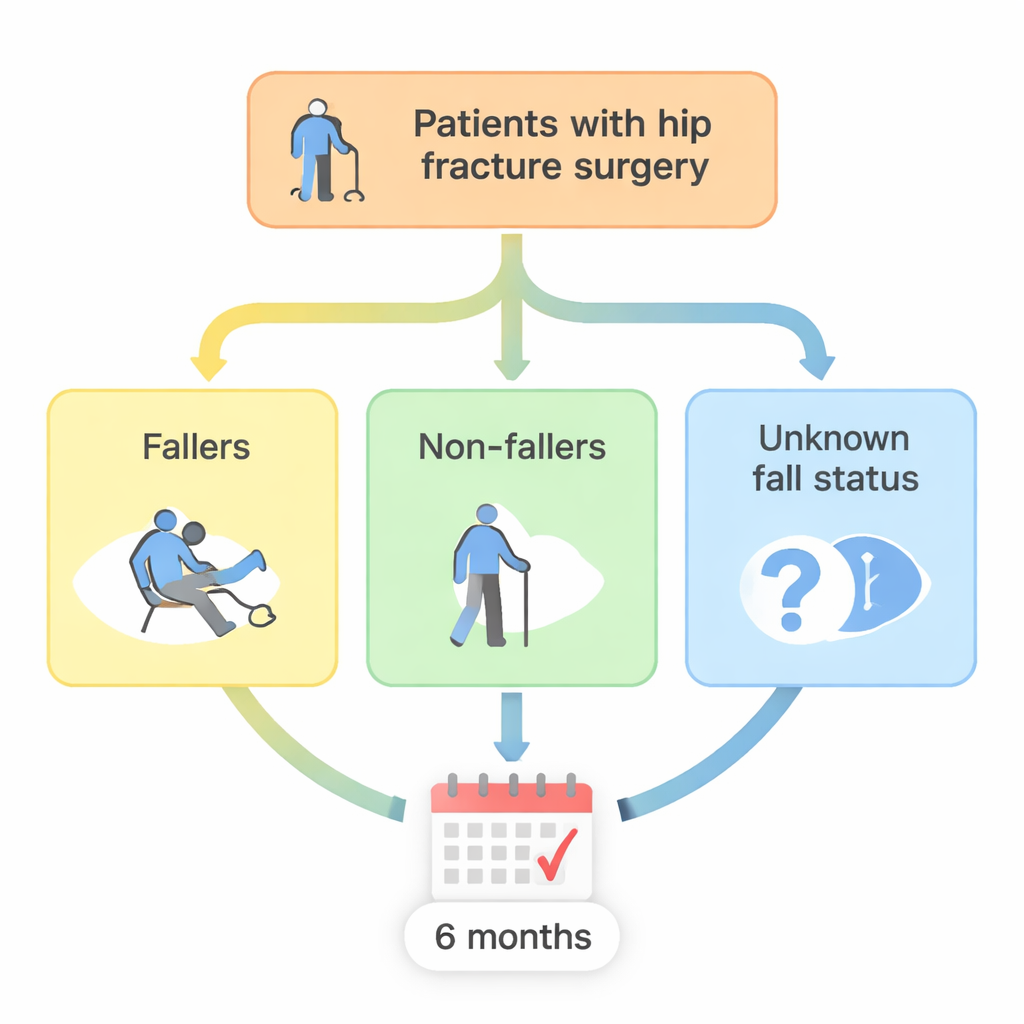
The researchers used data from the large APOLLO trial, which compared two common ways of performing hip hemiarthroplasty. For this new analysis, they focused not on the operation itself but on what happened afterward. They tracked 843 patients, most of them in their eighties, and used questionnaires and hospital records to see who fell in the six months after surgery. People were placed into three groups: those who fell at least once ("fallers"), those who did not fall ("non-fallers"), and those whose fall status was unclear, often because they died or did not return the surveys. The team then examined many details recorded before surgery and at hospital discharge, such as mobility, daily self-care, medical problems, and complications in the hospital.
How common were repeat falls?
Among the 459 patients whose fall status was known, nearly half—219 people—fell at least once within six months of their hip operation. Many did not stop at one fall: over one third of the fallers went down two or more times, adding up to 474 falls in total. About one in three fallers reported serious injuries, including new fractures, dislocations, or brain injuries. Most first falls happened after patients had already left the hospital, especially in the first three months, when they were back at home or in a care facility trying to regain their independence. Another large group of patients had unknown fall status, and they looked very similar to the fallers in terms of age, health, and independence, but had a higher death rate. This suggests the true scale of the problem may be even greater than the figures show.
Warning signs before and after surgery
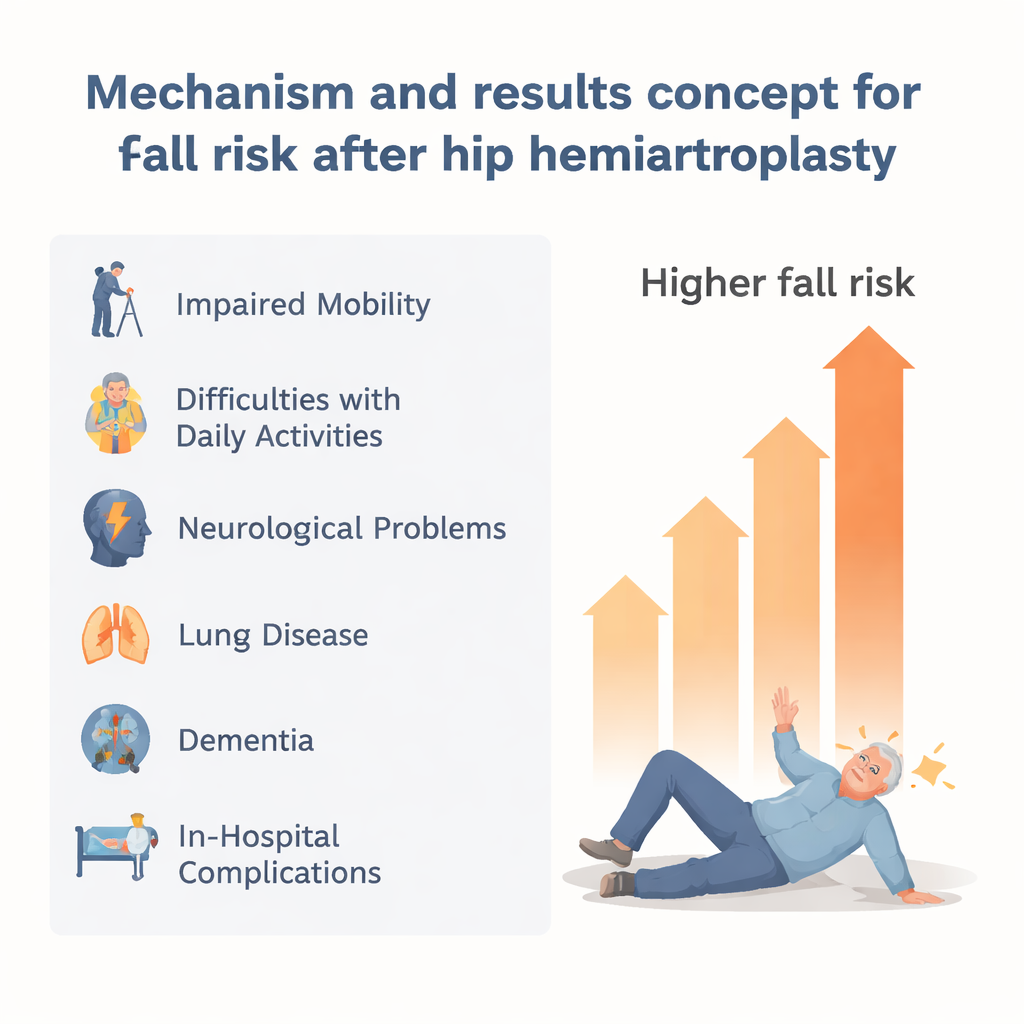
The researchers looked for patterns that separated fallers from non-fallers. Even before surgery, several clear warning signs emerged. People who already had trouble walking or needed walking aids, struggled with everyday tasks like washing and dressing, had brain or nerve disorders such as stroke or Parkinson’s disease, had lung problems such as chronic bronchitis or asthma, or showed signs of dementia were all more likely to fall later on. After surgery, the picture was similar. Patients who left the hospital with poor mobility, had ongoing difficulties in daily activities, or suffered complications during their hospital stay—such as infections, anemia, or delirium—were at especially high risk. These factors together allowed the researchers to build prediction models that could sort patients into higher- or lower-risk groups with moderate accuracy.
What this means for care and recovery
Although the prediction models were not perfect, they were good enough to highlight the kinds of patients who need extra attention. Importantly, some of the strongest warning signs, like poor mobility, difficulties with self-care, and hospital complications, can be improved or prevented with targeted care. This means the findings can be used in two key moments: before surgery, to identify patients who will need more support, and at discharge, to decide whether someone can safely go home or should first recover in a rehabilitation center with close supervision.
Take‑home message for patients and families
The study’s main message is simple: after a hip fracture and hemiarthroplasty, falling again is very common and often dangerous, but it is not random. Older adults who already struggle to walk, manage daily tasks, or cope with brain, nerve, or lung conditions, and those who run into problems in the hospital, are especially vulnerable. For these people, fall prevention should be treated as a core part of treatment, not an optional extra. That can include balance and strength training, home safety checks, careful review of medications, and closer follow-up after discharge. While more research is needed to test which combinations of these measures work best, this study gives doctors, patients, and families a clearer roadmap for spotting high-risk individuals early and taking concrete steps to keep them safely on their feet.
Citation: Rasker, A.J., Berghorst, L., Willigenburg, N.W. et al. Predictors for falling within six months after surgery in patients with hemiarthroplasty after an acute femoral neck fracture. Sci Rep 16, 5695 (2026). https://doi.org/10.1038/s41598-026-35974-9
Keywords: hip fracture, falls after surgery, older adults, fall prevention, hemiarthroplasty