Clear Sky Science · en
SARS-CoV-2 occurrence in cervids in the United States and US territories
When a Human Virus Jumps Into the Woods
Most of us think of COVID-19 as a disease that spreads from person to person, but the virus that causes it, SARS-CoV-2, has also slipped into wild animal populations. This study tracks how often the virus shows up in deer and their relatives across the United States and its territories. Understanding what happens when a human virus settles into wildlife is key to knowing whether it can evolve in new ways and potentially find its way back to us.
A Nationwide Checkup on Wild Deer
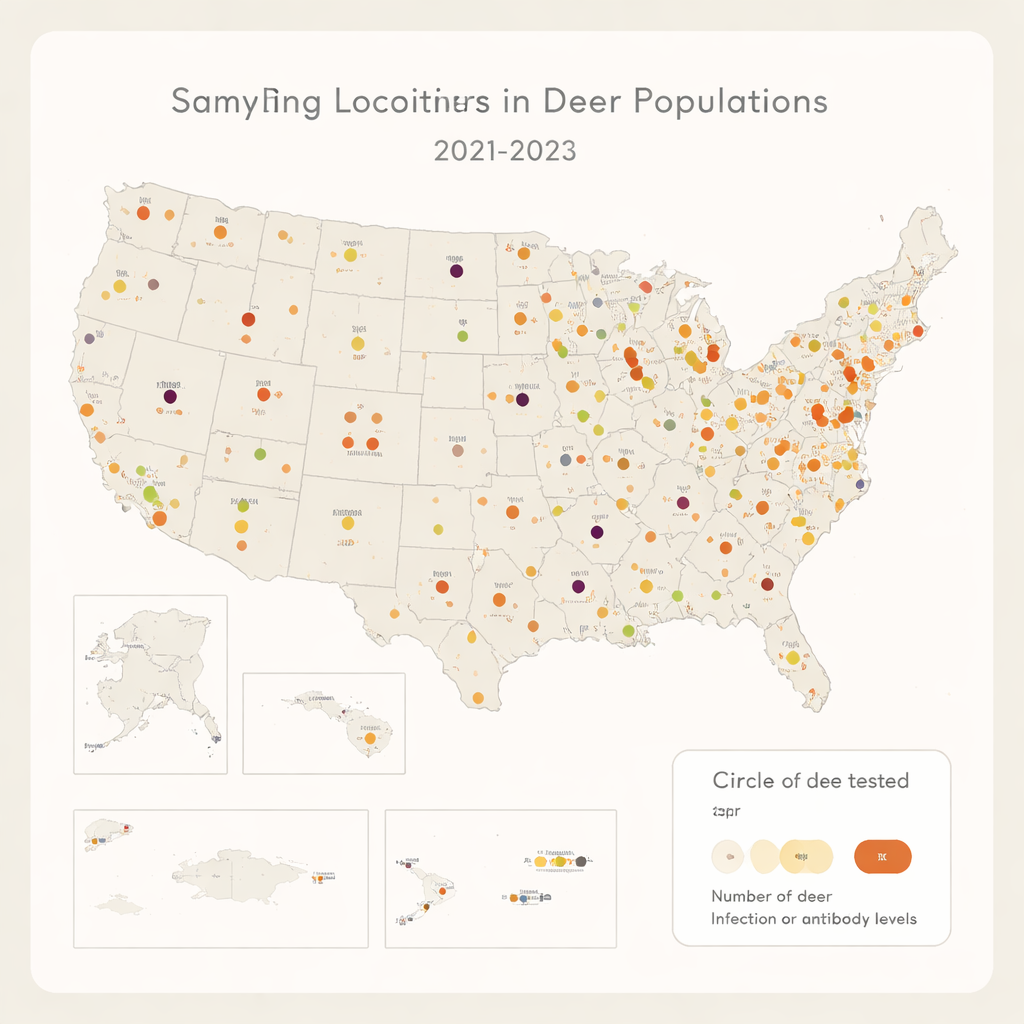
To see how widespread infection really was, scientists carried out a large, two-year survey of wild hoofed animals in the deer family, known as cervids. From October 2021 through October 2023, they collected nose and mouth swabs, plus blood samples, from more than 30,000 animals in 42 states, Washington, D.C., Guam, and the U.S. Virgin Islands. Most of the animals were white-tailed deer, a common species that often lives close to people, but the team also sampled mule deer, elk, moose, caribou, axis deer, Philippine deer, and Sitka black-tailed deer. Many samples came from hunter-harvested animals, along with roadkill and animals taken for wildlife management, allowing a broad look without disturbing live herds.
What Swabs and Blood Reveal
The swab samples were tested for active SARS-CoV-2 infection using a sensitive genetic test that detects viral RNA, while blood spots were checked for neutralizing antibodies, which show that an animal’s immune system had seen the virus before. Overall, about 5.6% of the sampled cervids were actively infected at the time of testing, and more than 21% carried these antibodies. Almost all of the positive results came from white-tailed deer, although a small number of mule deer, moose, and Philippine deer showed past exposure as well. This contrast—many more animals with antibodies than with virus—suggests that infection has been common over time, even if only a fraction of animals are infected on any given day.
Rise and Fall of Infection Over Time
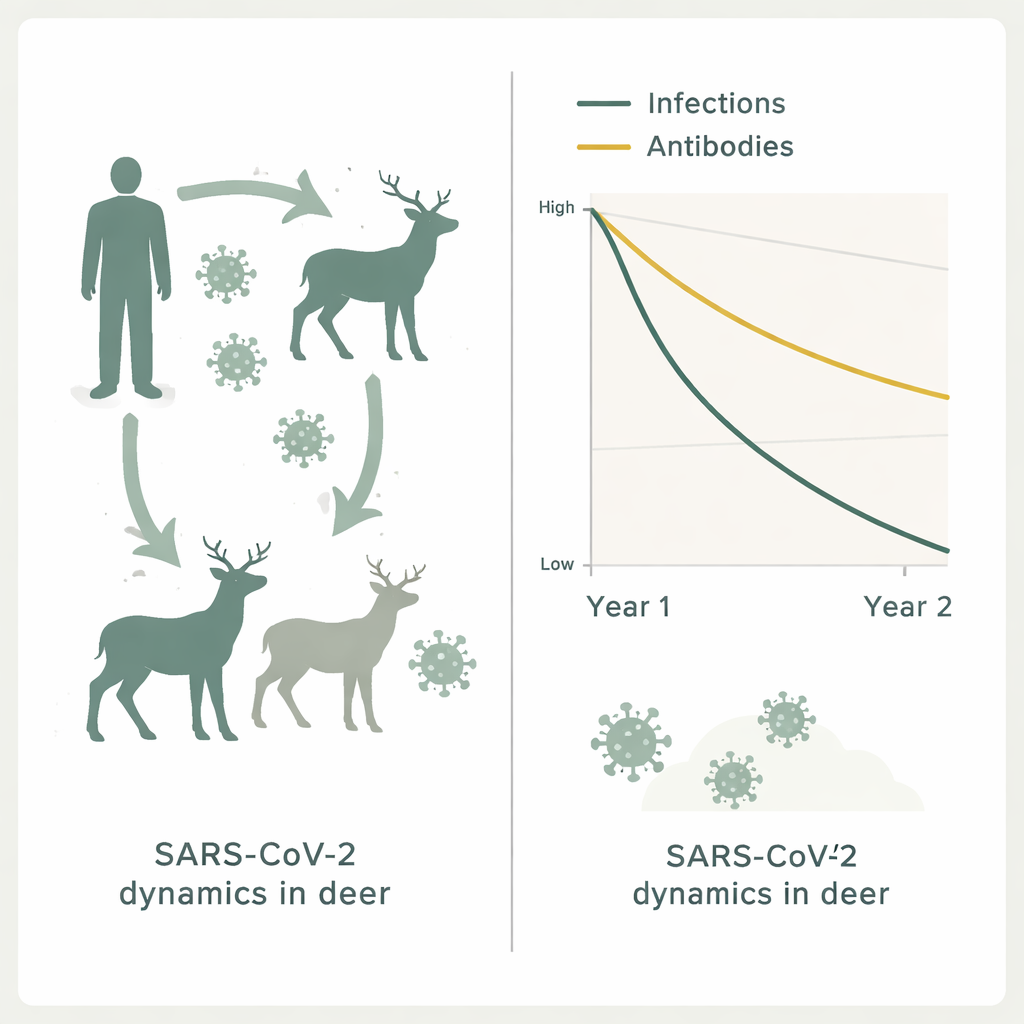
When the team compared the first study year to the second, they found a marked decline in infection. In the first year, about 12% of sampled cervids were actively infected; in the second year, only about 2% were. Antibody levels also went down, but less sharply, dropping from around 32% in year one to 16% in year two. Many deer tested negative on the virus test but positive for antibodies, indicating they had already been infected and recovered. A smaller group showed the opposite pattern—virus present but no detectable antibodies—likely representing very recent or first-time infections. Together, these patterns point to widespread past infection and growing immunity in deer populations.
Which Versions of the Virus Took Hold
The researchers also sequenced the virus from infected deer to see which variants were circulating. Early in the study, most deer carried the Delta variant, even though Delta had largely disappeared from human cases by then. A smaller number carried earlier variants such as Alpha and Gamma, and only a couple of deer showed Omicron in that first year. By the second year, however, Omicron became the most common variant in deer, with Alpha and Delta still appearing in some animals. This lag between human and deer variants suggests that once a version of the virus spills into deer, it can continue to spread among them even after people have mostly moved on to newer variants.
Why This Matters for People and Wildlife
The study shows that SARS-CoV-2 has firmly established itself in wild deer across much of the United States, but it also offers some reassurance. As infections in people dropped and immunity built up in deer, infection rates in these animals fell as well. At the same time, the presence of older variants and shifting patterns over time highlight that the virus can follow its own path in wildlife, potentially evolving in ways that differ from human outbreaks. Continued, long-term monitoring of deer and other wild animals will help scientists track these changes, understand how often the virus still moves between people and wildlife, and decide what steps might be needed to reduce risks for both.
Citation: Bevins, S.N., Chipman, R.B., Beckerman, S.F. et al. SARS-CoV-2 occurrence in cervids in the United States and US territories. Sci Rep 16, 5285 (2026). https://doi.org/10.1038/s41598-026-35967-8
Keywords: SARS-CoV-2 in deer, wildlife reservoirs, spillover and spillback, COVID-19 in animals, virus evolution in wildlife