Clear Sky Science · en
Evaluation of polyclonal antibodies raised in rabbits against dengue NS1 antigen
Why this matters for everyday health
Dengue fever is a fast-spreading mosquito-borne disease that can turn deadly, yet doctors still struggle to diagnose it quickly and cheaply in many parts of the world. This study explores a new, lower-cost way to detect dengue by using antibodies raised in rabbits against a viral protein called NS1, with the goal of improving blood tests for both patients and mosquitoes that carry the virus.
A growing threat carried by mosquitoes
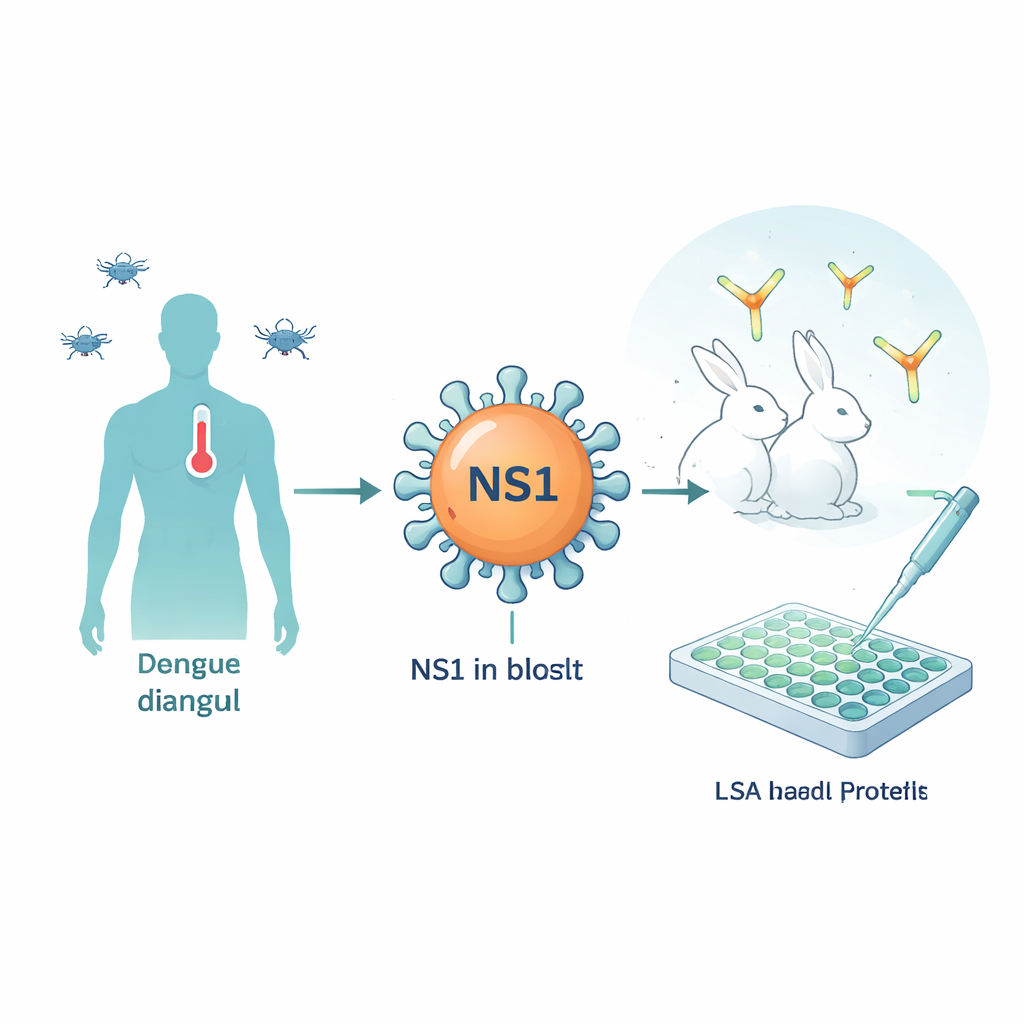
Dengue infects millions of people every year across more than 100 countries, causing anything from flu-like illness to life-threatening bleeding and shock. Because there are no widely available antiviral drugs and vaccines remain limited, early diagnosis is critical: it helps doctors monitor patients closely and alerts public health workers to outbreaks. One of the best markers of an active dengue infection is a viral protein called NS1, which circulates in very high amounts in the blood during the first days of illness. Modern test kits look for this NS1 protein, but they usually rely on monoclonal antibodies, which are expensive to make and can have a limited shelf life.
A different kind of antibody
Instead of monoclonal antibodies, the researchers focused on polyclonal antibodies—mixtures of many slightly different antibodies that can recognize several parts of the same target. They immunized two rabbits with a purified form of dengue virus type 2 NS1 protein and kept a third rabbit as a control. Over several weeks, they collected blood from the animals and used standard laboratory methods to see whether the rabbits produced antibodies that could reliably latch onto NS1. They also purified the main antibody class (IgG) from the rabbit blood to create a cleaner preparation suitable for use in test kits.
Putting the rabbit antibodies to the test
The team then built their own NS1 blood test, known as an ELISA, using the rabbit polyclonal antibodies as the key detection ingredient. They showed that antibodies from both immunized rabbits strongly bound to the dengue NS1 protein over a wide range of dilutions, while the control rabbit serum did not. A second technique, Western blotting, confirmed that these antibodies recognized the NS1 protein specifically and could detect very small amounts of it. When the scientists compared their rabbit antibodies to a commercial monoclonal antibody, the rabbit version performed at least as well and, at certain antigen amounts, even gave a stronger signal.
Detecting many dengue types, ignoring look-alikes
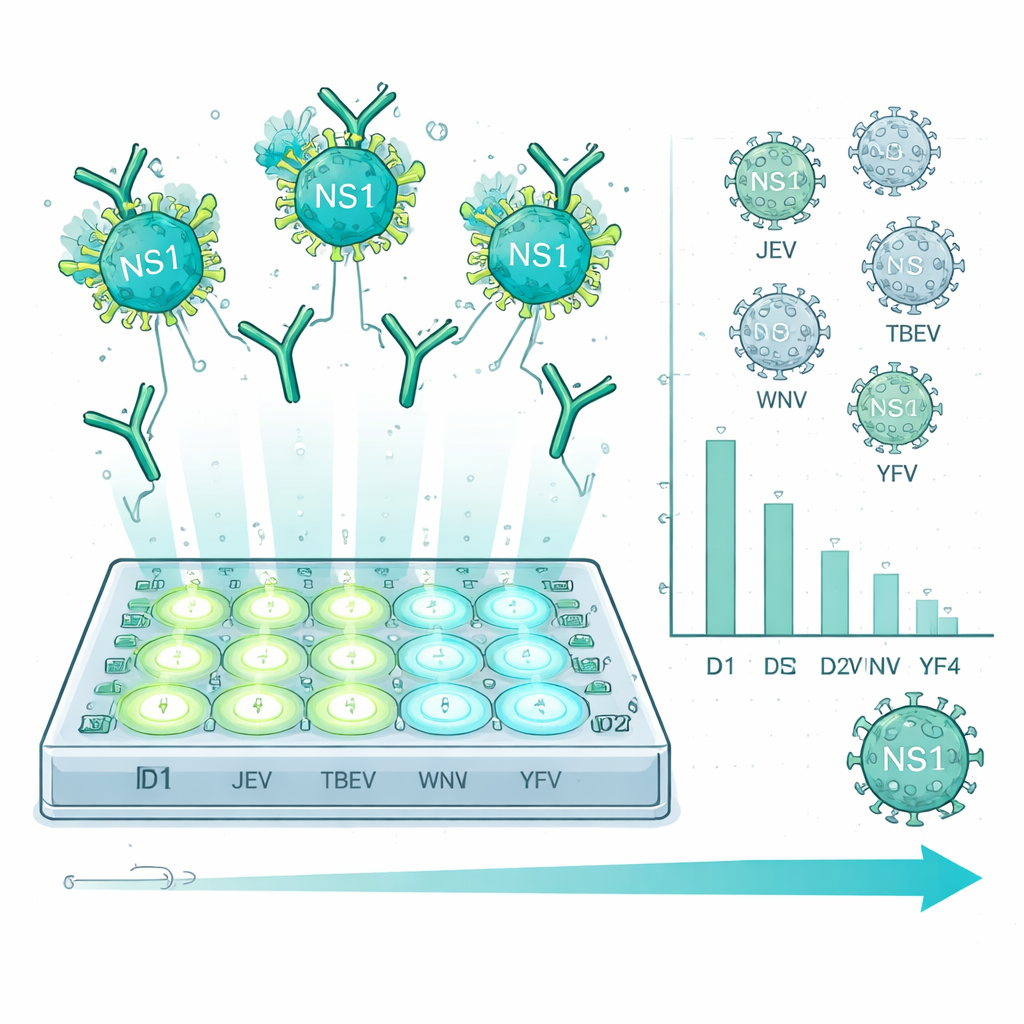
An important challenge in dengue testing is that the virus belongs to a larger family of related viruses, such as Japanese encephalitis, West Nile, yellow fever, and tick-borne encephalitis. All of these have their own NS1 proteins, raising the risk of confusing one infection for another. The researchers therefore checked whether their rabbit antibodies reacted only to dengue NS1 or also to these close relatives. In ELISA experiments, the rabbit antibodies showed strong binding to NS1 from all four dengue serotypes, including the clinically worrisome type 4, but showed little to no reaction to NS1 from the other flaviviruses. A small amount of cross-reactivity was seen with some non-dengue viruses, but the signals were much weaker than for dengue, suggesting that the antibodies are largely specific.
What this could mean for future dengue tests
Overall, the study shows that rabbit-derived polyclonal antibodies can be produced relatively quickly and provide a stable, sensitive, and mostly dengue-specific tool for detecting the NS1 protein. While the work so far has been done with purified viral proteins in the laboratory—and only a few animals—these results suggest that such antibodies could become the basis of more affordable NS1 tests for clinics and for checking infected mosquitoes in the field. Before that happens, the approach will need to be validated using real patient samples and larger animal groups, but it offers a promising path toward simpler and more widely accessible dengue diagnostics.
Citation: Abraham, P.R., Devaraju, P., L, B. et al. Evaluation of polyclonal antibodies raised in rabbits against dengue NS1 antigen. Sci Rep 16, 5591 (2026). https://doi.org/10.1038/s41598-026-35952-1
Keywords: dengue diagnosis, NS1 antigen, polyclonal antibodies, ELISA test, mosquito-borne disease