Clear Sky Science · en
Association of low progesterone levels and periodontal disease with threatened preterm labor
How Mouth Health Ties Into Early Birth Risk
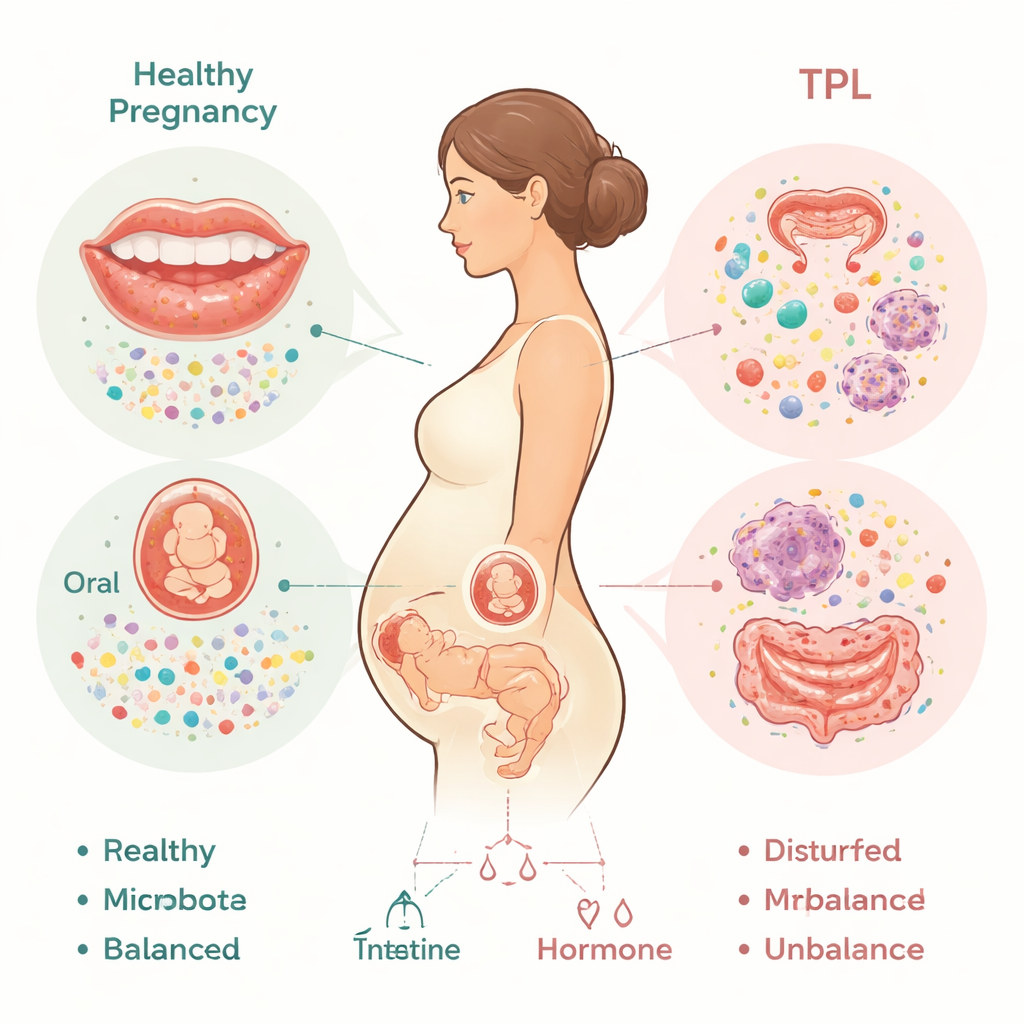
Most expectant parents focus on prenatal vitamins and ultrasound scans, not on their gums or the trillions of bacteria living in their bodies. Yet this study suggests that the health of a pregnant woman’s mouth, her hormone levels, and the mix of microbes in her mouth, vagina, and gut may together influence the risk of going into labor too early. Understanding these hidden connections could open new, simple ways—like better dental care and monitoring key hormones—to help protect babies from being born too soon.
Early Labor And Why It Matters
Preterm birth, when a baby is born before 37 weeks of pregnancy, can lead to serious breathing, brain, and growth problems. Threatened preterm labor (TPL) is a warning stage, when regular contractions and changes in the cervix raise the risk that birth may happen too early. In Japan, TPL is diagnosed in about 15% of pregnancies, and preterm birth in about 5%. Earlier reports hinted that gum disease and infections in the body’s bacterial communities might be part of the story, but few studies had looked at the mouth, vagina, and gut together in women with TPL.
Inside The Study: Who Was Tested And How
The researchers followed 60 pregnant women: 30 with TPL who were hospitalized, and 30 healthy pregnant women without TPL. They measured gum health using standard dental checks, including how deep the spaces around teeth were and how easily the gums bled. They collected saliva to measure two key female hormones, estradiol and progesterone, and took gentle swabs from the inside of the cheek, the vagina, and the rectum. Using next‑generation DNA sequencing, they identified which bacteria were present and how these tiny communities differed between women with and without TPL. They also used computer tools to predict what chemical pathways these microbes were likely to be using.
Hormones, Gums, And Bacteria
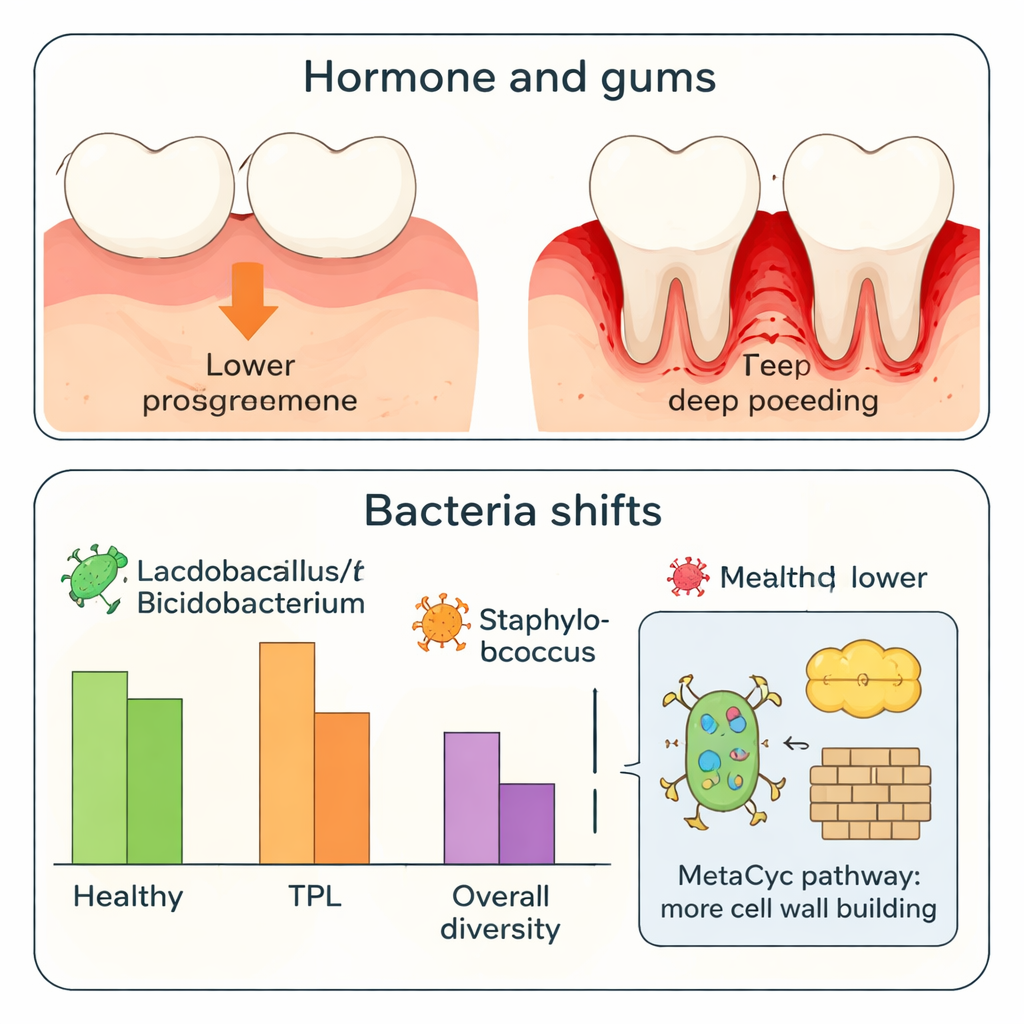
Women with TPL had clearly worse pregnancy outcomes: on average they delivered earlier and had smaller babies than women without TPL. Their gum health was poorer too. They showed deeper pockets around the teeth, more bleeding, and larger areas of inflamed gum tissue, all signs of more severe periodontal disease. At the same time, their saliva contained significantly lower levels of progesterone, a hormone that helps maintain pregnancy. Across all women, higher progesterone was linked with longer pregnancies, heavier babies, and healthier gums. Lower progesterone went hand‑in‑hand with deeper gum pockets and more bleeding. The bacterial communities also differed. In saliva, cheek, vaginal, and rectal samples, the overall structure of the microbiome was shifted in TPL. Helpful microbes such as Lactobacillales in saliva and Bifidobacterium in the rectum were reduced, while potentially harmful Staphylococcus species were increased in the mouth and vagina. Progesterone levels tended to rise with beneficial bacteria and fall as Staphylococcus and other less friendly species became more common.
Metabolic Clues From Microbial Activity
Looking beyond which microbes were present, the team asked what these microbes might be doing. In women with TPL, dozens of metabolic pathways in mouth, vaginal, and rectal bacteria were altered compared with healthy pregnant women. Pathways linked to building bacterial cell walls (peptidoglycan) and certain genetic building blocks were more active, while some related to heme, a molecule important in oxygen handling, were less active. Interestingly, several of these changes were shared between the mouth and vagina, hinting that a common host factor—likely hormone shifts such as low progesterone—might be nudging both microbial communities in the same, less favorable direction. This pattern supports the idea that TPL is not driven by one “bad germ” alone but by a broader imbalance, or dysbiosis, shaped by both hormones and inflammation.
What It Means For Mothers And Babies
For a lay reader, the key takeaway is that low progesterone, gum disease, and disturbed bacterial communities appear to travel together in women at risk of early labor. This study cannot prove which comes first, but it strengthens the link between mouth health, pregnancy hormones, and the timing of birth. In the future, checking gum health, supporting beneficial bacteria, and carefully managing hormone levels—ideally even before conception—may become part of a broader strategy to reduce the risk of babies being born too soon.
Citation: Sugiyama, N., Kato, S., Shimizu, S. et al. Association of low progesterone levels and periodontal disease with threatened preterm labor. Sci Rep 16, 5686 (2026). https://doi.org/10.1038/s41598-026-35944-1
Keywords: preterm birth, pregnancy hormones, gum disease, microbiome, progesterone