Clear Sky Science · en
Microbial degradation of Diospyros melanoxylon biomass by Trichoderma atroviride for plant growth promotion of finger millet
Turning Leaf Trash into Farm Treasure
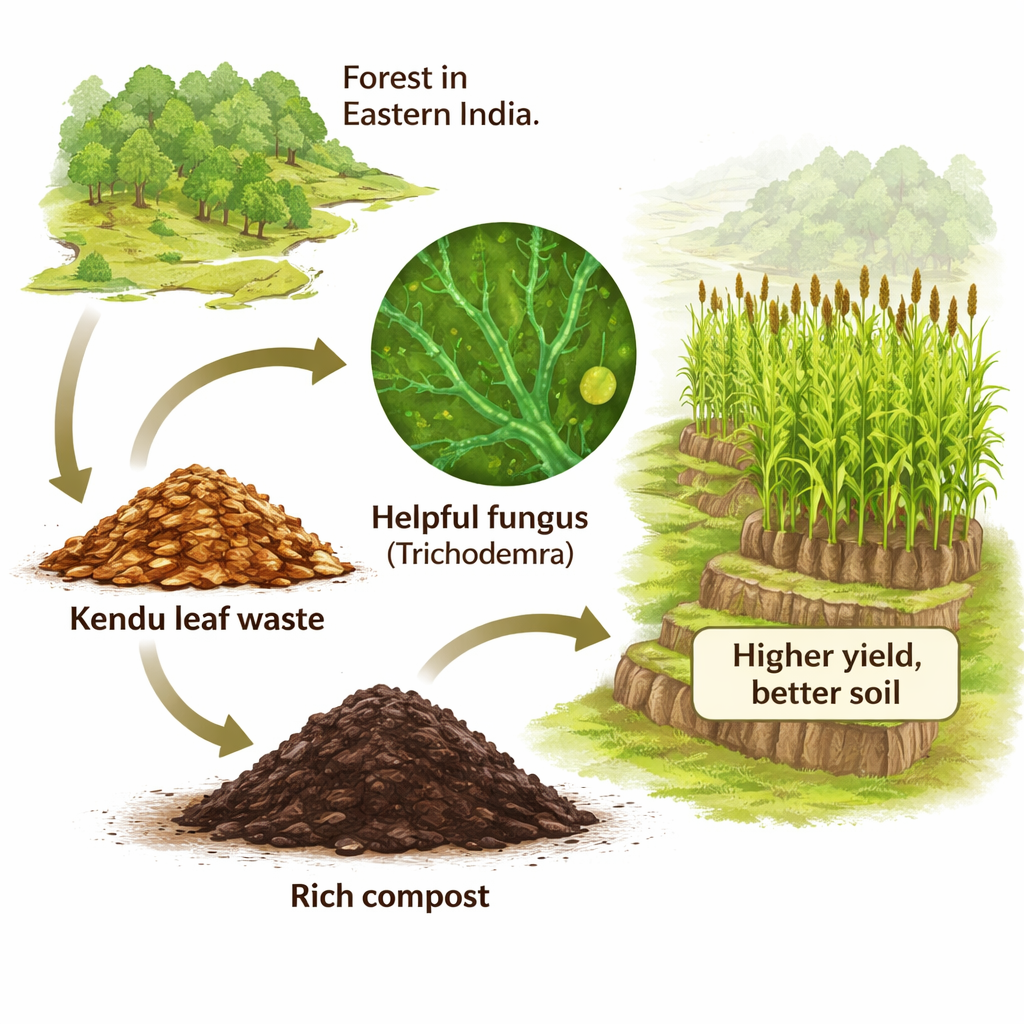
In the forested hills of eastern India, a humble leaf used to roll traditional cigarettes creates a surprisingly big waste problem. Mountains of discarded Kendu (Malabar ebony) leaves pile up after harvest, slowly rotting and clogging the landscape. This study explores a simple but powerful idea: enlist a native “friendly fungus” to break down this stubborn leaf litter and turn it into compost that helps a traditional millet crop grow taller and yield more grain for tribal farmers.
A Tough Leaf and a Hardy Grain
Kendu leaves are tough customers. They are packed with lignin and protective plant chemicals that make them resistant to decay, so they linger in the environment. At the same time, nearby tribal communities depend on finger millet, an ancient grain that thrives in poor soils and harsh climates while providing iron, zinc, calcium and other nutrients often missing from local diets. These farmers typically rely on homemade compost from forest leaves instead of chemical fertilizers. If Kendu leaf waste could be turned into high‑quality compost more quickly, it would simultaneously clean up the forest floor and feed a vital food crop.
Recruiting a Native Fungal Helper
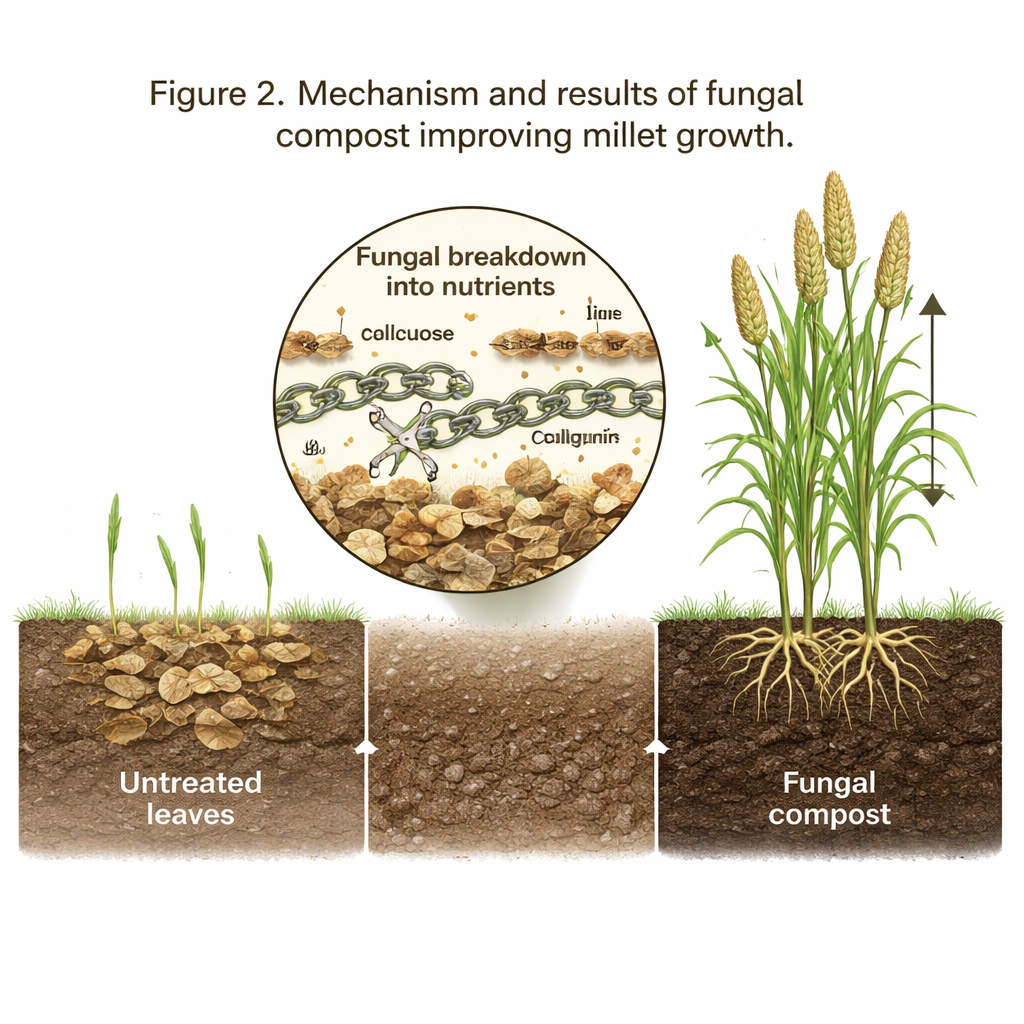
The researchers began by hunting for helpful microbes in local crops. From the seeds of a traditional maize variety, they isolated a strain of the fungus Trichoderma atroviride, known elsewhere as a natural ally of plants. Under the microscope and through DNA analysis, they confirmed its identity and then tested what it could do. On special laboratory plates, this strain produced strong halos of activity for three key enzymes—cellulase, amylase and pectinase—that slice apart the main building blocks of plant cell walls. This enzyme toolkit suggested the fungus could chew through the stubborn Kendu leaves that normally decompose very slowly.
From Leaf Litter to Living Compost
To test this idea, the team packed dried, chopped Kendu leaves into flasks and set up three treatments: no additions (control), added sterile water, or added water plus the fungal culture. Over 100 days, only the fungus‑treated leaves lost about a quarter of their weight as they broke down into darker, crumbly material. Measurements of carbon, hydrogen, nitrogen and sulfur showed that this semi‑digested biomass had a moisture level and nutrient balance typical of good compost. Importantly, its carbon‑to‑nitrogen ratio moved from an unhelpful, slow‑decay range toward the “sweet spot” that supports vigorous microbial activity and releases nutrients plants can use.
Helping Millet Sprout, Grow and Fill with Grain
The real test was in the plants. The partially degraded Kendu compost from all three treatments was mixed into soil and used to grow a local finger millet landrace called ‘Sanatara’. Millet seeds germinated well in all composts, but the fungus‑treated material gave seedlings a head start: stronger early vigor, longer roots and heavier shoots within six days. When moved to pots and grown to maturity without any added fertilizer, the differences became striking. Plants supplied with the Trichoderma‑processed compost grew to about 46 centimeters tall—roughly 39% taller than controls—and produced more leaves and panicles (grain clusters). Grain yield per plant jumped to over eight times that of untreated compost, and overall shoot biomass was also much higher. The fungus itself was later found colonizing the roots, where it likely helped the plants take up water and nutrients more efficiently.
A Circular Boost for Tribal Farming
Together, these results show that a naturally occurring fungus from local seeds can turn a troublesome forest by‑product into a valuable resource. By accelerating the breakdown of Kendu leaf waste and improving its compost quality, Trichoderma atroviride not only helps clean up the “green gold” industry but also boosts the growth and yield of a nutritious, climate‑resilient grain. For tribal farmers in the Eastern Ghats, this low‑cost, homegrown approach could mean richer soils, better harvests and reduced dependence on chemical fertilizers—closing a small but meaningful loop between forest, microbe and food.
Citation: Swain, S.S., Ghana, M., Mohanty, O.P. et al. Microbial degradation of Diospyros melanoxylon biomass by Trichoderma atroviride for plant growth promotion of finger millet. Sci Rep 16, 6023 (2026). https://doi.org/10.1038/s41598-026-35942-3
Keywords: finger millet, Trichoderma fungus, leaf composting, tribal agriculture, sustainable farming